
Flowers That Mark the Beginning of Spring
Early Bloomers (Late Winter to Early Spring)
Snowdrops (Galanthus) These delicate white flowers are often the first to emerge, sometimes pushing through snow. Their nodding bell-shaped blooms symbolize hope and new beginnings. They typically appear in February and are perfect for naturalizing in gardens.
Crocuses Available in purple, yellow, white, and striped varieties, crocuses are low-growing bulbs that create carpets of color. They’re among the earliest spring bloomers and are beloved by early-season pollinators.
Winter Aconite (Eranthis hyemalis) These cheerful yellow buttercup-like flowers appear in late winter with distinctive ruffled green collars beneath each bloom. They often flower alongside snowdrops.
Hellebores (Lenten Rose) Though they can bloom in winter, hellebores bridge the gap between seasons with elegant, nodding flowers in shades of white, pink, purple, and green. They’re shade-tolerant and long-lasting.
Classic Spring Flowers (March to May)
Daffodils (Narcissus) Nothing says spring quite like daffodils. From classic yellow trumpets to delicate white varieties and double-flowered forms, these reliable bulbs naturalize beautifully and return year after year.
Tulips Available in virtually every color and form imaginable, tulips are quintessential spring flowers. Early varieties bloom in March, while late-season tulips can flower into May. Popular types include triumph tulips, parrot tulips, and elegant lily-flowered varieties.
Hyacinths Known for their intoxicating fragrance, hyacinths produce dense spikes of star-shaped flowers in blues, pinks, whites, and purples. Their perfume can fill an entire room or garden.
Primroses (Primula) These cheerful, low-growing perennials come in a rainbow of colors and are perfect for containers, borders, and woodland gardens. They thrive in cool spring weather.
Magnolias These flowering trees produce spectacular blooms in white, pink, and purple before their leaves emerge. Star magnolia and saucer magnolia are particularly stunning early bloomers.
Forsythia This deciduous shrub explodes with bright yellow flowers along bare branches, creating a dramatic golden display that signals winter’s end.
Cherry Blossoms (Prunus) Ornamental cherry trees produce clouds of pink or white blossoms in early to mid-spring, creating breathtaking displays that last about two weeks.
Bleeding Heart (Dicentra) These shade-loving perennials produce distinctive heart-shaped flowers dangling from arching stems in pink, red, or white.
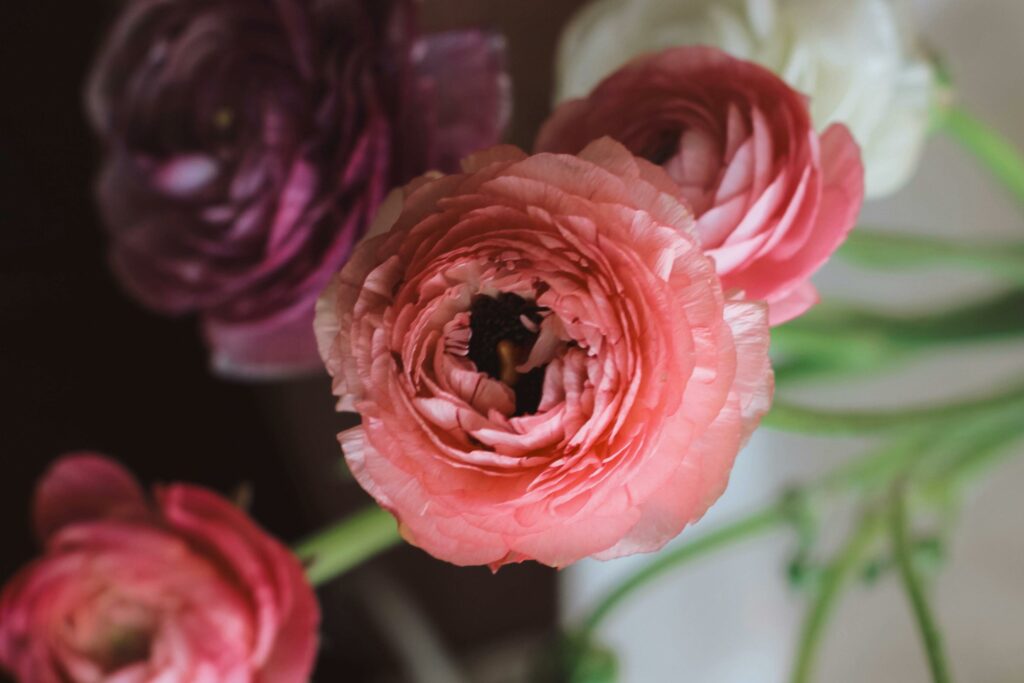
Ranunculus With their paper-thin petals layered in perfect rosettes, ranunculus flowers resemble roses but with a more delicate appearance. They come in stunning colors from coral to pink to yellow.
Pansies and Violas These cheerful cool-season flowers bloom prolifically in spring with “faces” in purple, yellow, white, and multicolored combinations.
Spring Bouquet Inspirations
1. Classic Garden Romance
Combine soft pink tulips, white ranunculus, purple hyacinths, and delicate Queen Anne’s lace or baby’s breath. Add eucalyptus or dusty miller for silvery foliage. This bouquet evokes cottage gardens and timeless elegance.
2. Sunny Yellow Celebration
Feature bright yellow daffodils, lemon-yellow tulips, golden ranunculus, and white freesias. Accent with green trick dianthus or bells of Ireland. This cheerful arrangement captures spring’s optimistic energy.
3. Purple and White Elegance
Mix deep purple tulips, white hyacinths, lavender-blue grape hyacinths (muscari), and white hellebores. Add silver-leafed herbs like sage for texture. This sophisticated palette feels both regal and fresh.
4. Coral and Peach Sunrise
Blend coral ranunculus, peach tulips, apricot-colored parrot tulips, and cream-colored stock flowers. Include trailing greenery like jasmine vine. This warm-toned bouquet is perfect for spring weddings.
5. Wildflower Meadow
Gather an informal mix of daffodils, primroses, grape hyacinths, white narcissus, and early flowering branches like pussy willow or flowering quince. Keep stems visible for a fresh-picked look.
6. Dramatic Jewel Tones
Combine deep burgundy tulips, magenta ranunculus, purple anemones, and wine-colored hellebores. Add dark foliage like smokebush or copper beech leaves for richness.
7. All-White Spring Purity
Feature white tulips, white hyacinths, white ranunculus, and lily of the valley. Include white lilac branches if available. Add variegated greenery and silvery accents for dimension without color.
8. Cottage Garden Mix
Blend pink bleeding hearts, blue forget-me-nots, yellow primroses, white sweet peas, and multi-colored pansies. This loose, romantic style celebrates spring’s diversity.
Tips for Spring Bouquets
Texture Matters: Combine smooth petals (tulips) with textured blooms (hyacinths) and interesting foliage for visual interest.
Vary Heights: Use flowers at different stages—some buds, some fully open—to create depth and ensure longer vase life.
Include Fragrance: Spring flowers like hyacinths, freesias, and sweet peas add wonderful scent to arrangements.
Branch Out: Incorporate flowering branches (cherry, magnolia, forsythia, pussy willow) for dramatic height and seasonal authenticity.
Keep It Fresh: Spring bulb flowers are thirsty. Change water daily and recut stems every few days.
Embrace Seasonality: The beauty of spring bouquets lies in their ephemeral nature. Celebrate what’s blooming now rather than seeking year-round availability.
Care Tips for Spring Flowers
Most spring flowers prefer cool temperatures and will last longer in rooms around 60-65°F. Remove foliage below the water line, use clean vases, and add flower food to extend their beauty. Daffodils release sap that can shorten the life of other flowers, so condition them separately for 24 hours before mixing.
Spring’s flowers are nature’s celebration of renewal, and whether you’re enjoying them in the garden or bringing them indoors, they offer unmatched beauty and hope after winter’s darkness.