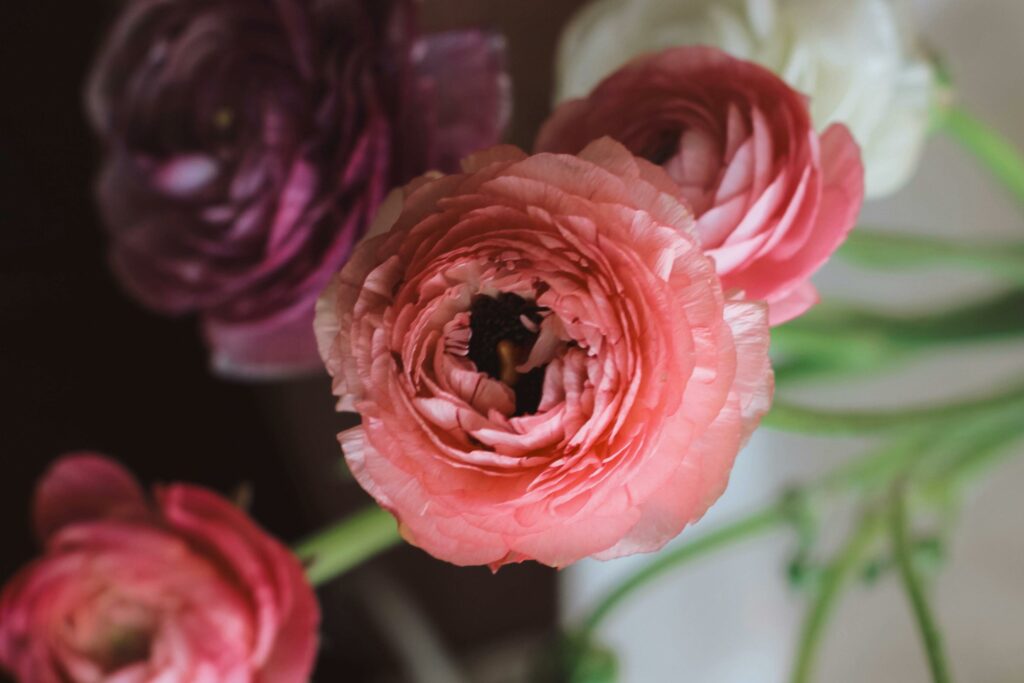

A Global Guide to Flowers Used in Paint and Pigment
Before paint came in tubes, before color was stabilized by industry and chemistry, pigments were gathered, coaxed, and persuaded from the living world. Stone yielded earth tones, insects gave crimson, and flowers offered something rarer: color that was luminous, delicate, and often unstable. To make paint from flowers was to work with impermanence. These pigments demanded patience, constant renewal, and an intimate understanding of time, light, and decay.
Across cultures, flower-based pigments were rarely the most durable, but they were among the most valued. Their brilliance, translucency, and symbolic weight made them indispensable for manuscript illumination, religious painting, court art, and ritual imagery. This guide traces how flowers entered the history of paint, not merely as sources of color, but as collaborators in the act of seeing.
The Nature of Flower Pigments
Flower pigments differ fundamentally from mineral pigments. Most derive from anthocyanins, flavonoids, and carotenoids—organic compounds that respond dramatically to light, air, and acidity. Unlike ochre or lapis lazuli, flower colors shift, fade, and sometimes vanish entirely over time. Artists who used them understood that their paintings were not static objects, but living surfaces that would age, soften, and transform.
Flower pigments were often used in water-based media: inks, tempera, fresco secco, manuscript washes, and early watercolors. Binding agents such as gum arabic, egg yolk, or animal glue helped suspend the color, but could not fully arrest its instability. The result was a visual language of subtlety rather than permanence.
Ancient Worlds: Flowers as Sacred Color
In the ancient world, flowers entered paint primarily through ritual and symbolism rather than realism. In Egypt, blue lotus petals were steeped to produce soft blue-violet washes used in papyri and wall paintings. Though not as enduring as mineral blue, lotus color carried spiritual resonance, associating painted surfaces with rebirth, perfume, and the divine breath.
In South and Southeast Asia, flower pigments were used in temple murals, ritual diagrams, and manuscript painting. Saffron, derived from crocus stigmas rather than petals, is often noted, but other flowers played quieter roles. Palash flowers, known as the flame of the forest, produced vivid orange washes for religious imagery. These colors echoed the hues of ascetic robes and sacred fire, reinforcing spiritual associations through paint.
In Mesoamerica, flower-based pigments were part of a broader chromatic system that linked color to sound, poetry, and truth. Certain yellow and red washes derived from flowers were used in codices, where their brilliance mattered more than longevity. Paintings were periodically renewed, making fading an expected stage rather than a failure.
East Asia: Ephemeral Color and Scholarly Restraint
In China, Korea, and Japan, flower pigments occupied a complex position. While ink and mineral pigments dominated, flowers were used to create gentle, atmospheric hues suited to literati aesthetics.
Safflower was the most significant floral pigment in East Asian painting. Processed into cakes or liquids, it produced pinks and reds used in figure painting, court imagery, and decorative scrolls. Artists understood that safflower red would fade, and this impermanence aligned with philosophical views of transience. In Japanese emakimono and ukiyo-e prints, safflower pigments once glowed far brighter than they do today, their current softness a testament to time rather than original intent.
Gardenia fruits are more famous for dye, but gardenia flowers contributed yellow tones to paintings and prints. These yellows were often used sparingly, accenting robes, blossoms, or atmospheric light rather than dominating compositions.
Plum blossom extracts were occasionally used to tint paper or create pale washes, particularly in poetry albums where the suggestion of color mattered more than saturation.
Islamic Manuscripts: Flowers as Framing Light
In Islamic art, flower pigments played a subtle but crucial role in manuscript illumination. While mineral pigments provided structural color, floral pigments added warmth, softness, and visual rhythm.
Rose petals were sometimes used to create pale pink inks and washes, especially in Persian manuscripts. These hues framed text, filled floral borders, or softened architectural elements. Because rose pigment was delicate, it reinforced the manuscript’s intimacy and preciousness.
Safflower and other floral reds were layered thinly, creating luminous effects when paired with gold leaf. The resulting pages were gardens of color, designed to be experienced slowly and closely.
Here, flower pigments were not meant to dominate the image, but to breathe within it, offering light rather than weight.
Europe: From Illumination to Obsolescence
In medieval Europe, flower pigments were most prominent in illuminated manuscripts. Monastic scribes and painters used flowers to tint inks, paint marginalia, and color delicate details such as garments, flowers, and flesh tones.
Cornflower, iris, and hollyhock were used to produce blues, purples, and pinks, though these colors were fragile. They were often applied over chalk grounds or mixed with mineral pigments to extend their life.
Red poppy petals were used to make transient scarlet washes, valued for their intensity despite their tendency to fade. These pigments were ideal for devotional books meant for personal use rather than public display.
By the Renaissance, flower pigments began to decline in importance. The growing availability of mineral pigments and imported colorants offered artists greater permanence. Flower colors survived mainly in preparatory sketches, watercolors, and decorative arts.
Indigenous Knowledge Systems: Paint as Renewal
For many Indigenous cultures, paint made from flowers was never intended to last indefinitely. Murals, body painting, rock art refreshment, and ritual objects were repainted regularly, embedding renewal into the artistic process.
In parts of the Americas, flower pigments were mixed with clays, resins, or plant gums to create paints for ceremonial imagery. The act of repainting was itself meaningful, reaffirming relationships with land, ancestors, and seasonal cycles.
Australian Aboriginal traditions sometimes incorporated floral extracts into temporary body paints and ritual designs, where disappearance was not loss but completion.
In these systems, flower pigments were valued precisely because they returned to the earth.
Early Modern Science and the Study of Color
As botany and chemistry developed, flowers became objects of pigment study. Artists, natural philosophers, and alchemists experimented with extracting stable color from petals, documenting failures as carefully as successes.
Seventeenth- and eighteenth-century watercolorists relied heavily on flower pigments, whose transparency suited the medium. Many early botanical illustrations were painted using pigments derived from the very plants they depicted, collapsing the boundary between subject and material.
These works were both art and experiment, mapping the limits of organic color.
Modern and Contemporary Practice: Flowers Reclaimed
With the dominance of synthetic pigments, flower-based paints nearly disappeared. Yet contemporary artists have returned to them deliberately, drawn by their instability and ecological resonance.
Artists now grind petals, ferment blossoms, and extract color as acts of resistance against industrial permanence. Flower pigments are used in installations, performance, and works that fade in public view, making time visible as part of the artwork.
In these practices, flowers are no longer merely sources of color, but collaborators that assert their own lifespan within the image.
Paint That Remembers Life
Flower-based paint does not aspire to immortality. It remembers sunlight, soil, season, and decay. It records not only what an artist saw, but how long the color was allowed to live.
Across cultures, flowers in paint remind us that color was once a negotiation with nature, not a command over it. To paint with flowers is to accept that art, like life, is radiant precisely because it does not last.