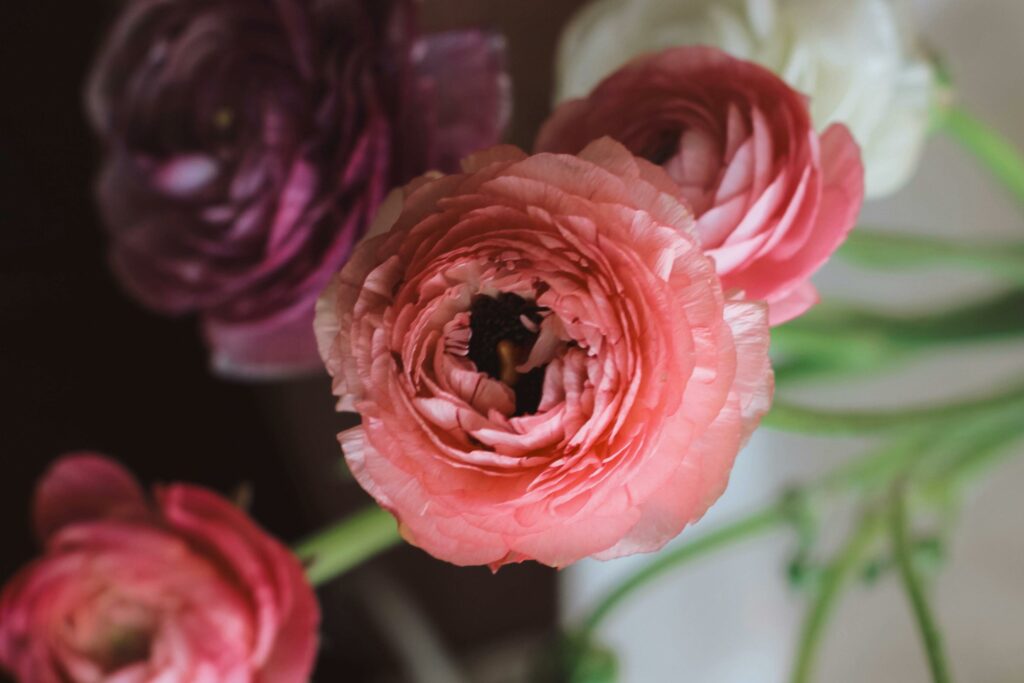

Chinese New Year, also known as the Spring Festival, is rooted in the ancient Chinese understanding of time as a living cycle of death, renewal, and rebirth. Flowers play a central role in this transition because they visually and symbolically announce the return of life after winter. Long before flowers became decorative items, they were treated as living omens whose growth habits, blooming seasons, fragrances, and resilience reflected moral ideals and cosmic forces. The flowers traditionally associated with Chinese New Year did not emerge by chance; their use evolved over centuries through agriculture, philosophy, poetry, imperial custom, and folk belief.
Plum Blossom (梅花, Méihuā)
The plum blossom is one of the oldest and most profound floral symbols associated with Chinese New Year. Native to China and cultivated for well over a millennium, the plum blossom blooms in late winter, often while snow still covers the ground. This defiance of cold made it a natural symbol of endurance and moral strength. During the Tang and Song dynasties, scholars and officials embraced the plum blossom as a metaphor for integrity under pressure, particularly during political exile or personal hardship. Its five petals were later interpreted as representing the five blessings: longevity, prosperity, health, virtue, and peaceful death. Because plum blossoms often flower during the Lunar New Year period, they became inseparable from the festival itself, symbolizing the promise of renewal before spring fully arrives.
Plum blossoms are more than seasonal markers; they carry deep philosophical significance. Confucian scholars likened their purity and resilience to virtuous character, and Daoist practitioners often included them in rituals meant to attract auspicious energy for the year ahead. By displaying plum blossoms at home, families symbolically invite perseverance, hope, and the triumph of life over adversity into their lives.
Peony (牡丹, Mǔdān)
The peony’s association with Chinese New Year originates in imperial court culture and the social ideals of prosperity and honor. Although peonies bloom later in spring, their symbolic value far outweighed seasonal accuracy. Cultivated as early as the Han dynasty and exalted during the Tang dynasty, peonies became known as the “king of flowers.” They were closely tied to wealth, aristocracy, and feminine beauty, frequently appearing in palace gardens, literary works, and court paintings. Over time, peonies came to represent not only material abundance but also social success and family prestige.
As Chinese New Year became a time to wish for advancement and fortune in the coming year, peonies were adopted into New Year imagery, even when represented through paintings, embroidery, and ceramics rather than fresh blooms. In southern China, peony motifs appear on festive textiles and decorative paper cuttings, symbolizing hope for a prosperous year and social elevation.
Peach Blossom (桃花, Táohuā)
Peach blossoms trace their New Year significance back to ancient mythology and Daoist spiritual practices. In early Chinese belief systems, peach trees were considered sacred, capable of repelling evil spirits and disease. Peach wood was used to make protective charms that were hung on doors during the New Year to guard households against misfortune. Beyond protection, peach blossoms became associated with vitality, growth, and even romantic luck, reflecting the life-giving energy of spring.
In literature and folk traditions, peach blossoms often symbolize youthful beauty, love, and marriage prospects. During the New Year, displaying peach blossoms in the home conveys a wish for vitality, romance, and family harmony. Their delicate pink petals and early spring bloom visually complement the season of renewal, making them an enduring festival favorite.
Narcissus (水仙, Shuǐxiān)
Narcissus, a bulbous flower introduced to China from the Middle East over a thousand years ago, became closely associated with New Year celebrations in southern regions such as Fujian and Guangdong. The narcissus blooms indoors with minimal care, often producing fragrant flowers during winter. This remarkable ability to flower when other plants lie dormant made it a natural symbol of emerging fortune and luck. In Chinese culture, a narcissus flowering precisely at New Year is considered a strong omen for prosperity and career success in the coming year.
Scholars and literati prized narcissus for both aesthetic and symbolic reasons. The meticulous cultivation of its bulbs and careful shaping of its leaves became a metaphor for self-discipline and refinement. Families display potted narcissus bulbs to invite good fortune, and in some traditions, the number of blooms is thought to influence the level of luck the household will receive.
Orchid (兰花, Lánhuā)
Orchids have been revered in China for over two millennia and occupy a special place as one of the “Four Gentlemen” in Chinese art and culture, alongside plum, bamboo, and chrysanthemum. The orchid embodies elegance, moral integrity, and scholarly virtue. Confucius himself praised orchids, likening a noble character to their subtle fragrance: understated yet profoundly influential.
In the context of Chinese New Year, orchids serve as reminders of inner growth, refinement, and the cultivation of virtues. Unlike peonies, which emphasize external wealth and status, orchids convey personal development and moral excellence. Displaying orchids during the festival expresses wishes not just for prosperity, but for wisdom, poise, and harmony in human relationships.
Chrysanthemum (菊花, Júhuā)
Chrysanthemums, though traditionally an autumn flower, hold symbolic significance during Chinese New Year because of their association with longevity, resilience, and retreat from worldly concerns. Cultivated for centuries, chrysanthemums are celebrated in poetry and painting as emblems of a life in harmony with nature and of contentment in old age. In Daoist thought, chrysanthemums represent the ability to flourish even under quiet or adverse conditions, embodying serenity and wisdom.
By including chrysanthemums in New Year displays, families convey hopes for long life, peaceful existence, and enduring health. Their bright yellow or gold hues further enhance the symbolism of wealth and positivity, aligning well with the celebratory mood of the festival.
Kumquat Plant (金桔, Jīnjú)
Though technically a fruiting plant rather than a flower, the kumquat has become indispensable to Chinese New Year traditions, particularly in southern China. The kumquat’s name sounds like “gold” in Chinese, and its round, bright-orange fruits symbolize wealth, abundance, and continuity. Remarkably, kumquat trees bear flowers and fruit simultaneously, reinforcing their association with perpetual prosperity.
Kumquats are displayed in homes during New Year as living talismans of good fortune, bridging the visual delight of flowering plants with the promise of material and familial success. Their dual symbolism—beauty and abundance—makes them a unique and enduring fixture of festive décor.
Flowers as Living Symbols of Renewal
The flowers and flowering plants associated with Chinese New Year carry meanings far beyond mere decoration. Each variety embodies a blend of seasonal timing, philosophical ideals, mythological roots, poetic admiration, and imperial or folk traditions. From the resilient plum blossom to the wealth-bringing kumquat, these plants transform homes into landscapes of hope, virtue, prosperity, and renewal, aligning human life with the rhythms of nature at the start of a new lunar year.