
Buying flowers for Mother’s Day anywhere in Asia can feel deceptively simple. A beautiful bouquet seems universal. Yet across the region, flowers often carry layers of meaning that go far beyond colour and fragrance. A bloom can express gratitude, respect, affection, family closeness, and celebration. But in the wrong context, the very same bouquet can also suggest mourning, condolence, ritual formality, or emotional distance.
That is why Mother’s Day flowers in Asia are rarely judged only by how pretty they look. They are read almost like social language. The flower itself matters, but so do colour, stem count, presentation, and cultural association. A bouquet that feels bright and warm in one city may feel unexpectedly solemn in another.
The good news is that most of the region shares one guiding principle. On Mother’s Day, flowers should feel joyful rather than ceremonial. The aim is not to navigate superstition with anxiety. It is simply to understand how celebration is visually expressed in different parts of Asia.
In much of East Asia, white flowers are the first thing to think about carefully.
Across places such as China, Hong Kong, Taiwan, Japan, and South Korea, white can sometimes lean toward the visual language of remembrance, condolence, or funerary tradition. That does not mean every white flower is automatically inappropriate. Context matters enormously. A few white blooms mixed into a lively arrangement can feel elegant. But an all-white bouquet, especially one that is sparse or minimalist, can sometimes feel emotionally distant for Mother’s Day.
Among the flowers most often treated with caution are white chrysanthemums. In many parts of East Asia, chrysanthemums in white carry particularly strong associations with mourning and memorial occasions. They may be graceful and beautiful, but for a Mother’s Day bouquet they can easily send the wrong emotional signal.
Lilies often require more nuance. In places like Japan and South Korea, lilies are admired for their elegance, yet a bouquet dominated by white lilies can sometimes feel overly formal. If lilies are part of the arrangement, warmer colours or mixed tones usually create a more celebratory mood.
Pink, by contrast, travels remarkably well across Asia.
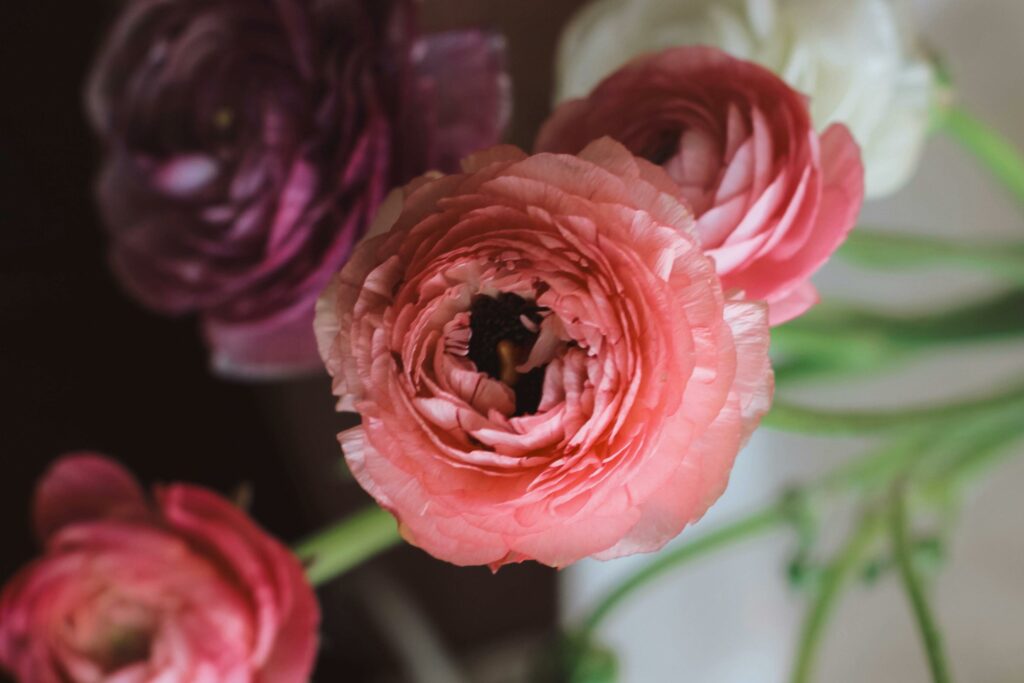
Few colours communicate Mother’s Day as naturally as pink. In much of the region, pink suggests tenderness, affection, gentleness, and gratitude without carrying overly romantic overtones. It feels soft, flattering, and emotionally generous. Whether in Singapore, Malaysia, Thailand, or Japan, pink rarely feels culturally risky.
That is one reason carnations remain one of the safest Mother’s Day flowers almost everywhere in Asia. Pink carnations in particular have become strongly linked with maternal appreciation. They feel traditional but not old-fashioned, thoughtful but not stiff. Even where floral symbolism is less formalized, carnations tend to read correctly at first glance.
Orchids also work beautifully across the region.
In many Asian cultures, orchids carry an effortless sense of elegance and refinement. They feel respectful without being solemn, and graceful without being overly decorative. In cities like Singapore, Bangkok, and Hong Kong, orchids are especially popular because they strike that rare balance between sophistication and warmth.
Red is another colour that generally performs well, but it carries different emotional weights depending on where you are.
In much of Chinese cultural Asia, including China and Hong Kong, red is strongly associated with luck, happiness, and celebration. It can feel festive and warm. Yet on Mother’s Day, many people still prefer softer reds, blush tones, or pink-red palettes rather than intensely romantic crimson arrangements.
In some parts of Southeast Asia, the same principle applies less as superstition and more as emotional tone. A bouquet should feel affectionate rather than dramatic. Mother’s Day is not meant to look like a grand romantic gesture.
Numbers, too, quietly matter in several Asian cultures.
In Chinese-speaking communities, the number four is the one most commonly avoided because its pronunciation resembles the word for death. That association extends beyond flowers into gifts, addresses, and everyday symbolic choices. A bouquet with four prominent stems may not offend everyone, but it can feel unnecessarily careless.
By contrast, the number eight is often considered auspicious, especially in places influenced by Chinese numerology. It is associated with prosperity and good fortune, which makes it feel especially welcome in a celebratory gift.
Not every country in Asia pays equal attention to flower counts, but if you are buying flowers across the region and want to stay on safe ground, avoiding four is one of the easiest and most useful rules to remember.
Presentation can matter almost as much as the flowers themselves.
Across much of Asia, bouquets are read as complete visual compositions. Wrapping, colour balance, and overall atmosphere all shape interpretation. A bouquet of perfectly appropriate flowers can still feel oddly formal if wrapped in stark white paper or arranged too rigidly.
Warm-toned wrapping usually helps. Soft blush, champagne, peach, muted cream, and gentle pastels generally create the emotional softness Mother’s Day calls for. The bouquet should feel alive, generous, and approachable rather than ceremonial.
If there is one subtle truth that applies across Asia, it is that flowers are less about literal symbolism than emotional temperature.
People may not consciously think, “That flower is unlucky.” What they often notice first is whether the bouquet feels bright or sombre, affectionate or distant, celebratory or mournful. Much of what people call superstition is really a shared visual instinct shaped by tradition.
That is why the safest Mother’s Day bouquet almost anywhere in Asia often follows the same quiet formula: pink carnations, a few orchids, soft pastel filler flowers, and warm wrapping. Nothing about it feels overly symbolic. It simply feels right.
And that, ultimately, is the secret.
Avoiding unlucky Mother’s Day flower superstitions across Asia is not about memorising a list of forbidden blooms. It is about understanding mood. Choose flowers that look warm rather than stark. Choose colours that suggest gratitude rather than ceremony. Avoid white chrysanthemums, avoid the number four, and when in doubt, let softness lead.
A Mother’s Day bouquet should never feel like ritual.
It should feel like love.