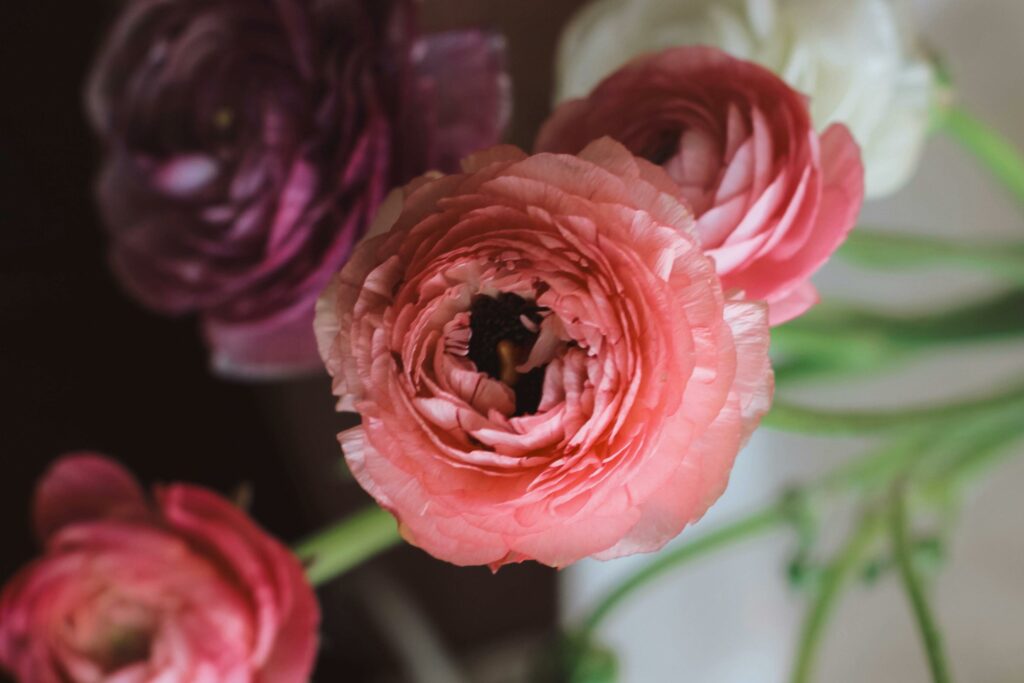

Britain has long had a complicated relationship with flowers. It buys them dutifully — over £2bn worth each year — yet has historically demanded little of them beyond freshness and a reasonable shelf life. The high street florist, with its cellophane-swathed roses and foam-filled arrangements, has for decades operated as a comfort rather than a creative statement. The industry, in short, was ripe for disruption. It just did not know it yet.
Enter Kaiva Kaimins.
The founder of myladygardenflowers.com does not fit the profile of a typical industry disruptor. She arrived in London at 18 from Melbourne, took work as a nanny and a bartender on party boats, and stumbled into floristry only after drawing up a mind map of her interests and noticing that Columbia Road flower market appeared on it. She enrolled in a diploma at the Academy of Flowers in Covent Garden and interned alongside her studies. It was, she has said, purely impulsive. What followed was rather less so.
After training in London and freelancing in New York, Kaimins developed a sensibility that was conspicuously at odds with the British mainstream — sculptural rather than sentimental, chromatic rather than conservative. She founded myladygardenflowers.com in late 2019, launching officially in 2020, a moment of singular commercial inconvenience. That the business not only survived but flourished during that period says something about the robustness of her proposition.
The studio’s aesthetic is deliberately arresting. Where conventional British floristry favours the muted and the harmonious, myladygardenflowers.com traffics in clashing hues, spray-painted foliage, and arrangements that function more as sculptural objects than decorative accessories. Kaimins describes herself not as a florist but as a creative director. The distinction is more than semantic. Her client list — Dior, Selfridges, Vogue, Swatch among them — reflects an operation that has successfully positioned itself at the intersection of design, fashion, and contemporary culture, rather than in the rather more modest territory of the corner flower shop.
This positioning has been methodically reinforced. The studio runs workshops from its Islington space, hosts a podcast (Flowers After Hours), and in 2023 Kaimins published Flower Porn, a book whose title alone signals the distance she has travelled from conventional floristry. Structured around seasonal recipes rather than traditional arrangements, it codified a philosophy: that working with flowers is a creative act, not a domestic chore.
The broader significance of myladygardenflowers.com lies less in its commercial success than in what it reveals about a shift in consumer expectations. A generation increasingly fluent in visual culture and aesthetically self-conscious in its consumption has grown impatient with an industry content to repeat itself. Kaimins identified that impatience early and built something to meet it.
Whether myladygardenflowers.com will prove a harbinger of wider industry change or remain a highly regarded outlier is, for now, an open question. What is less debatable is that Kaimins has demonstrated something the British floristry trade had perhaps forgotten: that flowers, handled with genuine conviction, can be genuinely interesting.
The mind map, it turns out, was onto something.
myladygardenflowers.com — Dalston, East London