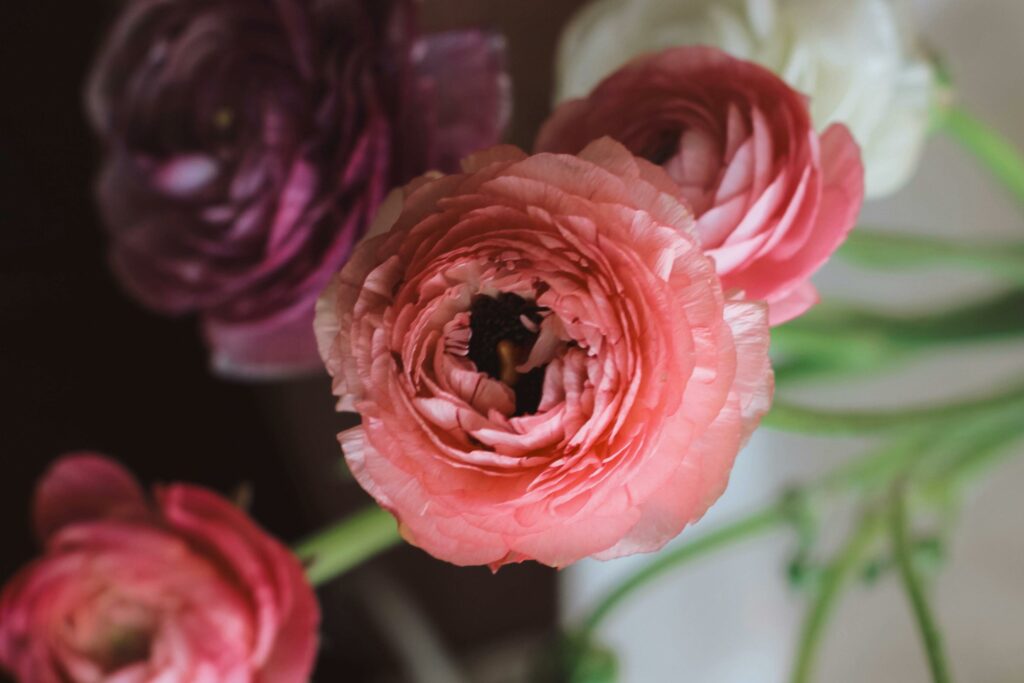

Hong Kong has long been a city that rewards the audacious. In finance, fashion, and gastronomy, it has produced enterprises that redefine what the possible looks like. In an unlikely corner of that tradition, a florist is doing the same thing with flowers.
M Florist — also known as Mille Florist — describes its mission as transforming nature’s finest blooms into extraordinary works of art, treating flowers as vessels for memory, emotion, and connection. That might sound like marketing copy. But in a city where the flower trade had long been dominated by functional displays for hotel lobbies and perfunctory bouquets of cellophane-wrapped roses, the ambition proved consequential.
Roots in a Different Era
To understand what M Florist disrupted, one must first understand what came before it. The origins of flower selling in Hong Kong can be traced to the 19th century, when the city served as a major trading port. Fresh flowers were primarily used for decorative purposes in homes and temples, as well as for celebrations such as weddings and festivals. The influx of migrants from mainland China in the mid-20th century introduced various regional floral traditions, swelling the number of flower stalls and markets, particularly in Mong Kok and Wanchai.
The 1970s and 1980s marked a turning point, as the economy expanded and disposable incomes rose. The establishment of the Flower Market in Mong Kok provided a centralised location for florists to source blooms and for customers to access a wide variety of flowers, including exotic imports from across Asia and beyond. For decades, however, the underlying logic of the trade remained unchanged: buy wholesale, arrange, and sell. Price was the primary differentiator. Design was an afterthought.
That model served a market in which flowers were purchased out of obligation rather than desire — dutiful gestures for birthdays, hospitals, and funerals, selected in haste and wrapped in cellophane. The bouquet, in short, was a transactional object, bereft of narrative or aesthetic ambition. It was into this environment that M Florist arrived, armed with a rather different idea of what a flower shop could be.
A Different Proposition
Located in the heart of Central, M Florist became known for European-inspired floral arrangements that brought elegance and sophistication to bespoke bouquets and artistic floral installations. By importing an aesthetic sensibility more familiar to Parisian ateliers than to Hong Kong’s utilitarian flower stalls, it repositioned the bouquet — not as a commodity transaction, but as a considered luxury object.
The company frames its purpose in ambitious terms: flowers, in its hands, become more than temporary beauty. They become vessels for memory, emotion, and connection. The florists train for years to master the balance between structure and fluidity, learning to create arrangements that appear effortlessly natural while achieving perfect proportion and lasting beauty. True artistry, the shop insists, lies in making the complex appear simple.
The product range reflects a studied understanding of Hong Kong’s gift-giving culture. Arrangements scale from a mini bouquet of roughly 15 centimetres in diameter up to a deluxe arrangement of 55 centimetres, accommodating everything from a casual gesture of affection to the grand statement required by corporate clients marking a significant occasion. Particular acclaim has attached to its flower box and orchid selections — formats that signalled, from the outset, that M Florist was thinking about the full experience of receiving flowers, not merely the flowers themselves.
Crucially, the shop works with seasonal offerings rather than maintaining a static catalogue. Should certain blooms be unavailable, the florists select alternatives that honour the original aesthetic vision while ensuring freshness and quality. This seasonal discipline — common in high-end European floristry but unusual in Hong Kong — lent the brand a credibility that price alone cannot manufacture.
The Digital Pivot
Technology was central to the disruption. Rather than relying on walk-in traffic in an era of shrinking retail footfall, M Florist built its business around a digital-first model. The convenience of online flower delivery transformed traditional floristry in Hong Kong, allowing consumers to browse and purchase arrangements without visiting a physical store — a shift particularly powerful in a densely populated and time-pressured city.
M Florist moved early and decisively on this front. Its same-day delivery network spans all of Hong Kong — from Hong Kong Island to Kowloon and the New Territories — with complimentary delivery on all orders. Customers can commission arrangements without stepping away from their desks in Central or their apartments in Repulse Bay. In a city where time is the scarcest currency, this was not incidental to the brand’s appeal — it was foundational to it.
The digital strategy extended beyond logistics. Social media platforms, particularly Instagram, became the primary showroom. Florists across Hong Kong discovered that the visual nature of the medium was ideally suited to their craft — a single well-composed photograph of a bouquet could reach thousands of potential customers at negligible cost. M Florist’s feed became a curated gallery of its work, attracting customers who might never have visited a physical flower shop but were moved by what they encountered on their screens. The aesthetic consistency of the account reinforced the brand’s identity as a luxury proposition, not merely a convenient one.
Media recognition followed. Publications including Elle, Time Out, Prestige, Lifestyle Asia, and Sassy Hong Kong placed M Florist in listings of the city’s top luxury florists from 2020 onwards. In a market where consumer trust is built incrementally and third-party endorsement carries genuine weight, such coverage accelerated the shop’s ascent considerably.
The Market It Helped Create
M Florist’s rise did not occur in a vacuum. It was both a product of, and a contributor to, a broader transformation in how Hong Kong thinks about flowers. As the city consolidated its position as a global financial hub, demand for high-quality floral arrangements surged. Companies began using flowers to enhance their professional image — at product launches, gala dinners, and corporate receptions. Individuals sought unique, luxurious bouquets not merely as gifts but as expressions of personal taste and social fluency.
This growing demand has since bifurcated the market in interesting ways. At the premium end, a cohort of design-led florists now competes on artistry, provenance, and experience. Some approach floristry from the perspective of fine art, taking direct inspiration from painters and sculptors. Others fuse European garden traditions with East Asian sensibilities. Several have built client lists that include luxury fashion houses, international conglomerates, and celebrity clientele. At the value end, a parallel wave of online-native florists has pursued the opposite strategy — arguing, with some force, that since most Hong Kong florists source from the same wholesale markets, there is no defensible reason for premium prices. Arrangements equivalent to those sold at boutique prices, these challengers contend, can be delivered at a fraction of the cost.
M Florist occupies the space between these poles with some dexterity. It is unambiguously a premium brand, yet its online model and free delivery proposition strip away the friction that often makes luxury feel exclusionary. One need not make an appointment, visit a boutique in a mall, or spend an afternoon deliberating with a florist. The luxury, in other words, is designed to be accessible — which is itself a form of competitive intelligence.
What Flowers Reveal About a City
There is something revealing about the floristry market that M Florist helped create. Flowers are, by their nature, ephemeral. They wilt. They cost money that leaves no durable trace. The decision to spend seriously on them is, in a sense, a decision to prioritise experience over accumulation — a value that sits at odds with Hong Kong’s popular reputation as a city of relentless materialism.
And yet the market is booming. Hong Kong’s floristry scene is now characterised by a blend of traditional craftsmanship and contemporary design, shaped by international styles and local sensibilities. The city’s strategic location in Asia, with proximity to major flower-producing countries including China, Thailand, and Japan, and its excellent transportation infrastructure, makes it a natural hub for importing fresh blooms from as far afield as Holland, Ecuador, Kenya, and South Africa.
Sustainability has also entered the conversation. With environmental awareness rising among younger consumers, some florists now source eco-friendly blooms, use biodegradable packaging, or partner with local farms to reduce their carbon footprint. Flower recycling programmes, where old bouquets are composted or repurposed, are gaining traction among the environmentally conscious — a constituency that did not exist in the Hong Kong flower market a decade ago.
A Shift in Expectations
M Florist’s lasting contribution may be less any single innovation than a shift in expectation. By insisting that a bouquet could be designed with the intentionality of a piece of jewellery or a tailored suit — and by demonstrating that this level of care could be delivered, same-day, to a door anywhere in the city — it raised the baseline against which all Hong Kong florists are now measured.
The company frames itself as honoured to be part of life’s most significant moments, crafting pieces that will live on in photographs and hearts long after the last petal has fallen. In the age of Instagram, where the visual documentation of milestones has become a social ritual in its own right, this is a commercially astute observation. A bouquet is no longer merely a gift. It is content. It is memory. It is, increasingly, identity.
Whether M Florist will maintain its position at the forefront of a market it helped to shape is an open question. Competition is fierce, consumer tastes are restless, and the economics of perishable luxury are unforgiving. But in a city that has always understood the relationship between presentation and prestige, the instinct that drove the shop’s founding — that a flower arrangement deserves to be taken seriously — has proved its worth. The petals, one might say, have spoken.