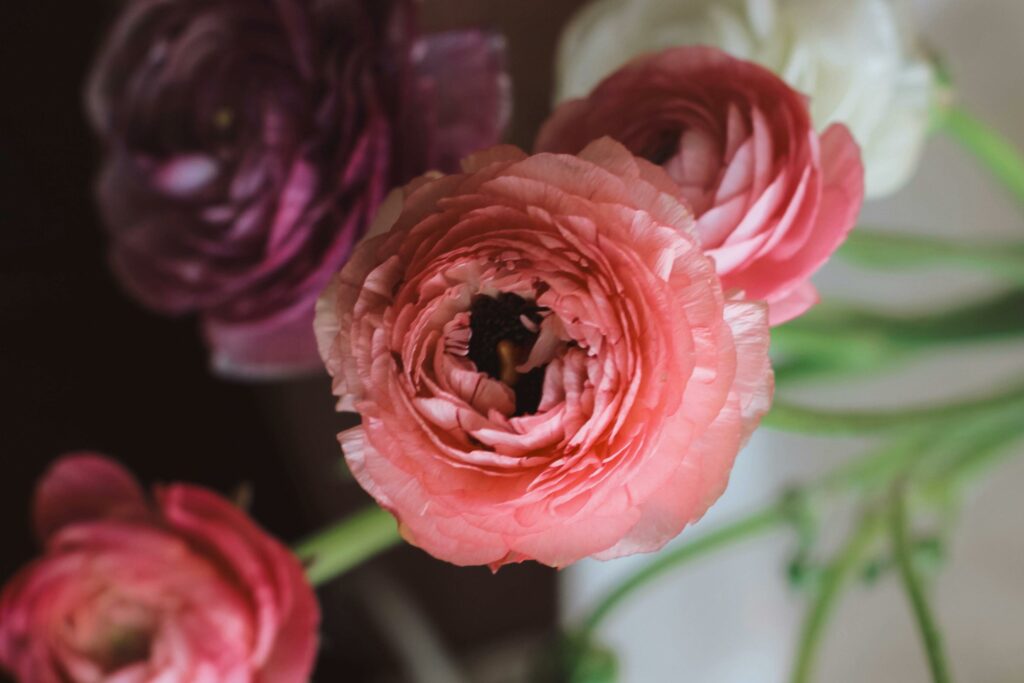

From Cherry Blossom to Smoke Tree — The Flowers Redefining Modern Floristry
Introduction: Japan’s Floral Renaissance and Its Global Influence
Japan has long held a singular relationship with flowers. In a culture where the falling of cherry blossoms can move an entire nation to melancholy, and where the arrangement of three stems in a vase is treated as a philosophical act, it is perhaps unsurprising that Japanese floral aesthetics have come to dominate the most forward-thinking corners of contemporary floristry. From the minimalist precision of ikebana — the ancient art of Japanese flower arranging — to the lush, overgrown romanticism of modern bouquet design, Japan’s botanical heritage offers an extraordinary palette for those who work with blooms.
In recent years, however, something has shifted. The global floral industry has begun borrowing with greater intentionality from Japanese tradition, reaching beyond the iconic sakura and chrysanthemum into more unusual, textural, and architecturally interesting plant material. Smoke trees (Cotinus coggygria and its cultivars), with their ethereal plumes of hazy, hair-like flowers, have become one of the most talked-about additions to high-end bouquets worldwide. But they are merely one player in a broader revolution that also includes ranunculus cultivars developed by Japanese breeders, rare peony species native to Japanese mountain landscapes, elegant varieties of cosmos and lisianthus, and a host of foliage and filler flowers that create the structural drama modern bouquets demand.
This article sets out to explore that revolution in depth. It profiles the most important Japanese flower varieties currently appearing in the trendiest bouquets around the world, examining each flower’s botanical identity, its cultural history within Japan, its unique aesthetic properties, and the specific ways in which florists — from Tokyo’s cutting-edge design studios to London’s most sought-after wedding ateliers — are incorporating it into contemporary arrangements. Along the way, we will consider the broader horticultural and cultural forces that have elevated Japanese flowers to their current global prominence, and look at how the Japanese approach to beauty, impermanence, and natural form continues to reshape the way the world thinks about flowers.
Part One: Understanding the Japanese Floral Tradition
The Philosophy of Ma and Mono no Aware
To understand why Japanese flowers look the way they do in a bouquet — and why they produce such a distinctive effect when used well — it is necessary to understand something of the philosophical soil from which they grew.
The Japanese concept of ma (間) refers to the meaningful pause, the deliberate negative space between objects. In music, it is the silence between notes. In architecture, it is the empty room that gives meaning to the furnished one. In flower arranging, it is the air between stems, the gap that lets each flower breathe and be seen as an individual. This is why a traditional ikebana arrangement might use only three stems where a Western bouquet would use thirty, and why those three stems, placed with exquisite care, can feel more powerful than the fuller Western composition.
Allied to ma is the concept of mono no aware (物の哀れ), often translated as “the pathos of things” or “an empathy towards things.” It is an awareness of impermanence, a bittersweet appreciation for the transient nature of beauty. Nothing in Japanese culture encapsulates this better than the sakura — the cherry blossom — which blooms for barely two weeks each year and falls in drifts of pale pink snow before the petals even have time to wither. The Japanese do not mourn this brevity. They celebrate it, gathering in parks for hanami (flower-viewing) parties precisely because the beauty is so fleeting.
Both of these concepts have profoundly influenced the types of flowers that Japanese breeders have developed and that Japanese floral culture has elevated. Flowers that are delicate, that age gracefully and sometimes dramatically, that have an architectural elegance rather than a blowsy abundance, that suggest rather than shout — these are the flowers that Japanese aesthetics prize. And these, not coincidentally, are the qualities that the most discerning contemporary florists are increasingly seeking.
Ikebana: The Art of Living Flowers
Ikebana (生け花, literally “living flowers”) is not simply flower arranging in the Western sense of packing stems into a vase. It is a discipline with millennia of history, codified schools, and a philosophy that treats the arrangement of flowers as a form of meditation and self-cultivation. There are numerous schools of ikebana, each with its own principles and aesthetics, including the Ikenobo school (the oldest, dating to the fifteenth century), the Ohara school (which introduced the concept of moribana, low, landscape-style arrangements), and the Sogetsu school (founded in 1927, more avant-garde and open to non-traditional materials).
What all schools share is a commitment to expressing the beauty of natural forms by working with them rather than against them. A curved branch is not straightened but used to express the character of the tree from which it came. A flower bud is placed alongside an open bloom to suggest the passage of time. Fallen leaves may be incorporated because they, too, are part of the flower’s story.
This approach has had a direct influence on the kinds of plant material that are now considered valuable in contemporary global floristry. Branches with interesting forms — flowering quince, crab apple, persimmon, Japanese maple — are no longer merely supporting players in bouquets but sometimes the stars. Flowers that show multiple stages of development simultaneously, from bud to full bloom, are prized. Foliage is not just filler but an essential element of composition.
The Japanese Horticultural Tradition: Centuries of Breeding Excellence
Japan has one of the world’s most sophisticated and long-standing traditions of horticultural breeding. For centuries, Japanese gardeners have selected for qualities that most Western breeders would not have thought to prioritize: subtle colour gradations visible only in certain lights; petal textures that change as the flower ages; forms that balance between fullness and openness; scents that are present but never overpowering.
The result is a horticultural heritage of extraordinary richness. Japan has contributed to the world some of its most treasured garden plants: the Japanese anemone, the Japanese iris (Iris ensata), the Japanese tree peony, the Japanese wisteria. It has developed varieties of chrysanthemum so elaborate that their cultivation requires decades of practice. It has produced ranunculus cultivars of a refinement and colour complexity not found anywhere else. It has given the world the lisianthus (though native to North America, it was Japanese breeders who transformed it from a roadside wildflower into one of floristry’s most sophisticated blooms).
Today, Japanese flower breeders continue to push at the boundaries of what is possible. New varieties of ranunculus, peony, dahlia, and cosmos emerge from Japanese nurseries every season, each more refined than the last. The Japanese flower market — centred on the Ota Flower Market in Tokyo, the world’s largest flower wholesale market — is a place of extraordinary diversity and innovation, where varieties not available anywhere else in the world are sold to florists who travel from across Japan and beyond to source them.
Part Two: The Smoke Tree — Japan’s Most Fashionable Floral Foliage
Botanical Identity and the Japanese Connection
The smoke tree (Cotinus coggygria) is, in botanical terms, not native to Japan. It originates from a broad swath of territory ranging from southern Europe through Central Asia to China. However, it has been cultivated in Japanese gardens for centuries, and it is Japanese and Japanese-influenced horticultural culture that has elevated it from an interesting garden shrub to one of the most coveted elements in contemporary floral design.
The plant takes its common name from the extraordinary visual effect produced by its fruiting panicles. After the small, inconspicuous yellow flowers have finished, the flower stalks elongate and become covered in a mass of feathery, hair-like pedicels that catch the light and create an impression of smoke or mist hanging around the branches. This effect, particularly striking in evening light or when backlit by morning sun, persists for weeks and transforms the plant into something almost otherworldly.
The smoke tree family is divided into several species and dozens of cultivars, but for floral design purposes, the most important distinction is between the green-leaved forms and the dramatically purple-leaved forms. In Japanese floral culture, both are used, but it is the purple-leaved cultivars — particularly ‘Royal Purple’ with its deep maroon-burgundy leaves, ‘Grace’ with its larger, more softly purple foliage, and the extraordinary ‘Velvet Cloak’ with its intensely dark wine-red leaves — that have become most fashionable in bouquet design.
Why the Smoke Tree Is Having Its Moment
The smoke tree’s current dominance in high-end floristry is not accidental. It arrives at a moment when floral design is moving decisively away from the tightly packed, dome-shaped bouquets that dominated the early twenty-first century, toward something looser, more naturalistic, and more architecturally complex. The smoke tree is a perfect vehicle for this aesthetic shift.
First, there is the colour. The purple-leaved varieties provide a depth and richness of tone that is almost impossible to achieve with flowers alone. The dark, velvety burgundy-purple of cultivars like ‘Royal Purple’ creates a shadow-like anchoring effect in arrangements that reads as both luxurious and edgy — equally at home in a romantic garden wedding and a high-fashion editorial context.
Second, there is the texture. The feathery smoke plumes add a dimension of movement and lightness that flowers alone rarely provide. They catch and diffuse light in a way that creates a kind of visual shimmer, making them particularly beautiful in photographs and in candlelight — two contexts enormously important to the wedding and event floristry markets.
Third, there is the structure. The branches of the smoke tree have an inherently architectural quality. They are not simply linear stems but branch and ramify in ways that create three-dimensional form, allowing florists to build arrangements that have genuine spatial complexity.
Finally, there is the longevity. Cut smoke tree branches, particularly those carrying the feathery fruiting panicles, last exceptionally well out of water and can be air-dried without losing their decorative value. This makes them useful for installations and arrangements that need to endure over several days.
Key Cultivars and Their Characteristics
Cotinus coggygria ‘Royal Purple’ is perhaps the most widely used cultivar in contemporary floristry. Its leaves are a deep, saturated burgundy-purple in spring and summer, turning to brilliant orange-red in autumn. The smoke plumes are a dusky rose-purple, creating a harmonious colour story throughout the plant’s season. It grows to approximately four metres and has a naturally graceful, slightly arching habit.
Cotinus coggygria ‘Grace’ is a hybrid (C. coggygria × C. obovatus) that produces larger leaves with a softer, more blue-tinged purple colouration. The leaves in summer are a particularly beautiful dusty plum, and the autumn colour — blazing scarlet and orange — is arguably the best of any smoke tree. In bouquets, it offers a slightly more romantic, less intense tone than ‘Royal Purple’.
Cotinus coggygria ‘Velvet Cloak’ earns its name from the extraordinarily rich, deep purple-maroon of its foliage, which has a velvet-like quality in certain lights. It is the darkest of the commonly available cultivars and particularly popular with florists seeking a moody, dramatic effect.
Cotinus coggygria ‘Young Lady’ (sometimes marketed under the Japanese-coined name ‘Koyomairi’) is a more compact cultivar, producing particularly abundant and fine-textured smoke plumes. It is one of the forms most favoured by Japanese nurseries for cut flower production and is increasingly available through wholesale flower markets.
Cotinus ‘Flame’ is grown primarily for its exceptional autumn colour but also produces abundant smoke plumes. It offers a slightly different seasonal quality — its summer foliage is green, making it less dramatic as a cut foliage element but excellent when used in late-summer arrangements where the transition between the green leaf and the first blush of autumn colour creates a particularly interesting tonal effect.
Using Smoke Tree in Contemporary Bouquets
In contemporary floral design, smoke tree branches are most commonly used in one of three ways.
The first is as a structural backbone for loose, naturalistic bouquets. A few arching branches of purple-leaved smoke tree placed at the outer edges of a hand-tied bouquet immediately create a sense of movement and asymmetry that is difficult to achieve with flower stems alone. The branches cascade outward and downward, their feathery plumes extending beyond the flower heads to create a halo of misty texture around the arrangement.
The second use is as a colour anchor in palette-driven compositions. In the currently fashionable moody, jewel-toned palette — deep burgundy, plum, dusty rose, rust, terracotta — smoke tree foliage provides a foundation of rich colour from which the flowers seem to emerge. Paired with deep red dahlias, rust-coloured chrysanthemums, blush ranunculus, and burgundy scabiosa, a smoke tree branch transforms a collection of flowers into a coherent and deeply satisfying colour statement.
The third use is more architecturally ambitious: using substantial smoke tree branches as the primary structural element in large-scale installations, where their naturally dramatic silhouettes become the subject of the arrangement rather than a supporting element.
Part Three: Ranunculus — Japan’s Most Refined Contribution to the Modern Bouquet
The Japanese Ranunculus Revolution
While ranunculus (Ranunculus asiaticus) is native to southwestern Asia and the Mediterranean, it was Japanese flower breeders who, over the past thirty years, transformed it from a pleasant cottage-garden flower into one of the most sophisticated and complex blooms in the florist’s repertoire. The transformation is so complete that the Japanese varieties of ranunculus are now in a different aesthetic category from the varieties produced elsewhere, and their influence on global floral fashion has been profound.
The key to understanding Japanese ranunculus is appreciating what Japanese breeders selected for. Where conventional breeding prioritised large, solid flower heads with bold, saturated colours, Japanese breeders went in almost exactly the opposite direction. They developed varieties with layer upon layer of petals — sometimes over a hundred petals in a single head — creating a depth and complexity that is almost impossible to capture in a photograph. They selected for colours that are not solid but softly blended, shading from one tone to another within a single petal, or combining multiple colours in intricate bicolour and picotee patterns. They bred for petals with a particular texture — silky, slightly translucent, with a quality that Japanese aestheticians describe as utsuroi (the beauty of gradual change).
The Lale Series and Its Successors
The most influential series of Japanese ranunculus for the global floral market has been the Lale series, developed by the Japanese breeding company Koudou-Seikatsu. Lale ranunculus are characterised by their extraordinarily layered, peony-like form and their complex, multi-tonal colours. Names within the series — ‘Lale Amaretto’, ‘Lale Raspberry’, ‘Lale Apricot’, ‘Lale Salmon’ — hint at the food and drink-inspired colour palette that has made them so desirable to florists working in the current fashion for warm, earthy, edible-looking tones.
The Lale Amaretto, in particular, has achieved an almost iconic status in the floral world. Its petals combine warm tan, apricot, cream, and a faint blush of terracotta in proportions that seem to shift as the flower moves and is seen in different lights. It is the floral equivalent of a perfectly blended whisky — deeply satisfying, endlessly complex, impossible to reduce to a single description.
Following the success of the Lale series, numerous Japanese breeders have developed their own premium ranunculus lines. The Elegance series offers varieties with particularly frilly, ruffled outer petals that give the flowers a slightly wilder, more romantic quality. The Cloni series (developed in collaboration with Italian breeders but drawing heavily on Japanese breeding technology) produces flowers of exceptional size and structural integrity. The Clooney series, inspired by and initially developed for the Japanese luxury wedding market, produces softer, more loosely formed flowers that are particularly beautiful in natural light.
Ranunculus in the Modern Japanese Aesthetic Bouquet
The Japanese approach to using ranunculus in bouquets differs significantly from the Western approach. In the conventional Western bridal bouquet, ranunculus tends to be used in large numbers, packed tightly together to create a full, rich effect. In the Japanese approach — and in the international floristry that has been influenced by Japanese aesthetics — ranunculus are more likely to be used more sparingly, with each flower given space to display its full complexity.
A Japanese florist might build an arrangement around just three or four ranunculus of complementary but not identical tones, allowing the eye to move between them and notice the subtle differences in their layering and coloration. The flowers are typically placed slightly asymmetrically, at different heights and angles, so that their full depth of form is visible rather than flattened into a uniform surface.
The trend toward “deconstructed” or “garden-style” bouquets in contemporary Western floristry has made this approach more accessible internationally. In these looser, more naturalistic arrangements, the individual character of each flower matters more than the overall uniformity of the composition, which is precisely the condition in which Japanese ranunculus varieties can show their full beauty.
Part Four: The Japanese Peony — Ancient Flower, Modern Renaissance
A History of Peonies in Japan
The peony (Paeonia spp.) has been cultivated in Japan for well over a millennium. Chinese peonies were introduced to Japan in the Nara period (710–794 CE), initially as medicinal plants but quickly appreciated for their extraordinary ornamental qualities. Over the subsequent centuries, Japanese gardeners and breeders developed a distinct branch of peony culture, producing varieties — particularly of the tree peony (P. suffruticosa) and its hybrids — that are recognised worldwide as among the most beautiful ever created.
The Japanese tree peony, known as botan (牡丹), holds a status in Japanese culture analogous to that of the rose in Western culture — it is the quintessential luxury flower, associated with prosperity, nobility, and feminine beauty. In the Meiji period, when Japanese culture opened to Western influences, the botan was adopted as one of the most prestigious flowers for formal occasions, and Japanese breeders began an intensive program of hybridisation that produced many of the most admired varieties grown today.
Herbaceous peonies (Paeonia lactiflora and its hybrids) were also cultivated in Japan, though they arrived somewhat later and their development in Japan has been less distinctively different from Western breeding. It is the tree peony where Japanese breeding has made its most distinctive contribution.
Japanese Tree Peony Varieties
Japanese tree peonies are divided into several traditional types based on their flower form. The hana-daijin type produces large, fully double flowers of magnificent richness, with hundreds of petals arranged in a globe of extraordinary complexity. The renge type has flowers with a slightly more open form, the petals arranged in a more natural, slightly dishevelled-looking way that is actually considered more sophisticated in Japanese aesthetics. The karako type has a distinctive boss of modified stamens at the centre of the flower, creating a fascinating focal point.
Some of the most celebrated Japanese tree peony varieties include:
‘Hana Kisoi’ (花競) — one of the most famous Japanese tree peonies, producing large, double flowers of a warm, vivid pink with a slight purple tone. It has been cultivated for centuries and remains a benchmark for the type.
‘Shimane Seidai’ — a more modern variety producing enormous double flowers in a soft, creamy white with occasional pink flushes. The flowers can reach thirty centimetres in diameter and are considered among the largest of any tree peony in cultivation.
‘Kamatafuji’ — notable for its colour, a rich violet-purple that is rare in tree peonies and which creates a dramatic contrast with the flowers’ dark mahogany flares at the base of each petal.
‘Yachiyotsubaki’ — produces semi-double flowers of a vivid crimson-scarlet, the petals crinkled and slightly translucent, allowing light to pass through them and create a jewel-like effect.
‘Godaishu’ — a white-flowered variety of particular elegance, with enormous, semi-double flowers of pure white with delicate yellow stamens. It is particularly prized in Japanese floristry for its ability to work in both traditional and modern arrangements without looking out of place in either.
Tree Peonies in Modern Bouquets
Tree peonies present particular challenges and opportunities in cut flower use. Their stems are somewhat woody, requiring careful conditioning. Their flowers are typically available for only a brief period in late spring, making them highly seasonal and correspondingly prized. However, these limitations are part of their appeal in the current floral market, where seasonality and rarity are increasingly seen as qualities rather than drawbacks.
In contemporary Japanese floristry, tree peonies are typically used as statement flowers — single blooms or a small number of blooms that anchor an arrangement by virtue of their extraordinary size and complexity. A single ‘Shimane Seidai’ bloom, placed among branches of Japanese maple and a few stems of bleeding heart (Lamprocapnos spectabilis), constitutes a complete and magnificent arrangement.
For Western florists who have discovered Japanese tree peonies, the approach is similar. These flowers are too complex and too beautiful to drown in a crowd of other blooms. They need to be given space and surrounded by simpler, more textural elements that allow their full beauty to register.
Part Five: Lisianthus — Japan’s Global Floral Gift
From Prairie Wildflower to Floral Sophistication
The lisianthus (Eustoma grandiflorum, also known as Eustoma russellianum or Lisianthus russellianus) is native to the prairies and mountains of the American Southwest and Mexico, where it grows as a tall, somewhat unremarkable wildflower with funnel-shaped blooms in shades of purple, white, and pale pink. Left to its own devices in nature, it is pleasant but hardly remarkable.
What Japanese flower breeders did with this modest prairie plant over the past half-century is nothing short of extraordinary. By sustained selective breeding, they developed lisianthus varieties with doubled and tripled flower heads of extraordinary complexity, colour ranges extending from pure white through every shade of pink, purple, lavender, and blue-violet, and remarkable longevity as cut flowers. So complete was the transformation that lisianthus is now known in Japan as toruko kikyō (トルコキキョウ, “Turkish bellflower”), a name that reflects its Mediterranean-esque appearance rather than its actual origins — and it is Japanese-bred lisianthus that dominates the global cut flower market.
Key Japanese Lisianthus Series
Japanese breeding companies have developed dozens of lisianthus series, each with its own character and target market. Among the most important for contemporary floristry are:
The Voyage series — produced by Sakata Seeds, one of Japan’s largest seed companies, the Voyage series includes varieties with particularly complex, ruffled petal forms. The flowers have a romantic, slightly old-fashioned quality that makes them popular in garden-style wedding floristry. Colours in the series tend toward soft, nuanced tones — warm whites with hints of green, lavender with silver undertones, pink with peachy highlights.
The Echo series — also from Sakata, the Echo series leans toward more saturated colours and a slightly tighter, more formal flower form. The ‘Echo Blue Rim’ variety, with its white petals edged in violet-blue, has become a modern classic.
The Rosita series — from the Japanese breeding company Miyoshi, the Rosita series produces lisianthus with an exceptionally rose-like flower form. When fully open, these varieties are frequently mistaken for roses in photographs, making them valuable for florists and clients who want a rose-like effect but with the superior vase life and different character of lisianthus.
The Falda series — producing varieties with particularly ruffled, flounced petals, the Falda series brings a movement and lightness to lisianthus flowers that makes them particularly effective in loose, naturalistic arrangements.
The Voyage Lavender Blue — deserves special mention as one of the most fashionable lisianthus varieties in current circulation. Its petals are a blue-lavender with slightly deeper veining, and the flower has a particularly fine, translucent quality that photographs beautifully.
Lisianthus in Contemporary Japanese-Influenced Floristry
Lisianthus have become one of the defining flowers of contemporary Japanese-influenced floristry for several reasons. Their long vase life — typically two to three weeks from a Japanese supplier, compared with a week or less for many flowers — makes them economical as well as beautiful. Their multiple buds and flowers on a single stem mean that they have a natural quality of abundance that reads well in looser arrangements. And their extraordinary colour range, from the palest whisper of green-white to the deepest purple-blue, means they can be incorporated into almost any palette.
In Japan, lisianthus are used in ways that Western florists are only now beginning to explore. Japanese florists value the buds as much as the open flowers, allowing stems to be cut and placed in arrangements where the buds are still tightly closed, creating a pleasing progression from tight bud to fully open bloom along the same stem. This staged quality, which resonates with the Japanese aesthetic appreciation for showing the passage of time, is increasingly being adopted by Western florists who have visited Japan or studied Japanese floral design.
Part Six: Japanese Anemones — Elegance in Motion
The Wind Flower and Its Japanese Association
Despite their common name, Japanese anemones (Anemone × hybrida and related species) are not strictly native to Japan — the cultivated garden forms are hybrids of Chinese species that were introduced to Japan and cultivated there for centuries before reaching Europe. They arrived in the West in the mid-nineteenth century via the naturalist Robert Fortune, who encountered them growing in Japanese cemeteries and gardens and was immediately struck by their refined beauty.
The Japanese anemone grows into a tall, elegant plant with simple, slightly coarse leaves close to the ground and long, wiry stems rising to carry the flowers high in the air. The flowers themselves are simple — a ring of broad petals (technically sepals) surrounding a central boss of golden stamens — but the simplicity is deceptive. The way the flowers move on their long, flexible stems in the slightest breeze is extraordinarily beautiful, and the plant’s tendency to naturalise in gardens, seeding itself into drifts of pink or white, creates an effect of artless natural grace that is very difficult to replicate by deliberate planting.
Key Varieties for Cut Flower Use
‘Honorine Jobert’ is the most widely grown white Japanese anemone, a cultivar that has been in cultivation since 1858 and shows no sign of losing its popularity. It produces single flowers of pure white with a prominent boss of yellow stamens, on stems that can reach one-and-a-half metres. In cut flower use, its long stems and clean, architectural flower form make it an outstanding material.
‘Königin Charlotte’ (‘Queen Charlotte’) is a semi-double pink variety of particular elegance, its flowers arranged in a shallow cup that catches the light beautifully. The colour is a warm, clear pink — not too cool, not too hot — that works across a wide range of palettes.
‘Pamina’ produces deeper, more saturated pink flowers that are semi-double and particularly long-lasting as cut flowers. In the current fashion for richer, more saturated tones, it has become increasingly popular.
‘Whirlwind’ is a semi-double white variety whose petals are slightly irregular, giving the flowers a pleasantly dishevelled quality that suits naturalistic bouquet styles.
‘Dreaming Swan’ — a more recent variety with particularly delicate, slightly nodding flowers of the softest blush-white — has become a favourite of Japanese wedding florists for its romantic, ethereal quality.
Japanese Anemones in Modern Bouquets
Japanese anemones have experienced a significant revival in contemporary floristry, driven in part by the naturalistic, garden-style aesthetic that has dominated bridal and event floristry for the past decade. Their long, flexible stems and simple, open flowers create a sense of movement and lightness that is very difficult to achieve with more structured flowers.
In Japanese floristry, anemones are typically used as a transitional element — flowers that mediate between the bold focal flowers and the delicate fillers, their open, simple forms providing visual rest amid complexity. In contemporary Western floristry, they serve a similar function, though they are also used more boldly, sometimes as near-focal flowers in their own right when their simplicity is itself the point.
The autumn season of Japanese anemones — they bloom from late summer through to the first frosts — makes them valuable in a part of the year when the palette of available flowers changes significantly, and their ability to combine with both the last flowers of summer (dahlias, cosmos) and the first colours of autumn (berries, turning foliage) makes them seasonally very versatile.
Part Seven: Cosmos — The Featherweight Beauty
Cosmos in Japanese Culture and Horticulture
The cosmos (Cosmos bipinnatus and C. sulphureus) is another flower that, while not native to Japan, has been taken to the nation’s heart with a completeness that makes it feel entirely Japanese. Cosmos arrived in Japan from Mexico in the late nineteenth century and rapidly became one of the most beloved flowers of the Japanese countryside, naturalising along roadsides and field margins across the country and becoming associated with the melancholy beauty of autumn — the Japanese season of aki (秋), which carries a particular emotional resonance in the culture.
The Japanese word for cosmos, kosumosu, is essentially a transliteration of the Western name, but the flower has acquired a deeply Japanese identity. In Japanese poetry and prose, cosmos fields are evocative of mono no aware — the beauty of things that are both delicate and destined to pass. The flowers nod in the wind, their finely dissected foliage making them almost too frail to look at, and they bloom in great abundance precisely at the moment when the year begins to turn toward its end.
Japanese breeders have developed an exceptional range of cosmos varieties, extending the flower far beyond the simple pink-and-white forms of the original species. The range now encompasses double and semi-double forms, varieties with particularly fine “Sea Shells” petals that form tubes rather than flat blades, and colours from the purest white through every shade of pink and mauve to the deepest crimson.
Key Japanese Cosmos Varieties
‘Purity’ is a pure white variety of exceptional simplicity and elegance, with large flowers on particularly long, strong stems. In Japanese floristry, it is valued precisely for its whiteness — a colour that in Japanese aesthetics carries associations of purity, spiritual clarity, and the beginning and end of things.
‘Double Click Rose Bon Bon’ — one of the most popular of the double-flowered Japanese cosmos — produces flowers with up to forty petals arranged in a tight, cushion-like form. The colour is a warm deep pink, and the fully double flowers have a richness and substance quite unlike the typical single cosmos.
‘Sea Shells’ is a series in which each petal is rolled into a flute or tube, creating a flower of extraordinary texture — like a sea urchin made of silk. This distinctive form has made it particularly popular with florists seeking textural interest.
‘Antiquity’ is among the most fashionable cosmos in current Japanese wedding floristry, producing flowers of a complex, multi-tonal coloration — warm brownish-pink shading to cream, with a slightly dusty, vintage quality. The colour sits beautifully in the currently fashionable palette of warm earthy tones and pairs particularly well with smoke tree foliage.
‘Cupcake Pink’ is a recent Japanese development producing particularly large, open flowers with a shallow, cup-shaped form that catches the light unusually well. The flowers have a translucent quality at their petal margins that is genuinely beautiful in afternoon or evening light.
Cosmos in Contemporary Japanese-Influenced Bouquets
Cosmos presents particular challenges in cut flower use — the stems are somewhat fragile and the flowers, while beautiful, are not long-lasting. Japanese florists have developed conditioning techniques (including a practice of cutting stems under water and standing them immediately in cool, deep water for several hours before arranging) that significantly extend their vase life, and this knowledge is now spreading internationally.
In bouquet design, cosmos are most effective when their natural character — the feathery foliage, the nodding flowers, the delicate, slightly random quality of a meadow plant — is allowed to express itself rather than being disciplined into something more formal. Japanese florists typically use them in their natural state, stems slightly curved, foliage intact, flowers at various stages of development, combining them with other similarly naturalistic elements — wild grasses, Japanese anemones, scabiosa — to create arrangements that look like particularly beautiful sections of a Japanese autumn meadow brought indoors.
Part Eight: The Japanese Chrysanthemum — Ancient Icon, Modern Revival
The Chrysanthemum as National Symbol
The chrysanthemum (Chrysanthemum spp.) occupies a unique position in Japanese culture. The Imperial House of Japan uses a chrysanthemum — a sixteen-petalled yellow kiku (菊) — as its seal. The flower is associated with both the Emperor and with the autumn season, and its cultivation in Japan has a documented history of over a millennium. The craft of producing exhibition chrysanthemums in Japan is extraordinarily refined — growers spend years training single plants to produce enormous, perfectly spherical flower heads of dozens of carefully aligned petals, or cascading curtains of small flowers trained down frames to suggest waterfalls.
For most of the twentieth century in the West, the chrysanthemum’s association with funerals and formal occasions gave it a somewhat gloomy reputation. But contemporary floristry has dramatically rehabilitated the chrysanthemum, recognising in its extraordinary diversity of form and colour a versatility that no other flower can match.
The Diversity of Japanese Chrysanthemum Forms
The range of chrysanthemum forms cultivated in Japan is extraordinary. The principal classification distinguishes between several flower types:
The Irregular Incurved form produces large globes of petals that curve upward and inward to create a ball-like shape, but the petals are not uniformly arranged, giving the flower a slightly irregular, organic quality.
The Regular Incurved form is the most formal type, with petals arranged in a perfectly even sphere — the classic exhibition chrysanthemum form.
The Reflex form has petals that curve outward and downward, creating a mop-like flower of great fullness and considerable weight.
The Decorative form is intermediate between incurved and reflex types, with petals that are broad, flat or slightly incurved, and arranged in a dense, compact head.
The Pompon type produces small, tightly globose flowers that are among the most charming and versatile for cut flower use.
The Spider type — perhaps the most distinctive — has long, tubular petals that extend outward and downward like the legs of a spider, creating a flower of eccentric beauty that is now extremely fashionable in high-end floristry.
The Quill type is similar to the spider form but with petals that are more rigid and closely tubular.
The Single and Semi-double types produce simple, daisy-like flowers with a central disc of yellow florets surrounded by one or more rings of ray florets — the most naturalistic chrysanthemum forms.
Japanese Chrysanthemums in Modern Floristry
The current revival of interest in chrysanthemums in contemporary floristry is driven by several factors, all of which connect to Japanese aesthetic values. The extraordinary diversity of form available — from the spare simplicity of a single chrysanthemum to the extravagant complexity of an exhibition spider form — means that there is a chrysanthemum for virtually every aesthetic context. The remarkable colour range, extending from pure white through every yellow, orange, bronze, rust, red, pink, and purple to near-black, encompasses virtually every palette a florist might want to work with. And the exceptional vase life of chrysanthemums — typically two to three weeks, and sometimes longer — makes them one of the most economical luxury flowers available.
In Japan, chrysanthemums are used with particular sophistication in several current floral trends. The single or semi-double varieties — particularly the Japanese kogiku (小菊, small chrysanthemum) types with their masses of small, simply formed flowers — are used to create arrangements that feel simultaneously wild and refined, like particularly well-organised meadow flowers. The spider and quill forms are used as exotic focal flowers in editorial and event floristry, their eccentric beauty creating arrangements that are immediately recognisable as high-concept design.
The current international fashion for “ikebana-inspired” arrangements — using relatively few stems, emphasising space and structure, focusing on individual botanical beauty — has been particularly good for chrysanthemums, which show their full complexity when given room to breathe. A single stem of a large spider chrysanthemum in an austere ceramic vessel is one of the most powerful statements contemporary floristry can make.
Part Nine: Cherry Blossom — The Flower That Changed the World
Sakura: The Eternal Symbol
No discussion of Japanese flowers in contemporary floristry can fail to address the sakura (桜, cherry blossom). It is the flower most strongly associated with Japan in the global imagination, and its influence on floral aesthetics worldwide is immeasurable. The image of cherry blossom — pale pink petals falling in slow drifts against a blue sky — has become one of the most recognisable visual symbols of Japan, and its aesthetic vocabulary (the combination of delicate pink tones with the bare branching structure of the trees before their leaves emerge) has become a touchstone for a particular kind of fleeting, transient beauty.
In Japan, sakura means many things simultaneously. It is the symbol of the samurai’s willingness to die at the height of his glory, like the blossom that falls before it can wither. It is the occasion for hanami parties in which all social distinctions are temporarily dissolved as people gather under the blooming trees to eat, drink, and celebrate together. It is the anchor of the Japanese aesthetic year, the flower whose arrival is forecast on television like a weather system and whose appearance in each region of the country is tracked on national news.
Cherry Blossom Varieties in Floristry
Japan cultivates an extraordinary range of cherry blossom varieties — some estimates put the number at over six hundred. For floristry purposes, the most important are not the single-flowered wild species (Prunus serrulata and its relatives) but the cultivated sato-zakura (garden cherries), which have been selected over centuries for ornamental qualities.
‘Kanzan’ (Prunus ‘Kanzan’) — perhaps the most widely cultivated double-flowered cherry in the world, ‘Kanzan’ produces large, deep pink double flowers on arching branches that are magnificent in large-scale floral installations but sometimes almost too exuberant for more refined arrangements.
‘Shirofugen’ — a double-flowered white variety that opens pale pink and fades to white, then flowers that are pure white with a pink tinge. The double flowers are among the most complex and beautiful of any cherry, and the late flowering period (it blooms after most other cherries have finished) extends the season.
‘Ukon’ — distinctive for its yellow-green flowers, ‘Ukon’ is perhaps the most unusual cherry variety and has become fashionable in contemporary floristry precisely because of its unexpected colour. The green-tinged blossom pairs beautifully with white anemones and silvery foliage.
‘Kiku-shidare’ (Cheal’s Weeping Cherry) — a weeping variety with double pink flowers that cascade down pendulous branches, creating a curtain of blossom that is spectacularly effective in large floral installations.
‘Shirotae’ (Mount Fuji) — produces large, semi-double flowers of pure white, particularly attractive because of the slight fragrance and the way the flowers are held in graceful horizontal clusters. Its pure white is among the cleanest and most refined of any cherry.
Cherry Blossom in Contemporary Floral Design
The use of cherry blossom in contemporary floristry extends far beyond the obvious seasonal arrangement. Japanese florists have developed a sophisticated vocabulary for using blossom branches that encompasses everything from a single bare branch with two or three flowers as a minimalist ikebana statement to elaborate installations where entire trees are replicated in cut blossom arranged on armatures.
For contemporary Western floristry, cherry blossom branches have become the definitive statement of seasonal luxury — flowers that cannot be faked, that cannot be extended beyond their two-week season, and that carry with them the entire weight of Japanese aesthetic culture. Their use in high-end weddings and events creates an immediate atmosphere of refined, transient beauty that no other material can replicate.
The current fashion for using flowering branches as structural elements in bouquets — holding the blossom out on extended stems that arch beyond the main mass of the flowers — owes much to the Japanese practice of shinboku (working with the natural movement of the branch) in ikebana. The branch is not forced into a shape but gently guided to express its natural tendency.
Part Ten: Japanese Iris — Architectural Elegance
Iris ensata and the Japanese Tradition
The Japanese iris (Iris ensata, formerly I. kaempferi) holds a special place in the Japanese horticultural tradition that is comparable to the rose in Western culture. For centuries, Japanese breeders — particularly in the Edo period — worked to develop varieties of astonishing complexity and refinement, and the results of their efforts are some of the most magnificent flowers in the plant kingdom.
Japanese iris flowers are, in their most fully developed forms, almost flat — broad, horizontal plates of petals that seem to float above the upright sword-like leaves. The flowers can reach thirty centimetres across, and the palette of colours available includes colours impossible in most other irises: pure white with blue veining, deep violet with white streaks, pale lavender with purple veining, rich blue-purple with yellow signals, and extraordinary bicolours and picotees that seem to shimmer.
The iris has a significant cultural history in Japan. In the Heian period, iris leaves were worn as protective charms and incorporated into festival regalia. The flowers appear throughout Japanese art — painted on screens and kimonos, depicted in woodblock prints. The famous iris paintings of Ogata Korin, in which simplified, stylised iris flowers are depicted in bold, flat colour against a gold background, are among the most celebrated works of Japanese decorative art and have had an enormous influence on modern floral aesthetics.
Key Japanese Iris Varieties
‘Variegata’ — a variety with striped leaves and relatively simple violet flowers, notable primarily for the foliage it provides throughout the growing season. In floral arrangements, the striped leaves are occasionally used as an architectural element.
‘Nishiki Yama’ — produces large, double flowers of violet-blue with yellow signals, the outer falls extremely broad and nearly flat, creating the characteristic Japanese iris effect.
‘Katy Sherwin’ — a more recent variety of particular elegance, with flowers of soft pink-lavender that have a particularly silky texture and delicate veining.
‘Moonlight Waves’ — one of the most widely grown white Japanese irises, producing pure white flowers with minimal marking that are among the most refined and architectural of any iris.
‘Pink Lady’ — in the context of the current popularity of pink tones in floristry, this variety of soft warm pink has become particularly fashionable.
Japanese Iris in Modern Bouquets
Japanese iris present particular challenges in cut flower use — their flowers are large, somewhat fragile, and typically last only one to two days in a vase. However, this brevity is itself part of their appeal in the Japanese aesthetic tradition, and Japanese florists have developed ways of working with rather than against this quality.
In Japanese floristry, iris are most commonly used in ikebana-style arrangements where their architectural quality and brief, intense beauty is the entire point. A single stem of a large Japanese iris in a simple clay vessel, arranged so that the horizontal plate of its flower contrasts with the vertical thrust of its leaves, is one of the most powerful and beautiful statements in the Japanese floral vocabulary.
For contemporary bouquet work, Japanese iris are challenging but rewarding. Their large, flat flowers work best when they are given considerable space and used sparingly — one or two stems in an otherwise restrained arrangement, their wide horizontal flowers contrasting with vertical elements such as flowering grasses or slender Japanese willows.
Part Eleven: Wisteria — Cascading Drama
Japanese Wisteria and Its Spectacular History
Japanese wisteria (Wisteria floribunda) is one of the most spectacular of all flowering plants. At Ashikaga Flower Park in Tochigi Prefecture, wisteria vines over a century old produce racemes of blue-violet flowers two metres long — cascading curtains of bloom so dense and fragrant that photographs of them have become viral sensations worldwide. At Kawachi Fuji Garden in Fukuoka, a famous “wisteria tunnel” allows visitors to walk beneath interlocking arches of seven different wisteria varieties, creating an experience of immersion in flowering vines that is one of the most extraordinary botanical spectacles in Japan.
Wisteria has been cultivated in Japan for centuries, and Japanese breeders have developed an exceptional range of varieties that extend the species well beyond its natural form. Japanese wisteria (W. floribunda) is distinguished from its Chinese relative (W. sinensis) by several characteristics important to floristry: the flower clusters are longer and more gracefully tapered, the individual flowers open progressively from the base to the tip of the cluster (giving the arrangement a sense of movement through time), and the fragrance is, if anything, even more intense.
Wisteria in Contemporary Floristry
The use of wisteria in contemporary floristry has grown dramatically in recent years, driven in part by the viral popularity of photographs of Japanese wisteria gardens and in part by the current fashion for lush, romantic, maximalist floral installations.
Wisteria is almost impossible to condition as a conventional cut flower — the racemes wilt rapidly unless they are cut at a very precise stage of development and treated carefully. Japanese florists have developed conditioning protocols that extend their viability significantly, including cutting just as the base flowers begin to open and conditioning in deep, cool water for many hours before use.
In contemporary Japanese wedding floristry, wisteria racemes are used in large-scale installations where their cascading quality can be fully expressed. Arches and overhead installations of mixed blossom, with wisteria providing the long, dropping elements that give the installation depth and movement, have become one of the most desired looks in luxury Japanese wedding floristry.
For bouquets, wisteria is more challenging but has been used with great effect by Japanese florists who incorporate two or three racemes as pendant elements that hang below the hand of the holder, giving the bouquet a dramatically elongated, cascading form that is entirely different from the conventional rounded or dome-shaped Western bridal bouquet.
Part Twelve: Flowering Branches and Japanese Garden Shrubs
The Branch as Bouquet Element
One of the most distinctive features of Japanese-influenced contemporary floristry is the use of flowering branches not merely as accessory elements but as central components of floral compositions. This approach derives directly from ikebana tradition, in which the branch — with its natural character, its asymmetry, its ability to suggest an entire landscape in a single stem — is often the most important element of an arrangement.
Contemporary florists influenced by Japanese aesthetics have embraced this approach with enthusiasm, incorporating branches of flowering shrubs and trees that would rarely be seen in conventional Western bouquets. The result is a generation of arrangements that have a spatial complexity, a sense of inhabiting the air around them rather than merely filling a vase, that is genuinely new in the history of Western floristry.
Flowering Quince (Chaenomeles japonica and C. speciosa)
The flowering quince is one of the most beloved of Japanese garden shrubs, producing brilliant coral, orange, red, or white flowers on bare branches in late winter and early spring — some of the first flowers of the new year, appearing before the leaves. In Japan, it is known as boke (木瓜) and is deeply associated with the early spring, with resilience (it flowers despite cold and rain), and with a particular kind of rough beauty — the flowers are brilliant and showy but the plant itself is thorny and ungainly, creating a contrast that Japanese aesthetics finds particularly satisfying.
For floristry, flowering quince branches offer several qualities of particular value. The flowers appear on bare wood, with no leaves to distract from their brilliant colour. The branches have a natural asymmetry and angularity that creates interesting structure in arrangements. And the flowers, in shades from white through palest pink to brilliant orange-red and deep crimson, span several important palette ranges.
‘Toyo-Nishiki’ — one of the most celebrated of all flowering quinces, producing white, pink, and red flowers simultaneously on the same plant. Cut branches may carry all three colours together, creating an effect of remarkable richness.
‘Geisha Girl’ — a salmon-pink double-flowered variety of unusual refinement, the flowers suggesting small roses or camellias.
‘Crimson and Gold’ — producing vivid scarlet flowers with contrasting golden anthers. The combination of intense colour and the bare, structural branches on which the flowers appear makes this one of the most dramatic of all cut flower materials.
Camellia (Camellia japonica and C. sinensis hybrids)
The camellia (Camellia japonica and its many relatives) is another quintessentially Japanese flower, though it is in fact widely distributed across East Asia. In Japan, the tsubaki (椿, Japanese camellia) is deeply embedded in the culture — it is the flower of winter, blooming from November through to April, associated with samurai culture (the way the flower head falls intact from the stem was considered symbolically resonant with the severed head), and used in the tea ceremony.
In contemporary floristry, camellia branches offer something that few other flowers can provide: waxy, perfectly formed flowers that last reasonably well as cut material, combined with glossy, dark evergreen leaves that are ornamental in their own right. The contrast of the shining dark foliage with the flowers — whether pure white, deep red, pink, or complex bicolours — is one of the most refined visual effects in Japanese garden culture.
Key varieties for floristry include the classic red-flowered ‘Adolphe Audusson’ (one of the most widely grown Camellias in Japan), the elegant single-flowered ‘White Doves’ (excellent for wedding work), and the extraordinary ‘Bob Hope’ with its deep red, anemone-form flowers.
Japanese Flowering Cherry and Plum (Prunus species)
Beyond the sakura varieties discussed in Part Nine, several other Prunus species and cultivars are important in Japanese floristry. The ume (梅, Japanese flowering plum, Prunus mume) is in many ways even more significant than the cherry in Japanese culture — it blooms earlier, often when snow is still on the ground, and its combination of delicate pale pink flowers with dark bare branches is one of the most powerful images in Japanese art and poetry.
For cut flower use, plum blossom has the advantage of appearing even earlier in the year than cherry blossom, making it valuable in late winter arrangements when few flowers are available. Japanese florists use it in exactly the same way as cherry blossom — emphasising the structure of the bare branches and allowing the flowers to speak for themselves — but its earlier season and the slightly different character of its flowers (smaller, more rounded, and often more strongly fragrant than cherry) give it a distinctive quality.
Part Thirteen: Scabiosa and Astrantia — The Quiet Revolutionaries
Japanese Scabiosa and Its Global Influence
The scabiosa (pincushion flower, Scabiosa spp.) occupies an interesting position in contemporary floristry — it is not typically thought of as a “Japanese” flower, but Japanese breeders have produced some of the most influential varieties in current circulation, and the Japanese aesthetic has been particularly important in establishing the current fashion for the flower’s delicate, slightly otherworldly quality.
Japanese breeders have developed scabiosa varieties that push the flower’s natural characteristics to their most extreme expression — extremely long, wiry stems that allow the flowers to float above the other elements of a composition; flowers with particular depth of colour, from the darkest maroon-black (‘Ace of Spades’, technically of British origin but widely adopted in Japanese breeding programs) to the palest, barely-there lavender-white; and forms that combine the central cushion with particularly fine, well-separated ray florets.
The current fashion for scabiosa in Japanese-influenced bouquets is partly about its structural contribution — the flowers on their long stems provide airy height and movement — and partly about its colour range. The darker varieties, in particular, provide a colour note that is almost impossible to find in other flowers: a depth of maroon or dark burgundy that is cooler and more refined than a red dahlia, less fleshy and more delicate than a deep rose.
Astrantia and Its Japanese Interpretation
Astrantia (Astrantia major and its varieties) is not a Japanese native either, but the Japanese love of intricate, small-scale botanical beauty has made it a staple of Japanese-influenced floristry. The flowers are architecturally remarkable — a dome of small true flowers at the centre, surrounded by a ruff of bracts that are star-shaped and typically beautifully veined in pink, red, or white.
Japanese florists use astrantia as a connector element — something that bridges the scale gap between large focal flowers and small filler materials. In this role, their intricate, jewel-like quality creates areas of close-up interest in arrangements that reward detailed examination in the way that Japanese flower arranging traditionally values.
The variety ‘Star of Beauty’ produces particularly fine, star-shaped bracts of white with pink veining. ‘Ruby Cloud’ provides a warm deep rose-red. ‘Florence’ is a particularly restrained pale pink that works exceptionally well in softer palette compositions.
Part Fourteen: Grasses, Sedges, and Botanical Fillers
The Japanese Approach to Filler Materials
One of the most distinctive features of contemporary Japanese-influenced floristry is the approach to filler materials. In conventional Western floristry, the filler role was typically assigned to baby’s breath (gypsophila) — a choice that Japanese florists find aesthetically somewhat blunt. The Japanese tradition values filler materials that are themselves botanically interesting, that contribute texture, movement, and botanical character to an arrangement rather than simply filling space.
This approach has had an enormous influence on contemporary Western floristry, which has largely abandoned baby’s breath in favour of a much wider range of botanical fillers. Many of the most fashionable current choices draw on Japanese garden culture or have been particularly championed by Japanese florists.
Pampas Grass (Cortaderia selloana)
Although South American in origin, pampas grass has become one of the defining materials of Japanese-influenced contemporary floral design. Japanese florists discovered its potential earlier than most, incorporating dried pampas plumes into arrangements that played on the contrast between their feathery lightness and the architectural solidity of more structural plant material.
The current global fashion for pampas grass in everything from wedding floristry to interior decoration owes a significant debt to Japanese floral aesthetics. The way pampas is used in Japanese-influenced work — bleached or dyed in soft tones, arranged alongside dried flowers and sculptural branches to create arrangements that are almost more sculptural installation than conventional bouquet — represents a genuinely new direction in floral design.
Miscanthus and Japanese Silver Grass
Miscanthus sinensis (Japanese silver grass or susuki, ススキ) is one of the most evocative plants in Japanese culture, associated with autumn moonlit landscapes and with the particular loneliness and beauty of late-year fields. The feathery seed heads, which catch the moonlight and move in the wind with a sound like sighing, appear in countless works of Japanese poetry and art.
In contemporary floristry, miscanthus provides a feathery, arching quality that no other material can quite replicate. Unlike pampas, which is large and bold, miscanthus is more delicate and can be used in smaller bouquets where its silvery plumes add a gentle movement and a connection to Japanese botanical culture.
Bleached and Preserved Japanese Foliage
Japanese florists have developed sophisticated techniques for preserving and treating botanical material — bleaching, pressing, dyeing, lacquering — that have created a range of materials with no equivalent in conventional Western floristry. Bleached magnolia leaves, preserved in glycerine until they are soft and permanent; pressed Japanese maple leaves, their autumn colours fixed at their most brilliant moment; dried hydrangea heads in the most subtle dusty tones — these materials have become important elements in contemporary Japanese and Japanese-influenced floral design.
The popularity of “dried flower” arrangements in contemporary global floristry draws heavily on Japanese techniques and Japanese aesthetic preferences. The Japanese appreciation for the beauty of things as they age and change — flowers that are more interesting when partly dried, when their colours have faded to dusty tones and their forms have settled into dignified autumn shapes — is one that has found a ready audience worldwide.
Part Fifteen: Japanese Hydrangea — The Architecture of Abundance
Hydrangea in Japanese Culture and Horticulture
The hydrangea (Hydrangea spp.) is native to Japan and has been cultivated there for centuries. The most commonly cultivated species, Hydrangea macrophylla, is the so-called bigleaf hydrangea that produces the familiar large, mophead or lacecap flower clusters that are now among the most widely grown garden plants in the world. Japan, however, cultivates a far wider range of hydrangea species than most Western gardens, including the climbing hydrangea (H. anomala subsp. petiolaris), the oakleaf hydrangea (H. quercifolia, actually North American but widely grown in Japan), and the extraordinary Hydrangea serrata varieties with their lacecap flowers of particular delicacy.
The Japanese word for hydrangea is ajisai (紫陽花), and it is associated strongly with the rainy season (tsuyu) that falls in June, when the heavy rains cause the mophead varieties to bow their heads under the weight of water. There is a particular kind of quiet melancholy associated with ajisai in Japanese culture — the flowers are beautiful but they appear at a time of rain and mist, they are blue (associated in Japanese poetry with distance and longing), and they change colour depending on the pH of the soil, making them inherently variable and therefore emblematic of the Japanese concept of utsuroi (change, impermanence).
Japanese Hydrangea Varieties for Floristry
Japanese breeders have developed an extraordinary range of hydrangea varieties for the cut flower market, many of which are not readily available outside Japan but are increasingly sought after by high-end florists internationally.
‘Tardiva’ (H. paniculata) — produces large, cone-shaped flower heads of white florets that turn pink as they age, and then, as they dry, fade to the most beautiful dusty cream-pink-tan. These hydrangeas are among the most popular for dried flower arrangements.
‘Incrediball’ — produces enormous, globe-shaped flower heads of white florets on strong, upright stems. The flowers are among the most dramatic of any hydrangea variety and are popular in large-scale wedding installations.
‘Magical Coral Sunrise’ — a Japanese-developed variety that changes colour dramatically as it ages, moving from pure white through pink to deep coral over several weeks. This quality of change makes it particularly valued in Japanese floristry for arrangements that are intended to be viewed and enjoyed over an extended period.
‘Blushing Bride’ — a white mophead variety that develops a delicate pink flush as it ages. The combination of pure white when young and blush pink when mature makes it particularly versatile for wedding floristry.
‘Endless Summer’ — perhaps the most widely grown hydrangea variety in Japanese commercial floristry, ‘Endless Summer’ produces reblooming mophead flowers in blue, violet, or pink depending on soil pH. Its long flowering season and strong stem production make it commercially important.
‘Hinodori’ — a Japanese lacecap variety of particular refinement, with small, fertile central flowers surrounded by delicate infertile florets of clear blue. The lacecap form, less commonly used in Western floristry than the mophead, is valued in Japan for its botanical elegance and the way it shows the structural logic of the hydrangea flower cluster.
Hydrangea in Contemporary Japanese-Influenced Bouquets
Hydrangeas have become one of the dominant flowers of contemporary bridal and event floristry worldwide, and Japanese varieties and Japanese approaches to their use have been particularly influential in shaping how they are used.
The Japanese approach favours using single large stems as anchors rather than clustering multiple heads together in the Western style. A single, perfectly conditioned mophead hydrangea of an unusual colour — deep antique blue, soft lime-green, complex dusty rose — is used as a focal element around which other, smaller flowers are arranged. This approach, treating the hydrangea as a serious focal flower rather than a filler, changes its entire character.
For dried flower work — now one of the dominant trends in contemporary floristry — Japanese techniques for harvesting and drying hydrangeas at their precise optimal moment (when the flowers have aged slightly and their petals have begun to develop a papery quality) produce results of extraordinary beauty. Dried Japanese hydrangeas in dusty antique tones — blue-green, rose-burgundy, old cream, dusty lavender — are among the most sought-after materials in the current dried flower movement.
Part Sixteen: Nandina, Hypericum, and Japanese Berries
The Berry Moment in Floristry
If flowers are the stars of the contemporary bouquet, berries and seed heads are their supporting cast — and in Japanese-influenced floristry, this supporting cast has been elevated to a prominence it has rarely enjoyed before. The current fashion for incorporating berries, seed pods, and other botanicals into floral work draws heavily on the Japanese tradition of including the full range of a plant’s seasonal development in arrangements, not just the flowering stage.
Nandina domestica — The Sacred Bamboo
Nandina (heavenly bamboo, Nandina domestica) is one of the most beloved plants of the Japanese garden. Despite the common name “heavenly bamboo,” it is not related to bamboo — it is a member of the barberry family — but its upright, cane-like stems with pinnate leaves have a bamboo-like elegance that explains the association. In autumn and winter, the leaves of many varieties turn brilliant shades of red, orange, and purple, and the plants produce clusters of bright red berries that persist through winter.
For floristry, nandina offers several valuable elements: the berries, which are a brilliant, slightly acid red that photographs extremely well and provides a dramatic accent in autumn and winter arrangements; the foliage, which in its various seasonal states (spring’s pink-tinged new growth, summer’s fresh green, autumn’s fiery reds and oranges) provides a range of colour and textural options; and the overall architectural quality of the stems, which have an upright, branching character well suited to Japanese-influenced compositional approaches.
Japanese breeders have developed numerous nandina varieties with different characteristics: ‘Firepower’ is compact with particularly vivid winter foliage colour; ‘Obsessed’ produces larger berries of an unusually saturated red; ‘Moon Bay’ maintains a warm orange-red colour through most of the year.
Hypericum and Japanese Berry Cultivars
The St. John’s Worts (Hypericum spp.) have been developed into a major cut flower crop by Japanese breeders, who identified the berry-bearing species and hybrids as having significant potential for floristry. The Japanese-developed cut flower hypericum varieties produce clusters of berries ranging from tiny cream to large burgundy-red, and their long stems and exceptional vase life have made them a commercial staple.
The varieties ‘Magical Red Charm’ (large, brilliant red berries), ‘Magical Burgundy’ (deep burgundy-red berries of unusual sophistication), ‘Autumn Blaze’ (clusters of orange-red berries with excellent keeping quality), and ‘Ivory’ (cream-white berries for lighter palettes) are all significant in current floristry.
Part Seventeen: Protea, Leucadendron, and the Japanese Exotic Palette
Japan’s Love Affair with Exotics
It might seem paradoxical that a floral culture so deeply rooted in native plants and indigenous aesthetic traditions would embrace exotic flowers from South Africa and Australia with such enthusiasm. But Japan’s relationship with botany has always combined deep reverence for its own natural heritage with genuine curiosity and openness about plants from other parts of the world. Japanese botanical gardens and private collectors have long assembled remarkable collections of exotic plants, and the Japanese cut flower market — particularly the Ota Market in Tokyo — carries an extraordinary range of imported material alongside domestic production.
In recent years, proteaceous plants from South Africa and Australia — protea, leucospermum, leucadendron, banksias, and their relatives — have become important elements in the Japanese luxury floral market, their architectural forms and dramatic colour contrasting with the more refined quality of typical Japanese flowers to create compositions of complex, layered beauty.
Protea in Japanese Floral Design
The king protea (Protea cynaroides) and its relatives have an almost sculptural quality that sits surprisingly well with Japanese aesthetic preferences when used thoughtfully. Their large, round flower heads — dramatically structured, somewhat otherworldly — have the kind of individual character and botanical complexity that Japanese florists value.
In Japanese-influenced bouquets, protea are typically used as a single strong focal element, surrounded by more delicate supporting materials. This approach — allowing the protea its full visual weight rather than clustering it with other large flowers — produces arrangements of the kind of austere, composed beauty that is characteristic of Japanese floral aesthetics at their best.
The range of protea colours available — from the pink-cream of the king protea through the warm salmon of ‘Cynaroides Orange Ice’, the deep burgundy of ‘Ruby’, and the extraordinary silver-pink of ‘Blushing Bride’ — provides plenty of options for palette-conscious Japanese florists.
Leucadendron in Colour Play
Leucadendron (Leucadendron spp.) occupies a different role — typically as a structural foliage and colour element rather than a focal flower. The leaves surrounding the central cone-like flower heads of leucadendron are often the most decorative part of the plant, changing colour dramatically as they mature and contributing tones of burgundy, cream, yellow-green, and soft red to arrangements.
‘Safari Sunset’ (deep burgundy-red bracts), ‘Inca Gold’ (soft yellow-gold bracts), and ‘Safari Goldstrike’ (bicolour cream and yellow bracts) are among the most commonly used in Japanese-influenced arrangements.
Part Eighteen: The Current Bouquet Trends and How Japanese Flowers Lead Them
Trend One: The Moody Jewel Palette
The dominant colour trend in contemporary high-end floristry has been toward deep, jewel-toned palettes combining burgundy, plum, rust, terracotta, dusty rose, and forest green. Japanese flowers are extraordinarily well-suited to this palette. Smoke tree foliage in ‘Royal Purple’ provides the deep base. Japanese ranunculus in Lale Amaretto and similar varieties provide the warm, complex midtones. Burgundy dahlias (many of the most prized varieties are Japanese-bred), dusty rose chrysanthemums, and dark scabiosa round out the palette.
The combination of smoke tree, burgundy dahlia, rust chrysanthemum, and antique pink lisianthus, arranged in a loose, naturalistic style with some dried grasses and hypericum berries, represents one of the most powerfully effective and currently fashionable bouquet designs available.
Trend Two: The Naturalistic, Garden-Style Bouquet
The reaction against the tightly packed, dome-shaped bouquet of the early twenty-first century has produced one of the most significant shifts in floral aesthetics in a generation. The naturalistic, garden-style bouquet — loose, asymmetrical, incorporating a wide range of botanical material at various stages of development — is now the dominant look in luxury floristry worldwide.
This trend has been enormously beneficial for Japanese flowers, which are typically at their most beautiful when arranged in a way that allows their individual character to register. The Japanese ranunculus varieties, with their complex, many-petalled forms, are perfect for this style. Japanese anemones, with their simple, open flowers on long, flexible stems, create exactly the kind of movement and lightness that the naturalistic style requires. Cosmos foliage provides the feathery, slightly wild-looking filler material. Smoke tree branches provide structural depth and colour.
Trend Three: Dried and Preserved Flowers
The dramatic rise in the popularity of dried and preserved flowers — one of the most significant trends of the 2020s in the floral industry — has strong Japanese roots. Japanese aesthetic appreciation for the beauty of things as they age, and Japanese techniques for preserving botanical material in its most beautiful state, have made Japanese florists natural leaders in this trend.
Dried Japanese hydrangeas, preserved Japanese maple leaves, dried miscanthus plumes, preserved gypsophila (baby’s breath, now valued again in its dried form), and air-dried Japanese chrysanthemums are all important elements in the current dried flower aesthetic. Japanese suppliers have developed reliable supply chains for high-quality dried material that was not previously available to the global market.
Trend Four: Ikebana-Influenced Minimalism
As a reaction against the maximalist, garden-style direction, there is a parallel trend toward restraint and minimalism that draws explicitly on ikebana principles. This trend is particularly strong in Japanese domestic floristry but is growing in influence internationally as the Instagram aesthetic that initially drove the maximalist trend gives way to a more considered, editorial sensibility.
In this approach, Japanese flowers are used with extreme selectivity — perhaps one large Japanese iris, one branch of quince blossom, and three stems of grass arranged in an asymmetric composition in which the negative space is as important as the plant material. The effect is powerful precisely because of what is not included, and it requires a deep understanding of the individual quality of each botanical element used.
Trend Five: The Seasonal and Local Emphasis
The growing awareness of environmental sustainability in floristry has created a significant trend toward seasonal and locally produced flowers, and this has been good for Japanese botanical culture in multiple ways. The Japanese tradition of seasonal flowers — sakura in spring, iris in early summer, sunflowers and cosmos in summer, chrysanthemums and anemones in autumn — aligns naturally with the contemporary interest in seasonal use.
For Japanese-influenced florists in other countries, the trend toward seasonal work has encouraged a closer attention to which flowers from Japanese culture are either locally producible or can be grown in their own climate — Japanese anemones grow well in most temperate climates, as do many chrysanthemum varieties and lisianthus.
Part Nineteen: Sourcing and Working with Japanese Flowers
The Japanese Wholesale Flower Market
For florists seeking to work with Japanese flowers at the highest level, the primary source is the Japanese wholesale flower market system, which is centred on the Ota Flower Market in Tokyo but includes major markets in Osaka, Nagoya, Fukuoka, and other cities. These markets are, by any measure, extraordinary. The Tokyo Ota Market alone handles over forty percent of Japan’s cut flower trade, with some twenty million stems passing through it every day at peak season.
The range of material available is unlike anything available through conventional flower auction systems. Japanese-bred ranunculus varieties not available anywhere else, specialty chrysanthemum forms, Japanese tree peony cut flowers available for only a few weeks each year, rare varieties of lisianthus and cosmos — all of these can be found, and the quality control standards maintained by Japanese growers are among the highest in the world.
For international florists who cannot visit the market in person, Japanese flower suppliers have developed export-focused wholesale operations that ship high-grade Japanese cut flowers worldwide. Several Tokyo-based suppliers have established international shipping programs that make it possible to receive Japanese-quality flowers in London, New York, or Sydney within twenty-four to forty-eight hours of cutting.
Growing Japanese Flowers
For florists who grow their own cut flowers, Japanese seed companies — particularly Takii, Sakata, and Matsuno — offer seed ranges that are significantly different from those available from European and American suppliers. Japanese cut flower breeding priorities, as discussed throughout this article, are focused on qualities that are specifically valuable for floristry: complex colour, multiple stages of development, long vase life, interesting form.
Many Japanese flower varieties are now available through specialist garden and cut flower seed suppliers in Europe and North America, though the full range of Japanese varieties typically requires ordering directly from Japanese suppliers or from specialist importers.
Conditioning Japanese Flowers
Japanese florists have developed conditioning protocols for their flowers that are somewhat more elaborate than the straightforward cut-and-place-in-water approach common in Western floristry. These protocols reflect both the higher quality of Japanese-grown flowers (which are worth the additional investment of conditioning time) and the Japanese cultural emphasis on doing everything correctly rather than adequately.
Key Japanese conditioning principles include cutting stems at a precise diagonal under running water; conditioning in deep, cool water for several hours before arranging (many Japanese florists condition overnight); removing all foliage below the water line immediately; using clean vessels and fresh water; and for woody stems (branches, smoke tree), crushing or splitting the cut end and conditioning in warm rather than cool water to promote uptake.
Part Twenty: The Future of Japanese Flowers in Global Floristry
Ongoing Breeding Innovation
Japanese flower breeding continues to develop at an extraordinary pace. Every season brings new varieties of ranunculus, lisianthus, chrysanthemum, and dahlia from Japanese breeding programs, each pushing further toward the qualities that Japanese aesthetics values: complexity, refinement, the beauty of gradual change.
Currently in development at various Japanese breeding companies are ranunculus varieties with colour combinations not yet achievable — soft blue-lavender tones (traditionally difficult in ranunculus), more complex bicolour patterns, and forms that combine the density of the Lale series with a slightly more open, relaxed petal arrangement. Chrysanthemum breeding is exploring varieties with even more complex spider and quill forms, as well as colours in the currently fashionable dusty, muted range that have been difficult to achieve in chrysanthemums without sacrificing structural integrity.
The Growing International Interest in Japanese Aesthetics
The broader cultural interest in Japanese aesthetics — the wabi-sabi philosophy (finding beauty in imperfection and impermanence), the ikigai approach to purpose and meaning, the hygge-like concept of uchi (home and comfort) — has created a receptive audience for Japanese floral culture far beyond the specialist floristry community. As consumers become more aware of Japanese design principles and more attuned to the kind of quiet, considered beauty that Japanese aesthetics values, the flowers that embody those principles become more desirable.
This cultural current is already visible in the broader home decoration and lifestyle market, where Japanese-influenced minimalism and the deliberate choice of natural, seasonal materials have become significant trends. The floral industry has followed and in some cases led these trends, with Japanese flowers at the forefront.
Sustainability and the Japanese Example
The Japanese cut flower industry has, in several important respects, been ahead of the global industry in sustainability practices. The tradition of valuing seasonal and locally produced flowers, rather than importing heavily from long-distance producers; the emphasis on vase life and longevity as key qualities; the preference for botanical material that can be dried and used for extended periods; the tradition of single-stem arrangements that avoid the waste inherent in large, densely packed bouquets — all of these practices are now being recognised as environmentally important as well as aesthetically superior.
As the global floral industry grapples with the environmental impact of intensive cut flower production (particularly the carbon footprint of air-freighting perishable flowers across hemispheres), the Japanese model — where the beauty of a single, perfectly chosen, locally grown flower is valued more highly than a large number of imported blooms — offers a compelling vision of how floristry might evolve.
The Smoke Tree as Metaphor
It is fitting to return, in closing, to the smoke tree with which this article began — not merely as a fashionable floral material but as a metaphor for what Japanese floral culture offers the world. The smoke tree does not have obvious, immediate beauty. Its flowers are tiny and inconspicuous. Its value lies in what it does after flowering — in the transformation of its spent flowers into something dreamlike and ethereal, something that looks like smoke or mist or the memory of colour rather than colour itself.
This capacity to find beauty in unexpected places, in transitions and transformations rather than in static perfection, in the hazy and indeterminate rather than the sharp and certain — this is quintessentially Japanese. And it is this quality, perhaps more than any specific flower or variety, that Japanese floral culture offers to contemporary floristry: a reminder that the most powerful beauty is often the most fleeting, the most subtle, and the most deeply considered.
The flowers discussed in this article — the smoke tree, the ranunculus in all its Japanese complexity, the tree peony with its ancient dignity, the lisianthus transformed from prairie weed to floral jewel, the Japanese iris with its architectural grandeur, the cherry blossom in its heartbreaking brevity, the cosmos nodding in the autumn wind — are all, in their different ways, expressions of this philosophy. They are flowers for people who look carefully, who appreciate what is suggested as much as what is stated, who find the most beautiful things are those that will not last.
In a world of instant gratification and visual overload, this is a philosophy the flower world needs.
Conclusion: A Floral Culture for Our Times
Japanese flower varieties are not dominating contemporary bouquet design by accident. They represent the culmination of centuries of horticultural refinement, philosophical reflection, and aesthetic development, filtered through a contemporary global floral culture that is increasingly hungry for exactly the qualities that Japanese flowers embody.
The smoke tree’s hazy plumes, the ranunculus’s layered complexity, the cherry blossom’s heartbreaking brevity, the iris’s architectural purity, the chrysanthemum’s extraordinary diversity — these are not merely botanical facts. They are aesthetic values made visible, the products of a culture that has thought more deeply and more beautifully about flowers than perhaps any other in human history.
As contemporary floristry continues to evolve — toward naturalism, toward seasonality, toward sustainability, toward the kind of considered, intentional beauty that treats each flower as an individual worthy of attention rather than a unit of commodity — Japanese flowers and Japanese floral aesthetics will be at the forefront. The world of flowers is richer, stranger, and more beautiful for it.
Glossary of Japanese Floral Terms
Ajisai (紫陽花) — hydrangea; the word carries associations with the rainy season and melancholy beauty.
Boke (木瓜) — Japanese flowering quince (Chaenomeles japonica); the word also means “blur” or “haze” in photography, and the flower’s association with the verb has contributed to its aesthetic significance.
Botan (牡丹) — tree peony; the “king of flowers” in Japanese floral culture, associated with wealth, nobility, and feminine beauty.
Hanami (花見) — flower viewing; the tradition of gathering under flowering trees, particularly cherry trees, to appreciate the blooms and celebrate the arrival of spring.
Ikebana (生け花) — the Japanese art of flower arrangement; literally “living flowers,” emphasising natural forms, negative space, and the expression of botanical character.
Kiku (菊) — chrysanthemum; the flower of the Imperial House of Japan and of the autumn season.
Kogiku (小菊) — small chrysanthemum; the cluster-flowered varieties used in both ornamental and everyday floristry.
Kosumosu (コスモス) — cosmos; the Japanese transliteration of the Western name, now a deeply embedded element of Japanese autumn culture.
Ma (間) — the meaningful pause or negative space between things; a fundamental Japanese aesthetic concept with profound implications for flower arrangement.
Mono no aware (物の哀れ) — “the pathos of things”; an awareness of impermanence and the bittersweet appreciation of transient beauty, epitomised by cherry blossom.
Sakura (桜) — cherry blossom; the national flower of Japan and one of the most powerful symbols in Japanese culture.
Tsubaki (椿) — Japanese camellia (Camellia japonica); a flower of winter and early spring, associated with both samurai culture and the refined world of the tea ceremony.
Utsuroi (移ろい) — the beauty of gradual change; the quality of things that are most beautiful in the process of transformation.
Wabi-sabi (侘び寂び) — the Japanese aesthetic philosophy that finds beauty in imperfection, incompleteness, and impermanence; one of the most influential aesthetic concepts in contemporary design.
Bibliography and Further Reading
Conder, Josiah. The Flowers of Japan and the Art of Floral Arrangement. Tokyo, 1891.
Herrigel, Gustie L. Zen in the Art of Flower Arrangement. London: Routledge & Kegan Paul, 1958.
Kawase, Toshiro. Inspired Flower Arrangements. Tokyo: Kodansha International, 2002.
Koren, Leonard. Wabi-Sabi for Artists, Designers, Poets and Philosophers. Point Reyes: Imperfect Publishing, 2008.
Nitschke, Günter. Japanese Gardens: Right Angle and Natural Form. Cologne: Taschen, 2003.
Ohara, Houn. The Art of Ohara: A Celebration of Flower Arranging. Tokyo: Ohara School, 2005.
Pratten, Anne. The Japanese Garden: Islands of Serenity. Tokyo: Graphic-sha, 1993.
Rao, Sujata, and Tomoko Takahashi. Japanese Flowers: A Cultural Guide. Tokyo: PIE International, 2019.
Teshigahara, Hiroshi. Sogetsu: The Art of Avant-garde Ikebana. Tokyo: Sogetsu Foundation, 2001.
This article is intended as a comprehensive reference for florists, floral designers, gardeners, and enthusiasts of Japanese culture who wish to deepen their understanding of Japanese flowers and their place in contemporary floral design. The varieties, techniques, and aesthetic principles discussed reflect the state of the field as of the mid-2020s.
Part Twenty-One: Dahlia — Japan’s Boldest Bouquet Anchor
The Japanese Dahlia Breeding Tradition
The dahlia (Dahlia spp.) is native to Mexico and Central America, but as with so many flowers that Japanese breeders have adopted, Japan has made it something uniquely its own. Japanese dahlia breeders have, over the past century, produced varieties that are distinctive in their colour complexity, their structural refinement, and their particular adaptation to the Japanese cut flower market’s exacting standards of vase life and petal integrity.
The dahlia occupies a different position in Japanese floral culture from the rose or the peony — it is associated more with craftsmanship and precision than with romance or luxury, and the Japanese appreciate it as a flower of extraordinary technical achievement. The perfectionism that Japanese breeders bring to dahlia breeding has produced results that stand apart from anything available from European or American breeding programs, and these Japanese varieties are increasingly sought after by the most discerning international florists.
Japan’s dahlia season runs from late summer through to the first frosts of November, making dahlias an important bridge between the summer and autumn floral calendars. The range of forms available through Japanese specialist growers is extraordinary — from tiny, perfectly formed pompons no larger than a golf ball to enormous dinner-plate dahlias forty centimetres in diameter. But what distinguishes Japanese dahlias from their counterparts elsewhere is not so much the extreme forms as the quality of the colours in the mid-range varieties — the complex, nuanced tones in the burgundy-rust-coral-bronze range that are so fashionable in contemporary floristry.
Key Japanese Dahlia Types and Varieties
Pompon and Ball Dahlias — the most compact forms, producing perfectly spherical flower heads of tightly spiralled petals. Japanese breeders have developed an exceptional range of pompon varieties in the most refined colour palette imaginable: ‘Cornel’ (wine red with darker edges), ‘Jowey Nicky’ (soft lavender-pink, one of the few truly cool-toned pompons), ‘Totally Tangerine’ (warm apricot-orange), and the extraordinary ‘Nescio’ (warm tan-apricot that is extremely fashionable in current wedding floristry).
Decorative Dahlias — the broader-petalled, flatter forms that are the most versatile for cut flower use. Japanese-bred decoratives include the famous ‘Café au Lait’ (a Japanese-origin variety that has become perhaps the most fashionable dahlia in contemporary wedding floristry worldwide — its complex warm cream-apricot-tan colour is almost impossible to describe and photographs magnificently), ‘Labyrinth’ (warm salmon-coral with cream centres), and ‘Terracotta’ (exactly the colour its name suggests, a deep warm orange-rust that is one of the definitive tones of current floristry fashion).
Cactus and Semi-Cactus Dahlias — with their spiky, rolled petals, cactus dahlias provide a dramatically different texture from the smooth, rounded petals of decorative forms. Japanese cactus varieties include ‘Night Butterfly’ (dark burgundy-maroon with slightly paler petal tips, creating a bicolour effect of extraordinary depth) and ‘Genova’ (warm apricot-orange with excellent stem strength).
Dinner Plate Dahlias — the largest form, producing flowers of theatrical scale. Japanese-bred dinner plate varieties include ‘Kelvin Floodlight’ (pure canary yellow), ‘Thomas Edison’ (deep royal purple), and the extraordinary ‘Purple Taiheijo’ — a Japanese variety of particular historical significance, producing enormous deep purple flowers that have been displayed at the Imperial Chrysanthemum Viewing Party at the Akasaka Palace in Tokyo.
The ‘Café au Lait’ Story
No discussion of Japanese dahlias in contemporary floristry can omit the extraordinary story of ‘Café au Lait’. This variety, developed in Japan in the late twentieth century and named for its uncanny resemblance to a milky coffee, was initially a specialist variety known primarily to dahlia enthusiasts. Its discovery by wedding photographers and event florists — who found that its complex, warm, almost edible-looking colour photographed magnificently and combined effortlessly with virtually any other flower — transformed it into what many consider the defining flower of the contemporary luxury wedding aesthetic.
The colour of ‘Café au Lait’ is genuinely difficult to categorise. It shifts between warm cream, soft apricot, pale tan, and blush pink depending on the light in which it is seen, the age of the flower, and the growing conditions. This variability, which would be considered a fault in a more conventional flower, is precisely what makes it so desirable in an age when the most fashionable floristry seeks complexity and depth rather than uniformity and saturation.
The Japanese breeders who developed ‘Café au Lait’ were applying principles that are fundamental to Japanese aesthetic culture — the value of tones that are neither clearly one colour nor another, that sit in the space between categories, that change as light and circumstances change. In this, it is the perfect expression of Japanese floral aesthetics applied to dahlia breeding.
Using Dahlias in Japanese-Influenced Bouquets
In Japanese floristry, dahlias are most frequently used as the primary focal flower — the dominant element around which everything else is arranged. The Japanese approach to building a dahlia bouquet typically involves selecting two or three dahlias of complementary but not identical colours, placing them at different heights and angles so that their full complexity of form is visible, and surrounding them with simpler, more textural elements that allow them to breathe.
The currently fashionable approach in international Japanese-influenced floristry is to combine dahlias with smoke tree foliage — using the feathery plumes and dark purple leaves of cultivars like ‘Royal Purple’ as a backdrop that makes the complex colours of the dahlias vibrate with greater intensity. A large ‘Labyrinth’ decorative dahlia against a background of smoke tree is one of the most visually powerful combinations in contemporary floristry.
Part Twenty-Two: Echinacea, Rudbeckia, and the Prairie-Japanese Fusion
Japanese Appreciation for North American Prairie Flowers
One of the most interesting developments in contemporary Japanese-influenced floristry has been the embrace of North American prairie and meadow flowers — particularly echinacea (coneflowers), rudbeckia (black-eyed Susans), and related Asteraceae family members. These flowers, with their strong central cones and radiating ray petals, have a bold structural quality that has appealed to Japanese florists attracted by their capacity to combine with more refined Japanese flowers in compositions that achieve a productive tension between the bold and the delicate.
Japanese breeders have worked extensively on echinaceas and rudbeckias, producing varieties with significantly extended cut flower vase life and colour ranges extending well beyond the typical orange-yellow of the wild species. The work has produced some remarkable results, particularly in echinacea, where Japanese breeding has contributed varieties in rich terracotta, warm burgundy, soft peachy-salmon, and complex bicolours that are now staples of the naturalistic bouquet vocabulary.
Key Varieties from Japanese Breeding Programs
Echinacea ‘Magnus’ — actually of Scandinavian origin but now widely grown and further developed in Japan — produces large, horizontal petals of vivid rose-magenta around a prominent orange-brown cone. Its strong stems and reliable vase life make it a commercial favourite.
Echinacea ‘Hot Papaya’ — the name gives away the colour: a warm, saturated orange-red that is one of the most photogenic of all cut flowers in current use. Japanese breeders have produced improved strains with better stem strength and more consistent flower size.
Echinacea ‘Cheyenne Spirit’ — a seed-grown series producing flowers in a range of warm tones from pure yellow through orange and red to deep burgundy, offering the flexibility of a colour range in a single planting.
Rudbeckia ‘Cherry Brandy’ — another variety that exemplifies Japanese colour breeding sophistication: its flowers are a complex warm burgundy-mahogany with bronze overtones and the characteristic rudbeckia dark central cone, creating a colour that has no equivalent in any other commonly available cut flower.
Part Twenty-Three: Japanese Sweet Peas — Fragrance and Delicacy
The Sweet Pea’s Japanese Transformation
The sweet pea (Lathyrus odoratus) is of Mediterranean origin, but Japan has become one of the world’s most important centres of sweet pea breeding, and Japanese sweet pea varieties are now widely considered the most refined and sophisticated available anywhere. Japanese breeders — particularly the commercial breeding program operated by Sakata Seeds in conjunction with specialist growers in the Kyushu region — have focused on qualities that are distinctively Japanese in their aesthetic priorities: subtle colour gradations, ruffled petal forms of great delicacy, and fragrance profiles that are present but never overpowering.
The sweet pea season in Japan runs from autumn through early spring in the warmer growing regions, making Japanese varieties available at times of year when sweet peas grown in cooler climates are not yet in season. This seasonal flexibility, combined with the exceptional quality of Japanese-grown sweet peas, has made them a significant presence in the global luxury cut flower market.
Japanese sweet peas are known collectively in the trade as nichi-ei-ran (日英蘭) varieties — a name referencing the Anglo-Japanese breeding heritage of the flower — and the best Japanese varieties are characterised by extremely long, strong stems (some varieties produce stems over fifty centimetres, exceptional for sweet peas), multiple flowers per stem (typically five to seven), and colours of extraordinary complexity.
Notable Japanese Sweet Pea Series
The Cupido series — produced by Sakata Seeds, the Cupido series includes sweet peas with particularly frilly, ruffled petals and an exceptional colour range. The ‘Cupido Antique Pink’ and ‘Cupido Lavender Blush’ varieties are particularly fashionable in current luxury floristry.
The Fantasia series — focusing on larger flowers with strong stems, the Fantasia series has become a commercial standard for Japanese sweet pea production. The ‘Fantasia Salmon Bicolor’ — warm salmon-pink with cream wings — is among the most popular varieties with wedding florists.
The Ruffled series — a newer development emphasising extreme petal ruffle, these varieties produce flowers with a quality that is almost more textile than botanical, the petals so ruffled and layered that they resemble fine silk organza.
Sweet Peas in Contemporary Japanese Wedding Floristry
Sweet peas hold a particular place in Japanese wedding floristry, associated with gentle femininity and romantic delicacy. The current Japanese bridal aesthetic, which favours the kind of soft, complex, layered beauty that Japanese sweet pea varieties exemplify, has made them one of the most sought-after elements in high-end Japanese wedding bouquets.
The challenge with sweet peas — their relatively brief vase life and sensitivity to heat — is addressed in Japanese floristry practice through meticulous conditioning and the use of specially refrigerated transport and storage. When properly conditioned and handled, Japanese sweet peas last three to four days as cut flowers, sufficient for their primary use in event and wedding floristry.
In bouquets, Japanese sweet peas are typically used in clusters that allow their natural habit of multiple flowers per stem to be fully appreciated, combined with other light, airy elements — Japanese anemones, cosmos, lisianthus buds — to create arrangements of ethereal delicacy.
Part Twenty-Four: The Hellebore — Winter’s Dark Beauty
Japanese Hellebore Cultivation and Breeding
The hellebore (Helleborus spp.) has, over the past decade, become one of the most fashionable flowers in the global luxury floral market, and Japanese breeders and growers have been at the forefront of its development as a cut flower of substance. The hellebore’s naturally dark, jewel-toned colours — the near-black of some double varieties, the deep plum-purple of the Ballard hybrids, the complex spotted and veined patterns of the picotee forms — align perfectly with the current fashion for moody, sophisticated floral palettes.
Japanese hellebore breeding has focused on several characteristics particularly valuable for cut flower use: upright or at least semi-upright flower presentation (the nodding habit of many hellebores makes them challenging in arrangements), strong, long stems, and the development of fully double and anemone-centred forms that show the flower’s full complexity.
The Japanese cut hellebore season runs from November through March, making them valuable winter flowers. Several Japanese specialist growers have developed production systems for hellebores that produce consistent quality cut flowers throughout the winter months, and these flowers are exported in small but significant quantities to luxury florists worldwide.
Key Japanese Hellebore Types
Double hellebores — the most extravagant form, with flowers consisting of numerous layers of modified petals forming a full, rounded flower head. Japanese breeding has produced double hellebores in extraordinary colours: near-black with red undertones, deep burgundy-plum, soft pink with deeper veining, and complex smoky mauve.
Anemone-centred hellebores — a single ring of outer petals surrounds a boss of modified petals (the petaloids) at the centre, creating a focal point of complex texture. The Shogun series, developed by the Japanese breeding program, produces particularly fine anemone-centred hellebores.
Single picotee forms — simple, open flowers with petals edged or spotted in contrasting colours. The Japanese ‘Party Dress’ series produces a range of picotee patterns that are particularly refined.
Hellebores in Bouquet Design
The use of hellebores in contemporary luxury bouquets has been shaped significantly by Japanese florists, who have developed the most sophisticated techniques for using these challenging flowers effectively. The key is conditioning: hellebores are typically conditioned by cutting the stems and immediately placing them in deep, warm water for eight to twelve hours before arrangement, which significantly extends their vase life and prevents the premature wilting that makes them challenging in less careful hands.
In Japanese-influenced bouquets, hellebores are typically used as focal or semi-focal flowers in winter compositions. Their nodding habit — the very quality that makes them challenging — is sometimes allowed to express itself in Japanese arrangements, where a slightly drooping hellebore adds a quality of melancholy grace that connects to the Japanese aesthetic of imperfection as beauty.
Part Twenty-Five: Muscari, Fritillaria, and Spring Bulb Flowers
The Japanese Spring Bulb Tradition
Spring bulb flowers — tulips, narcissus, hyacinths, muscari, fritillaria — have been an important part of Japanese floristry since the Meiji period, when Western garden plants were enthusiastically adopted alongside the traditional Japanese floral palette. Japanese breeders have contributed to the development of many bulb flower varieties, and the Japanese approach to using spring bulbs in arrangements has influenced contemporary Western floristry significantly.
The most distinctively Japanese contribution to spring bulb floristry is perhaps the approach to tulips: while conventional Western tulip use tends toward bold, saturated colours in tightly organised compositions, Japanese florists prefer varieties with subtler colours — the café-au-lait tinged ‘Brownie’, the complex greenish-white ‘Green Star’, the smoky violet ‘Purple Flag’ — and arrange them loosely, allowing their natural tendency to curve and move to express itself rather than holding them rigidly upright.
Fritillaria in Japanese Floristry
The fritillary (Fritillaria spp.) occupies a particularly interesting position in Japanese floristry. Several species are native to Japan, including the Japanese species Fritillaria japonica, which produces small, nodding, white-and-purple-chequered flowers of great botanical elegance. These native species, combined with the more widely cultivated F. meleagris (the snake’s head fritillary) and the large-flowered F. imperialis (crown imperial), form a family of flowers with particular appeal to Japanese aesthetic sensibilities — the nodding, pendant habit of the flowers, their complex surface patterns, and their somewhat melancholy character (many fritillaries smell faintly of decay or animal musk, which only adds to their complexity in the Japanese view) make them interesting botanical subjects.
In contemporary bouquet work, fritillaries are used as accent flowers that bring a sense of rarity and botanical specificity to compositions. Their unusual, slightly pendant habit makes them particularly effective at the edges of loose, naturalistic arrangements where they can be seen at their natural angle.
Muscari and Its Japanese-Style Uses
The grape hyacinth (Muscari spp.) might seem too simple and small a flower to warrant extended discussion, but in Japanese-influenced contemporary floristry it has become important precisely because of its apparent simplicity. The intensely saturated blue-violet of the common muscari (M. armeniacum) is one of the few truly blue colours available in floristry, and Japanese florists have developed sophisticated ways of using it as a colour note in compositions where blue is needed without the scale or formality of a delphinium.
Muscari is used in two main ways in Japanese-influenced bouquets: as a cluster of small flowers providing intense colour counterpoint in compositions dominated by warm tones, and as an element that connects bouquets to the broader tradition of spring garden beauty.
Part Twenty-Six: Japanese Maple — Foliage as Floristry
The Acer Heritage and Its Floral Applications
The Japanese maple (Acer palmatum and its numerous varieties) is one of the most celebrated ornamental trees in the world, and its contribution to floristry goes far beyond the obvious use of autumn leaves in fall arrangements. Japanese florists have developed a sophisticated vocabulary for using Japanese maple at every stage of its seasonal development, from the delicate unfurling of the spring leaves through the fresh summer foliage to the extraordinary autumn colour display.
In spring, Japanese maple produces young leaves of great delicacy — in the ‘Dissectum’ cultivars, feathery and finely cut like lacework; in the upright forms like ‘Sango-kaku’, a clean, bright green. These spring leaves have a freshness and translucency that makes them extraordinarily beautiful as foliage elements in spring arrangements, particularly in combination with cherry or plum blossom, Japanese anemones, and ranunculus.
In summer, Japanese maple foliage provides one of the most refined of all decorative leaves — the purple-leaved varieties like ‘Bloodgood’ and ‘Garnet’ offering a rich, jewel-like burgundy-purple similar in tone to smoke tree but with a more lacily dissected leaf form.
In autumn, the range of colours available through the many maple varieties is extraordinary: pure scarlet, orange-red, golden yellow, salmon-pink, deep burgundy — and often several colours on the same tree simultaneously, as the leaves transition at different rates.
Using Japanese Maple in Contemporary Bouquets
Japanese florists use maple foliage with a freedom and sophistication that is only beginning to be matched by Western florists. The key insight, drawn from ikebana tradition, is that foliage has as much right to be the star of an arrangement as any flower — a perfectly coloured autumn maple branch may be more beautiful and more expressive than any flower, and surrounding it with flowers that compete with rather than complement it diminishes both.
In contemporary bouquet work, Japanese maple is most effectively used when a specific stage of its seasonal development is celebrated rather than just incorporated. An arrangement built around the fiery scarlet of peak autumn maple colour, with only supporting flowers of complementary tone — rust chrysanthemums, burgundy dahlias, a few stems of dried grasses — can be more powerful than any flower-led composition.
Part Twenty-Seven: Pampas Grass, Dried Botanicals, and the Eternal Bouquet
Japan and the Dried Flower Revival
While the current global boom in dried flower arranging might appear to be a recent trend driven by social media aesthetics and sustainability concerns, its deeper roots lie in Japanese floral tradition. Japan has a long history of appreciating dried botanical material — both as a continuation of summer’s garden abundance into the austere winter months and as a medium in its own right, with distinctive aesthetic properties.
The Japanese approach to dried flowers differs from the conventional Western approach in important ways. Where Western dried flower traditions have historically favoured the preservation of colour at the expense of form (using drying methods that maintain bright colours but flatten and distort forms), Japanese technique prioritises the preservation of natural form, accepting that colours will shift and fade in the process of drying and valuing the result — the subtler, dustier, more complex tones of properly dried flowers — as more beautiful than the original.
This philosophy has been enormously influential in shaping the current global dried flower aesthetic, which is much more interested in the complex, aged tones of properly dried material than in the artificially bright colours of dye-treated or chemically preserved flowers.
Key Dried Materials in Japanese-Influenced Contemporary Floristry
Dried pampas grass (Cortaderia selloana) — the dominant material in the current dried flower trend, with Japan having pioneered its use in interior and event floristry. The feathery plumes, which can be bleached, dyed, or used in their natural cream-white form, provide volume, movement, and texture in a way that no other dried material can match. Japanese suppliers have developed expertise in harvesting pampas at the precise moment when the plumes have maximum volume and structural integrity, and in treating them to maximise their decorative life.
Dried hydrangeas — as discussed in Part Fifteen, Japanese techniques for drying hydrangeas produce results of exceptional beauty. The large, airy flower heads dry to complex dusty tones — blue-grey, mauve, antique rose, cream — that have a beauty quite different from and in some ways superior to the fresh flowers.
Dried lunaria (Honesty, Lunaria annua) — the translucent silver seed pods of lunaria are a traditional Japanese floral material, used in autumn and winter arrangements for the way they catch and refract light. Japanese lunaria seed pods, harvested at their peak of translucency and carefully preserved, are among the most refined of all dried floral materials.
Dried poppy seed heads (Papaver spp.) — the large, globe-shaped seed heads of the opium poppy have been used in Japanese floral arrangements for centuries, valued for their sculptural quality and the subtle blue-green colour of the freshly dried pods. In contemporary floristry, they are used as architectural elements that provide structural contrast to the softer textures of dried grasses and flowers.
Dried Japanese knotweed (Reynoutria japonica, syn. Fallopia japonica) — perhaps surprisingly, the same plant considered an invasive weed in most Western countries is occasionally used in Japanese floral design for the architectural quality of its dried stems, which have a bamboo-like jointed structure. Used sparingly and thoughtfully, dried knotweed stems add a distinctive Japanese character to arrangements.
Preserved eucalyptus — introduced to Japanese floristry from Australia but now produced domestically through glycerine-preservation techniques developed by Japanese suppliers, preserved eucalyptus offers permanent silvery-green foliage in a range of species. The silver dollar eucalyptus (E. cinerea) and the baby blue varieties are the most popular.
Part Twenty-Eight: The Art of the Mono-botanical Japanese Bouquet
When One Flower Is Enough
One of the most profound lessons that Japanese floral culture offers the contemporary bouquet-maker is the concept of the mono-botanical arrangement — the arrangement built from a single type of flower, or even a single flower, which relies on perfect botanical specimen selection, perfect conditioning, and perfect placement rather than variety and abundance to create its effect.
This approach, fundamental to ikebana, runs entirely counter to the Western tradition of the mixed bouquet, in which the combination of many different flowers is seen as creating value. The Japanese view is that a single perfect iris, placed where its horizontal flower can be seen from the most advantageous angle against a background that makes its colour sing, is worth more than a hundred flowers competing for attention.
For contemporary floristry, this principle has found expression in the “single-variety” arrangement that has become fashionable in editorial and event contexts — a hand-tied bunch of fifty ranunculus of a single variety, a vase of Japanese anemones, an installation of nothing but stems of different varieties of cherry blossom. The visual power of these arrangements derives precisely from the focus and intensity that mono-botanical work achieves.
The Single-Variety Ranunculus Bouquet
The single-variety ranunculus bouquet — perhaps twenty to forty stems of a single Japanese cultivar, loosely hand-tied and presented with their full complement of foliage — has become one of the most fashionable offerings in contemporary Japanese-influenced floristry. The effect is paradoxically rich: the many flowers, all of the same variety but each at a slightly different stage of development (from tight bud to fully open, from the outer petals just beginning to unfurl to the flower’s maximum complexity), create an almost musical effect of variation within unity.
The choice of variety matters enormously. Lale Amaretto, with its complex warm tan-apricot-cream colouring that shifts in different lights, rewards the close attention that a mono-botanical arrangement demands. The viewer’s eye, having nowhere else to go, begins to notice the infinitely subtle variations between individual flowers — the one with more pink, the one where the cream predominates, the bud that shows only the outermost petal layer and hints at the complexity within.
The Single Cherry Blossom Branch
At the furthest extreme of the minimalist approach is the single cherry blossom branch — one perfectly selected, perfectly placed branch in a simple vessel, representing the entire philosophy of Japanese floral culture in its most compressed and powerful form. This arrangement requires no skill in the sense of technical floristry expertise; it requires only the ability to see, to select, and to know when to stop.
The choice of vessel matters — traditionally a simple, slightly rough-textured ceramic in an earthy tone, chosen to complement rather than compete with the blossom. The placement of the branch within the vessel matters — angled so that its natural movement is preserved, its blossoms facing in the directions they naturally face, its bare portions showing the structure of the wood. And the relationship of the branch to the space it occupies matters — the negative space around and beneath the branch is as important as the branch itself.
This is ikebana in its most essential form, and it is, for those who can receive it, one of the most beautiful and instructive artistic experiences available through the medium of flowers.
Part Twenty-Nine: Japanese Floristry Schools and Their Global Influence
Ikenobo School: The Ancient Foundation
The Ikenobo school of ikebana is the oldest surviving school of Japanese flower arrangement, its origins traced to the Buddhist monk Ono no Imoko at the Rokkakudo Temple in Kyoto in the seventh century CE, though its formal organisation as a school of practice dates to the Muromachi period (1336–1573). Today, the Ikenobo school has branches worldwide and has been instrumental in spreading the Japanese floral philosophy to international audiences.
The influence of Ikenobo teaching on contemporary floristry has been primarily philosophical rather than technical — it is the school’s emphasis on the relationship between the arranger and the plant material, on working with natural forms rather than against them, and on the spiritual and meditative dimensions of the act of arranging flowers that has had the greatest resonance with contemporary florists seeking alternatives to purely technical, product-oriented approaches.
Ohara School: The Democratisation of Japanese Floristry
The Ohara school, founded in 1895 by Unshin Ohara, introduced a more democratic and accessible form of ikebana that opened the practice to a wider public. The school’s development of moribana (shallow, landscape-style arrangements using a kenzan, or frog, to support stems) freed ikebana from dependence on tall, narrow vases and allowed the creation of arrangements that could incorporate a much wider range of botanical material in more naturalistic compositions.
The Ohara school’s influence on contemporary floristry is particularly visible in the current fashion for low, landscape-style table centrepiece arrangements that use a wide kenzan or foam base to support a varied planting of flowers and foliage in a composition that suggests a garden or natural scene rather than a conventional vase arrangement.
Sogetsu School: The Avant-Garde Tradition
Founded in 1927 by Sofu Teshigahara, the Sogetsu school represents the most avant-garde and creatively open branch of contemporary ikebana. Teshigahara’s vision was that anyone could arrange flowers “anywhere, at any time, using any material” — a democratic, experimental vision that has proven enormously fertile.
The Sogetsu school has been particularly important in opening Japanese floristry to non-traditional materials — metal, plastic, wood, stone, paper, and other non-botanical materials are used alongside flowers in Sogetsu arrangements — and in developing the concept of floral installation art, in which large-scale environments are transformed by arrangements of botanical material.
The influence of Sogetsu thinking is visible in the most experimental contemporary event floristry, where florists create immersive environments of suspended flowers, botanical installations covering entire walls and ceilings, and compositions that blur the boundary between floristry and sculpture.
Contemporary Japanese Florists Making Global Impact
A generation of Japanese florists has emerged in the twenty-first century who synthesise the traditional principles of ikebana with global contemporary influences to produce work that is genuinely new. Their impact on international floristry has been significant through social media, international workshops and masterclasses, and collaborations with fashion houses, luxury hotels, and event organisers worldwide.
Prominent among these is the Tokyo-based florist Makoto Azuma, whose work uses flowers and botanical material in contexts and scales that have never been attempted before — sending a flower arrangement into space, encasing botanical material in ice, creating elaborate botanical sculptures that test the boundaries of what “floristry” means. Azuma’s work has been exhibited in the world’s most prestigious contemporary art venues and has influenced a generation of young florists internationally.
Equally influential, in a different direction, is the school of Japanese hana zakari (flower in full bloom) florists who work in the tradition of very full, abundant arrangements but bring to them the Japanese eye for colour, form, and botanical specificity that makes their work distinctively different from comparable Western work. The arrangements they produce are abundant without being disorganised, full without being crowded — achieving through Japanese compositional principles a richness that is quite different from the similar-looking but aesthetically cruder maximalism of less refined work.
Part Thirty: Practical Guidance for Japanese Flower Enthusiasts
Building a Japanese-Influenced Bouquet: Step by Step
For florists and flower lovers wishing to apply Japanese principles to their own bouquet work, the following practical framework offers a starting point.
Step One: Select a Focal Flower of True Botanical Quality
The Japanese approach to bouquet-making begins not with a colour palette or a floral “recipe” but with a single, exceptional flower. This might be a large Japanese ranunculus of unusual colour, a tree peony at its most magnificent, a Japanese iris in full flower, or a large spider chrysanthemum of extraordinary form. The focal flower should be something you can look at for a long time without exhausting its interest — this is the Japanese concept of mitate, the ability to see deeply into an object.
Step Two: Select Supporting Flowers That Serve Rather Than Compete
Japanese compositional thinking values supporting elements that amplify the focal flower’s qualities rather than competing with them for attention. If the focal flower is a large, complex ranunculus, the supporting flowers might be simple, open Japanese anemones that provide a note of simplicity that makes the focal flower’s complexity even more apparent. If the focal flower is architecturally bold — an iris, a large spider chrysanthemum — the supporting elements might be delicate and textural — cosmos, miscanthus, astrantia.
Step Three: Choose Foliage That Has Genuine Character
Japanese floral aesthetics does not accept the conventional Western concept of “filler” — the idea that any green leaf will do as long as it doesn’t distract from the flowers. Japanese foliage selection focuses on leaves and branches that have genuine visual character: the arching, dark glossy leaves of camellias; the feathery, smoke-like plumes of cotinus; the delicate, lacily dissected leaves of Japanese maples; the architectural, upright swords of iris foliage.
Step Four: Build the Composition Around Negative Space
Perhaps the hardest principle to apply for Western florists trained in the tradition of full, abundant bouquets: Japanese composition works actively with the spaces between flowers, not just with the flowers themselves. Each stem should be placed so that it can be seen individually, not merged into a crowd. The negative space between flowers is not emptiness but active compositional space that gives meaning to what surrounds it.
Step Five: Edit Ruthlessly
When in doubt, remove. The Japanese floral aesthetic is about essence rather than excess — the arrangement should contain exactly what it needs and nothing more. This is easy to understand and extraordinarily difficult to practice, because it requires the confidence to believe that less is genuinely more.
Sourcing Japanese Flowers in the United Kingdom
For readers based in the United Kingdom — the home region of many readers of this article — several avenues exist for accessing high-quality Japanese and Japanese-influenced flowers.
New Covent Garden Market in London stocks a reasonable range of Japanese varieties through some of its specialist wholesalers, and the range has expanded significantly in recent years as Japanese flower varieties have become more fashionable. Some specialist growers in the UK and the Netherlands now cultivate Japanese-bred varieties of lisianthus, ranunculus, and chrysanthemum, making them available domestically.
For the most exceptional Japanese varieties — particularly the rarest ranunculus forms, Japanese tree peony cut flowers, and specialty chrysanthemums — specialist importers who work directly with Japanese growers are the best source. A small number of UK-based importers now offer weekly airfreight shipments of Japanese cut flowers to order.
Some UK-based cut flower growers are working with Japanese seed companies to produce Japanese varieties in UK conditions. The lisianthus in particular grows well in UK glasshouses, and UK-grown Japanese lisianthus varieties are increasingly available through specialist cut flower growers.
The Chelsea Physic Garden, the Royal Horticultural Society gardens, and several specialist nurseries in the UK maintain collections of Japanese garden plants that provide access to botanical material — flowering branches, unusual foliage — that can complement Japanese cut flowers in arrangements.
A Year of Japanese Flowers
For those wishing to build a seasonal practice around Japanese flowers, the following guide offers a framework for each season.
Winter (December to February): Camellia branches, plum blossom (ume), hellebores in the deepest, most complex colours, dried hydrangeas, preserved botanicals, nandina berries, forced bulbs. The Japanese winter palette is muted and precise — dark greens, deep reds, white, occasional dusty gold.
Spring (March to May): Cherry blossom, flowering quince, Japanese ranunculus, tulips in the most complex Japanese varieties, muscari, fritillaria, Japanese anemones beginning to appear, tree peonies at their peak in late spring. The spring palette ranges from the palest whisper of pink-white to the vivid coral of quince and the deep purple of early ranunculus.
Early Summer (May to July): Japanese iris, sweet peas at their most abundant, lisianthus beginning its long season, roses with Japanese-influenced varieties gaining ground, wisteria in its brief, spectacular flowering. This is the season most associated with humidity and rain in Japan (tsuyu), which gives its flowers a particularly fresh, dewy quality.
Late Summer (August to September): Cosmos at its most abundant, Japanese anemones opening, hydrangeas at their peak, dahlias beginning their season. The late summer palette is warmer — peach, apricot, soft orange, clear pink, white.
Autumn (September to November): The Japanese autumn season is among the most spectacular in the botanical calendar. Chrysanthemums in every form, dahlias in their full range, smoke tree foliage at its most dramatic, Japanese maple at peak colour, anemones until the first frosts, dried material becoming the dominant seasonal aesthetic as the year turns toward winter.
This comprehensive guide has aimed to cover the principal Japanese flower varieties currently shaping the world’s most fashionable bouquets. From the ethereal plumes of the smoke tree to the layered complexity of Japanese ranunculus, from the ancient dignity of the tree peony to the delicate modernity of Japanese sweet peas, the flowers of Japan offer an inexhaustible treasury for anyone who loves beautiful things and is willing to look closely enough to truly see them.
Appendix: The Language of Japanese Flower Colour
Understanding Japanese Colour Vocabulary in Floristry
The Japanese language for colour — like Japanese floristry itself — is far more nuanced and specific than its Western equivalents. Understanding some of the key colour concepts that Japanese florists use helps explain both the kinds of colours that Japanese breeding programmes pursue and the aesthetic decisions Japanese florists make when building arrangements.
Momo-iro (桃色) — literally “peach colour,” this is the classic Japanese pink: warm, soft, faintly orange-tinged. Not the cool, blue-pink of Western “baby pink” but a warmer, more complex tone. The ranunculus variety ‘Lale Peach’ and the peach-toned sweet peas popular in Japanese bridal work both occupy this colour territory.
Fuji-iro (藤色) — the colour of wisteria (fuji), a soft, slightly grey-blue-violet that is one of the most sophisticated and distinctive of all Japanese colour references. The lavender-blue lisianthus varieties and the dusty violet muscari approximate this colour. It is a tone that reads as simultaneously romantic and restrained, a combination deeply characteristic of Japanese aesthetic preferences.
Uguisu-iro (鶯色) — “warbler colour,” the grey-green of the Japanese bush warbler. This subtle, slightly dull grey-green appears in certain chrysanthemum varieties, in the unripe seed heads of some grasses, and in the calyx of certain flowers. It is a background colour of great sophistication.
Beni-iro (紅色) — a complex, slightly orange-tinged red, the traditional Japanese “crimson.” This colour appears in some tree peony varieties, in certain deep red dahlias, and in the most intense red chrysanthemums. It is a warmer, more complex red than the pure crimson of Western colour vocabulary.
Enji-iro (臙脂色) — a deep, dark red with significant purple undertones; the colour of aged lacquerware. This tone is one of the most fashionable in contemporary Japanese floristry, appearing in the darkest dahlias, the deepest chrysanthemums, and in the foliage of smoke tree at its most saturated.
Yamabuki-iro (山吹色) — the colour of the kerria (yamabuki) flower, a vivid golden-yellow with slight orange warmth. This colour appears in certain ranunculus varieties, in yellow Japanese tree peonies, and in autumn chrysanthemums.
Understanding these colour categories helps explain the particular character of Japanese flower breeding and Japanese colour palette choices in floristry. The Japanese eye seeks colours that are complex, that resist easy categorisation, that carry multiple associations simultaneously. A flower that is simply “red” or simply “pink” is less interesting than one that occupies the uncertain territory between two colour categories — as does the ‘Café au Lait’ dahlia between cream and apricot, the smoke tree foliage between purple and brown, the wisteria between blue and purple.
This pursuit of colour complexity — of tones that shift as light changes and that cannot be adequately described in a single word — is one of the most distinctive and influential aspects of Japanese floral aesthetics, and it is one of the qualities that makes Japanese flowers so compelling to contemporary florists seeking something beyond the ordinary.