
Flowers are one of the oldest ways to say “congratulations” — but a birth is a more delicate occasion than most. There’s a new person to think about, a recovering parent, a household in flux, and often very little sleep involved. Getting the gesture right means thinking beyond “which bouquet looks nicest” and into the practical and emotional realities of a family in its first days together. Here’s how to do it well.
1. Timing: When to Send
The first 24–48 hours are usually not the right window. New parents are exhausted, the hospital room may be cramped, and a flood of gifts arriving before they’ve even settled in can feel like more to manage rather than less. A better approach:
- Send a card or text of congratulations immediately — the warmth doesn’t need to wait.
- Send flowers 3–5 days after the birth, once the family is likely home and has more space (literally and figuratively) to enjoy them.
- For a longer hospital stay (common with premature babies or complications), check with a close family member before sending anything to the hospital directly, since NICU units in particular often restrict flowers for infection control.
- A second gift 4–6 weeks later — after the initial rush of visitors has faded — is often even more appreciated, as this is when new parents can feel most isolated.
2. Where to Send Them
Sending to the home rather than the hospital is almost always the safer default:
- Many hospitals have policies against fresh flowers in maternity wards or NICUs, citing infection control, allergies, and limited space.
- A hospital room is temporary; the parents may not even be there to receive or enjoy the delivery, and flowers left unattended can wilt before anyone sees them.
- If you don’t know the family’s home address, it’s worth simply asking, or coordinating with someone closer to the family, rather than guessing at the hospital.
If you’re confident the family would want something at the hospital, keep it in a spill-proof, low-maintenance container (see point 5) and keep the arrangement small.
3. Choosing the Right Flowers
Favor cheerful, soft colors. Pastel pinks, yellows, whites (in most Western contexts), and light blues read as gentle and celebratory. Bright primary colors work too, but avoid anything that could read as somber — deep burgundy or all-white arrangements can, in some cultures and contexts, evoke sympathy flowers more than celebration.
Avoid heavy scent. Newborns have sensitive respiratory systems, and postpartum mothers often experience heightened smell sensitivity or nausea. Skip strongly fragrant flowers like oriental lilies, tuberose, or gardenias — even if they’re beautiful, they can be genuinely uncomfortable in a small room.
Be cautious with pollen. Lilies in particular drop pollen that stains fabric, furniture, and skin — not ideal around a baby who’s often being laid on blankets and being held constantly. If you love lilies, ask the florist for pollen-free varieties or have the stamens removed.
Popular, safe choices include:
- Roses (pastel or soft tones)
- Tulips
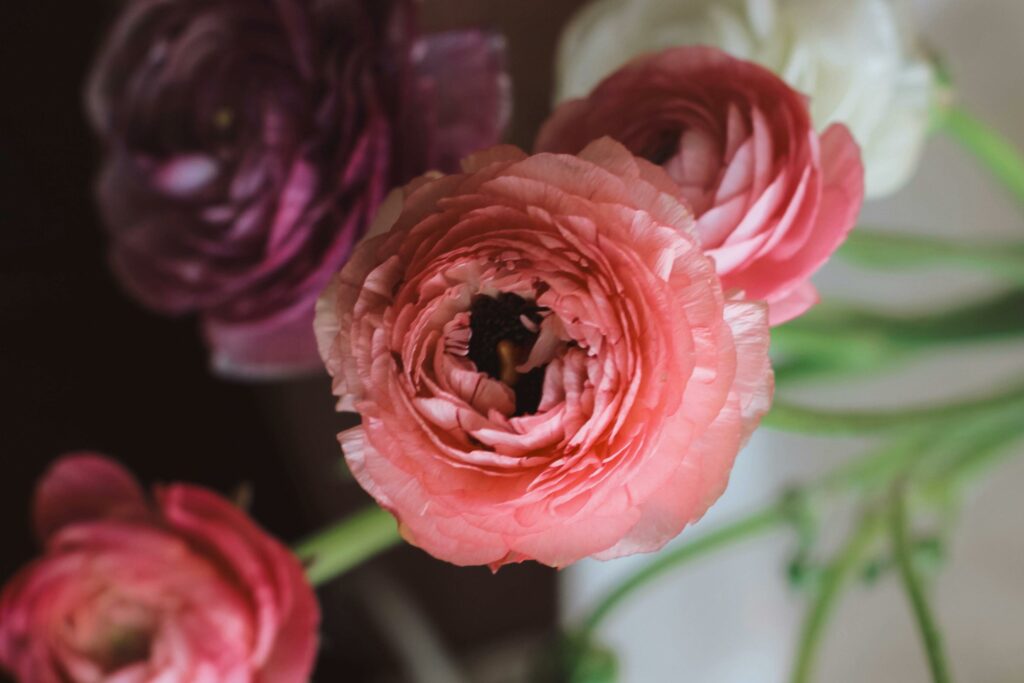
- Ranunculus
- Peonies (in season)
- Baby’s breath as a filler (fittingly named, and unscented)
- Daisies or gerberas for a cheerful, casual feel
Flowers to think twice about:
- Strongly scented lilies or tuberose (sensory overload in a small space)
- All-white or funeral-associated arrangements, depending on cultural context
- Anything with heavy pollen unless treated
- Flowers with thorns if the arrangement will be within reach of curious older siblings
4. Consider the Recipient, Not Just the Baby
A common misstep is treating the gift as being for the baby, when the person who will actually receive and appreciate it is the parent — usually the one recovering physically. Flowers addressed with a note to the parents (“Congratulations to you both” rather than “Welcome, little one”) tend to land better, because they acknowledge the very real physical and emotional experience the parent just went through, not just the baby’s arrival.
This matters especially for the birthing parent, who may be dealing with postpartum recovery, hormonal shifts, and exhaustion. A thoughtful note that says something like “Thinking of you as you rest and recover — congratulations” does more emotional work than a generic “welcome to the world” message aimed at an infant who won’t read it for years.
5. Practical Considerations That Show You’ve Thought It Through
- Low-maintenance arrangements win. New parents have no time or energy to trim stems, change water, or fuss over floral foam. A pre-arranged, ready-to-display bouquet or one in its own self-watering vase is far more considerate than loose stems needing immediate arranging.
- Skip the balloons with strong latex smell if bundling with flowers — same sensory-overload logic.
- Consider a live plant instead, if the family has a track record of keeping plants alive and appreciates lower-maintenance, longer-lasting gifts (note: this doesn’t apply in cultures where potted plants carry the “taking root” superstition — see below).
- Think about pets and older siblings. Some popular flowers (lilies especially) are highly toxic to cats. If you know the family has a cat, it’s worth choosing a lily-free arrangement or mentioning the toxicity risk in your note.
6. The Card: What to Write
Keep it warm, brief, and focused on the parents:
- “Congratulations on your new arrival — sending you love and rest.”
- “So happy for your growing family. Let us know if you need anything.”
- “Wishing you a smooth recovery and many peaceful naps ahead.”
Avoid unsolicited parenting advice or comments on the baby’s appearance, name, or resemblance to family members in a written note — save those for in-person conversation, if at all.
7. Sensitive Situations
If the birth involved complications, loss, or a difficult delivery: flowers can still be appropriate, but the note should acknowledge the parents’ experience with extra care rather than defaulting to purely celebratory language. When in doubt, a simple “Thinking of you” note paired with an offer of practical help (a meal, laundry, childcare for older kids) often means more than flowers alone.
If the pregnancy or birth involved loss (stillbirth, infant loss, or a NICU stay with an uncertain outcome): it’s best to step back from a “congratulations” framing entirely. A sympathy or support-oriented arrangement, sent with a message centered on care rather than celebration, is far more appropriate. If you’re unsure, a quiet, unmarked gesture — food, a note simply saying you’re thinking of them, or nothing at all until you know more — is safer than assuming celebration is welcome.
For adoptive parents or parents via surrogate: flowers are just as appropriate, but skip any language referencing pregnancy or labor (“hope you’re recovering!”) in favor of general celebratory language (“congratulations on becoming a family of three!”).
For twins, triplets, or subsequent children: resist jokes about “having your hands full” — most parents have heard every variation already. Simple, genuine congratulations go further than commentary on the number of kids.
8. Cultural Awareness
Etiquette shifts meaningfully by culture — white flowers are festive and auspicious in some traditions (parts of South Asia) and associated with mourning in others (much of East Asia); potted plants are a lovely, growing gift in some households and considered bad luck in Japanese custom, where they suggest a prolonged hospital stay. If you’re sending flowers to a family from a cultural background different from your own, it’s worth a quick check — with the family directly, a mutual friend, or a local florist familiar with the community — rather than assuming your own customs translate directly.
9. Alternatives Worth Considering Alongside (or Instead of) Flowers
Flowers are lovely but short-lived, and new parents often need practical support more than décor. Consider pairing flowers with:
- A prepared meal or meal-delivery gift card
- Diapers or wipes in the size they’ll need soon (newborn sizes are used up fast)
- A gift card for a cleaning service
- An offer of a specific, concrete form of help (“I’ll bring dinner Thursday” beats “let me know if you need anything”)
A small, thoughtful bouquet alongside one of these tends to leave a much bigger impression than an elaborate arrangement on its own.
The Bottom Line
Good newborn-flower etiquette comes down to a simple shift in thinking: the gesture is for tired, recovering people navigating a huge life change, not a decorative tribute to the baby. Time it with their recovery in mind, choose something low-maintenance and gentle on the senses, write to the parents rather than the infant, and pair it with real support where you can. Do that, and the flowers will land exactly as intended — as comfort, not clutter.