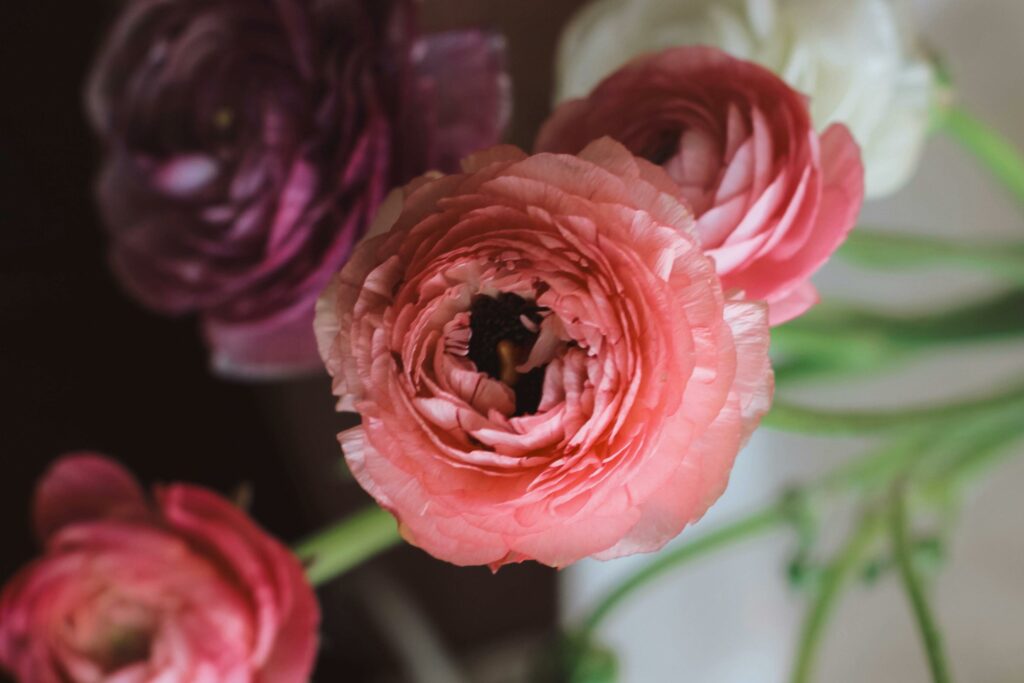

Wild roses (species roses) are the naturally occurring ancestors of today’s cultivated hybrids. Unlike modern roses, they typically have simple, five-petaled flowers, bloom once a year, and produce showy hips. Here’s a look at the most notable wild rose species from around the globe.
Rosa canina (Dog Rose)
Native to Europe, western Asia, and northwest Africa, this is perhaps the most widespread wild rose in the world. It has pale pink to white flowers and arching, thorny canes that can reach up to 3 meters. Its bright red hips are famously rich in vitamin C and have long been used for syrups, teas, and jams. The name “dog rose” likely comes from an old belief that its root could cure the bite of a rabid dog.
Rosa rugosa (Beach Rose or Rugosa Rose)
Originating in East Asia—particularly China, Japan, and Korea—this rose is prized for its wrinkled (“rugose”) leaves and remarkable hardiness. It thrives in poor, sandy soil and salty coastal air, which is why it’s naturalized along shorelines in North America and Europe. Its flowers range from deep magenta to white, and it produces large, tomato-like hips used in jams and vitamin supplements.
Rosa gallica (French Rose or Gallic Rose)
One of the oldest cultivated rose species, native to central and southern Europe and western Asia. It’s considered a parent of many old garden roses, including damasks and albas. The flowers are typically deep pink to crimson with a strong fragrance. The variety Rosa gallica officinalis, known as the “Apothecary’s Rose,” was historically grown for medicinal use and rose oil production.
Rosa moschata (Musk Rose)
Native to the western Himalayas and possibly parts of the Mediterranean, this climbing species produces clusters of white, musky-scented flowers that bloom later in the season than many other roses. It has been an important parent in the development of noisette and hybrid musk rose groups.
Rosa multiflora (Multiflora Rose)
Native to Japan, Korea, and China, this vigorous climber produces large clusters of small white flowers. It was introduced to the West as rootstock for grafting and for erosion control, but it has become an aggressive invasive species in parts of North America.
Rosa chinensis (China Rose)
Native to southwestern China, this species is historically significant because it introduced repeat-blooming genes into Western rose breeding when it arrived in Europe in the late 18th century. Before this, most European roses bloomed only once per season. China roses come in various colors and were pivotal in creating tea roses and modern hybrid teas.
Rosa foetida (Austrian Briar)
Native to western Asia, this species is notable for introducing pure yellow and orange-red coloring into rose breeding—colors that didn’t exist in European roses at the time. It has a somewhat unpleasant scent (hence “foetida,” meaning fetid), but its color genetics were so valuable that breeders tolerated this trait for generations.
Rosa arkansana (Prairie Rose)
Native to central North America, particularly the Great Plains, this low-growing, cold-hardy rose has pink flowers and thrives in prairie conditions. It’s notably resistant to extreme temperature swings, from harsh winters to hot summers.
Rosa virginiana (Virginia Rose)
Found along the eastern coast of North America, this species has bright pink flowers and glossy foliage that turns vivid red and orange in autumn—unusual among roses for having strong fall color. Its hips persist into winter, providing food for birds.
Rosa banksiae (Lady Banks’ Rose)
Native to central and western China, this is a vigorous, nearly thornless climber that can grow to enormous size—one specimen in Tombstone, Arizona is considered the largest rose bush in the world, covering thousands of square feet. It produces small clusters of white or pale yellow flowers with a light violet or banana-like fragrance.
Rosa spinosissima (Scotch Rose or Burnet Rose)
Native to Europe and parts of Asia, this low, suckering shrub is extremely cold and wind tolerant, often found on coastal dunes and moorland. It has small white or pale yellow flowers and very thorny stems, and its dark purple-black hips are distinctive among wild roses.
Rosa laevigata (Cherokee Rose)
Native to China but naturalized widely in the southeastern United States, this climbing rose has large white flowers with prominent yellow stamens. It’s the official state flower of Georgia, tied to Cherokee history and folklore in the American South.
Each of these species has played a role either ecologically—stabilizing soil, feeding wildlife—or in horticultural history, serving as genetic building blocks for the thousands of rose cultivars grown today. If you’re interested, I can go deeper into any one of these, such as their growing conditions, historical uses, or role in rose breeding.