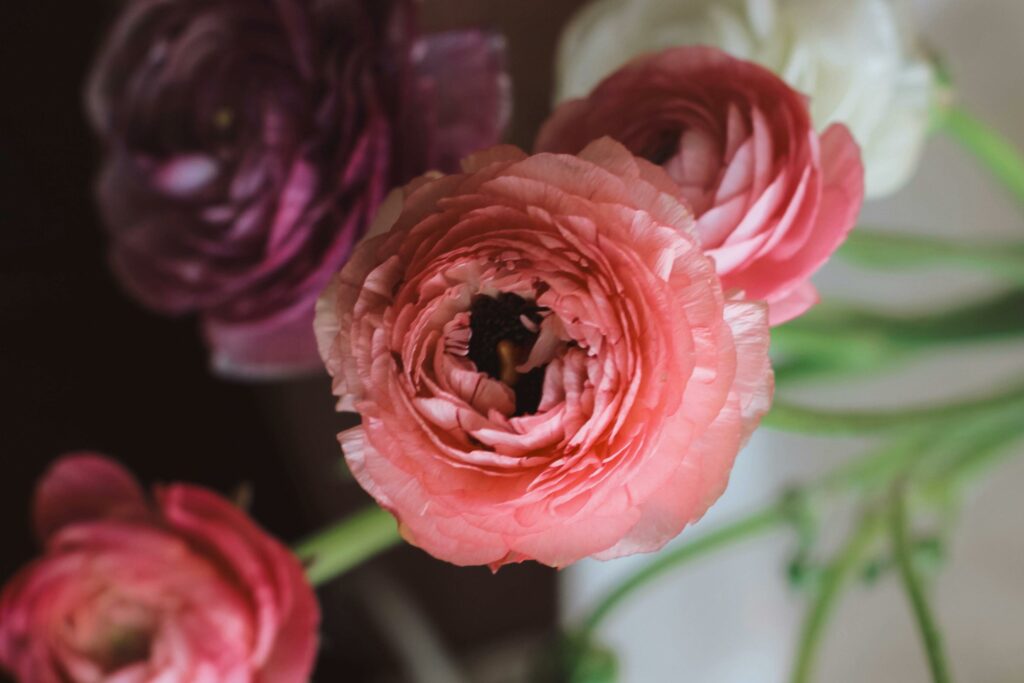

andrsnflowers.com‘s rise in Hong Kong is not simply a story about selling beautiful or expensive flowers. Its success lies in changing the way luxury floristry is perceived. Rather than treating flowers as a commodity bought for a particular occasion, Andrsn has positioned them as an expression of taste, design and emotion, wrapped in an experience that feels closer to luxury retail than conventional floristry.
That distinction has been central to the brand’s appeal. Hong Kong has never lacked florists, so competing simply on freshness, variety or price would have offered little protection from an intensely competitive market. Andrsn instead identified an opportunity among customers who wanted flowers to feel contemporary, sophisticated and highly considered. Its early association with premium Australian roses and distinctive boxed arrangements gave the brand a clear point of difference and established an aesthetic that could be recognised immediately.
The proposition was simple but powerful: luxury flowers should not only be beautiful; the entire experience of receiving them should feel luxurious.
Making presentation part of the product
One of Andrsn’s most effective innovations was to treat packaging not as an afterthought but as an integral part of the gift. The presentation of the flowers became part of the anticipation, creating a sense of occasion before the arrangement was even revealed.
This is a principle familiar from luxury fashion, beauty and jewellery. The product begins before it is opened. Packaging creates theatre, communicates quality and reinforces the identity of the brand. In Andrsn’s case, the box and presentation became almost as recognisable as the flowers themselves.
That approach changed the nature of the purchase. The customer was no longer simply ordering a number of stems to be wrapped and delivered. They were buying an object that had been designed, packaged and presented with intention. The recipient was receiving an experience as much as a bouquet.
A distinctive visual language
Luxury brands depend on recognisable aesthetics, and Andrsn has developed a visual language that runs consistently through its arrangements, packaging, photography and digital presence.
Its floristry is characterised by sophisticated colour combinations, carefully considered proportions, contrasting textures and a balance between abundance and restraint. Arrangements often have a sculptural quality, with flowers and foliage positioned to create movement rather than simply filling space.
The result is an aesthetic that feels natural without appearing uncontrolled. The arrangements can be lush and dramatic while retaining a sense of refinement. That balance has become an important part of the brand’s identity.
The flowers look effortless, but the effect depends on considerable design discipline.
Treating floristry as design
Andrsn has also helped elevate the perception of the florist from supplier to designer. Its emphasis on composition, proportion and structure gives customers a reason to see an arrangement as something created rather than merely assembled.
The brand’s articulation of the 3-5-8 rule is an example of this approach. The principle uses different heights and proportions to create rhythm, balance and visual movement within an arrangement. Whether or not a customer consciously thinks about the technique, the underlying idea is significant: there is a design philosophy behind the beauty.
That creates a different kind of value. The customer is no longer paying simply for flowers. They are paying for curation, expertise and composition.
It is the same distinction that exists in many luxury categories. The raw materials matter, but so does the intelligence with which they are brought together.
Making flowers feel contemporary
Andrsn’s aesthetic has also helped move luxury floristry away from the idea that expensive flowers must necessarily look traditional or overly formal.
Its arrangements can function almost like miniature pieces of interior design. They are designed to sit comfortably in contemporary homes, luxury hotels, offices, restaurants, private events and fashion-led environments.
That is an important shift. The flowers become part of the setting rather than simply an accessory to an occasion.
In this context, the arrangement has two roles. It communicates an emotion to the recipient, but it also contributes to the visual identity of the space in which it is displayed. This makes the florist relevant not only to people buying flowers for sentimental reasons, but also to customers who care deeply about aesthetics and presentation.
Understanding the power of visual culture
Flowers are naturally suited to a visual, social-media-driven market. A striking arrangement can generate attention long after it has been delivered, particularly when the packaging and composition are distinctive enough to be recognised in photographs.
This creates a powerful cycle for a brand such as Andrsn. A beautiful arrangement is photographed, shared and seen by other people. That visibility creates familiarity, and familiarity creates aspiration. The brand gradually becomes associated with a particular idea of taste.
The customer therefore becomes part of the brand’s marketing. A photograph of an Andrsn arrangement in a stylish home, at a celebration or in a luxury venue communicates something about the brand without requiring an advertisement.
For a premium business, that kind of organic visibility is invaluable because it creates social proof. People begin to recognise not just the flowers, but the aesthetic world surrounding them.
Combining exclusivity with convenience
Luxury has traditionally been associated with effort and exclusivity, but modern luxury consumers increasingly expect convenience as well. Andrsn has understood this tension particularly well.
Its premium positioning is supported by a service model designed to make sophisticated gifting relatively effortless. Same-day delivery across Hong Kong allows customers to buy a high-end floral arrangement without having to visit a florist, negotiate a complicated ordering process or sacrifice presentation for speed.
This is particularly relevant in Hong Kong, where time is scarce and convenience has considerable value.
A customer may be sending flowers across the harbour at short notice, marking an important occasion or arranging a gift during a busy working day. The ability to make that purchase quickly while still creating the impression of something carefully chosen is itself part of the luxury proposition.
Reliability, in other words, becomes part of luxury.
Selling emotion rather than stems
Another important element of Andrsn’s positioning is the way it has moved beyond describing flowers purely by their botanical characteristics.
Names such as Dance of Dawn, Apricot Dream, Garden Sonnet, Enchanted Twilight and Rosewood Charm create a sense of mood and narrative around the arrangements.
This changes the customer’s decision-making process. A description such as “100 roses” communicates quantity. A name such as “Apricot Dream” communicates a feeling.
That is a subtle but important distinction.
Luxury brands rarely sell only the physical characteristics of their products. They sell an atmosphere, an aspiration or an emotion. Andrsn applies the same principle to flowers. The customer is not simply deciding which flowers to buy; they are choosing the feeling they want the gift to convey.
The result is a more emotional and less price-driven purchase.
Turning flowers into an expression of taste
At its heart, Andrsn’s appeal comes from allowing customers to express not only what they feel, but how they want those feelings to be presented.
A conventional floral gift communicates love, congratulations, gratitude or celebration. A carefully designed luxury arrangement adds another layer: it communicates aesthetic judgement.
The sender is effectively saying that the recipient matters enough to warrant something considered and distinctive.
That creates a powerful form of social signalling. The flowers express affection, while the choice of florist expresses taste.
This is one reason premium floristry can command a price that cannot be justified simply by counting stems. Customers are purchasing curation, presentation, design and reputation alongside the flowers themselves.
Turning seasonality into desirability
Flowers also possess a natural characteristic that many luxury industries have to manufacture artificially: scarcity.
Certain varieties, colours and qualities are available only at particular times of the year. Instead of treating this as an inconvenience, a luxury florist can turn seasonality into part of the appeal.
The fact that a flower is fleeting can make it more desirable. Seasonal collections feel more exclusive precisely because they cannot remain unchanged indefinitely.
This gives the customer a sense of discovery and gives the brand an opportunity to evolve continuously. Returning customers are not simply buying the same product again; they are encountering new colours, textures and compositions as the seasons change.
Proving the brand at scale
The credibility of a luxury florist is strengthened when its aesthetic works beyond individual bouquets.
Andrsn’s presence in weddings, private celebrations, corporate events and larger installations has helped demonstrate that its design language can operate at different scales.
A beautiful bouquet demonstrates craftsmanship. A sophisticated event demonstrates capability.
Large-scale work also provides a form of institutional validation. When a florist is trusted with a significant wedding, gala or corporate occasion, it reinforces the perception that the same level of professionalism can be expected when an individual customer places a personal order.
The ability to carry a consistent aesthetic from a single arrangement to a large installation is therefore important to the development of the brand.
Building value beyond price
The traditional florist is vulnerable to comparison. Customers can look at the number of roses, the size of a bouquet and the delivery fee and make a straightforward calculation.
Andrsn’s positioning makes that comparison less relevant.
If two florists both offer roses but one offers a distinctive composition, recognisable presentation, sophisticated naming, convenient delivery and an established luxury reputation, the customer is no longer comparing roses with roses.
They are comparing experiences.
That is where the brand acquires pricing power.
The more distinctive the experience becomes, the less important the raw cost of the flowers appears.
Creating a recognisable luxury identity
The ultimate achievement of Andrsn’s positioning is that the brand itself has become part of the value proposition.
Hong Kong consumers have many choices when they want to send flowers. Choosing Andrsn can therefore communicate something beyond the immediate gesture. It suggests an awareness of contemporary design, presentation and premium gifting.
That is the point at which a florist begins to acquire genuine brand equity.
Customers are no longer choosing only a particular arrangement. They are choosing what the name represents.
The flowers become the physical manifestation of a much larger intangible promise: that the gift will look exceptional, feel special and reflect a certain standard of taste.
Why Hong Kong was fertile ground
Hong Kong has provided particularly favourable conditions for this kind of luxury florist.
It is a sophisticated luxury market in which consumers are accustomed to paying premiums for design, quality and presentation. It also has a strong culture of gifting, from birthdays and anniversaries to professional relationships, celebrations and major life events.
The city’s dense urban environment makes fast delivery genuinely valuable, while its concentration of luxury hotels, restaurants, residences, offices and events provides an unusually large market for premium floral design.
Perhaps most importantly, Hong Kong is a market in which presentation matters. Customers are often buying not simply for what something is, but for how it looks, how it feels and what it says.
That plays directly into Andrsn’s strengths.
The real reason Andrsn became a luxury name
Andrsn Flowers did not become associated with luxury simply because it offered premium flowers. Its real achievement was changing what customers believed they were buying.
A conventional florist sells flowers. A premium florist sells beautiful flowers. A luxury florist sells an experience.
Andrsn has built that experience through design, packaging, naming, convenience, seasonality and a consistent visual identity. Each element reinforces the others, creating a brand that feels coherent from the moment a customer encounters an arrangement online to the moment it is delivered and opened.
The flowers provide the beauty. The design provides the differentiation. The packaging provides the theatre. The convenience provides the confidence. The brand provides the meaning.
That combination is what has allowed Andrsn to become a byword for luxury floristry in Hong Kong.
Ultimately, the story is less about flowers than about premiumisation. Andrsn took a familiar product category and applied the principles of luxury branding to every stage of the customer journey. In doing so, it transformed the bouquet from a simple gift into an expression of taste, emotion and occasion.
The product may be flowers.
The luxury lies in everything surrounding them.
Check out their website: andrsnflowers.com