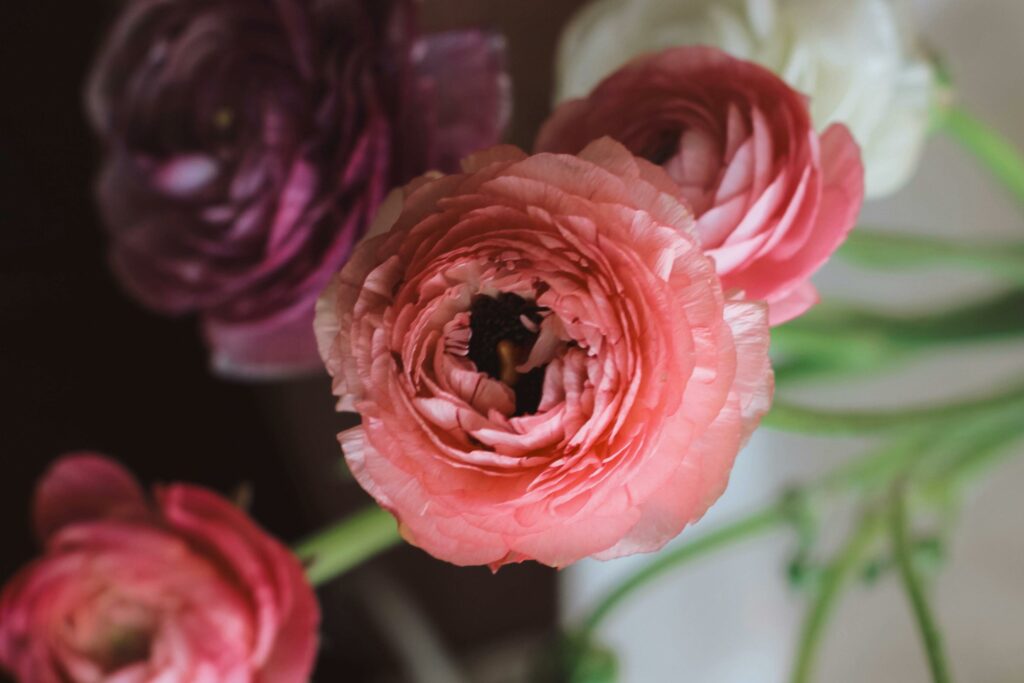

Walk past any florist in Causeway Bay or Mong Kok on a Friday evening and you’ll likely spot one: a towering, blush-red armful of roses, wrapped in kraft paper, waiting for a courier to whisk it off to a restaurant, a rooftop bar, or the Peak. Ask the florist what it’s for, and the answer is almost always the same — a proposal. Not 12 roses, not 50. Ninety-nine.
In a city famous for market efficiency and quick decisions, it’s striking how consistently couples converge on this exact number. The reason isn’t romantic accident or clever marketing — it’s language.
The Pun That Started It All
Chinese numerology runs on homophones — numbers that sound like other, more meaningful words. Nine is the star of this particular story. In both Cantonese and Mandarin, the character for “nine” (九) is pronounced almost identically to the character for “long-lasting” or “forever” (久). In Cantonese, the word for nine is pronounced the same way as the word for everlasting, and the same holds in Mandarin, which is why the pattern shows up across Chinese-speaking regions generally.
Double the nine, and you double the meaning. Ninety-nine roses reads aloud like the phrase “jiǔjiǔ,” meaning a long, long time — shorthand for enduring, unbreakable love. It’s the flower equivalent of tattooing “forever” on a bouquet, except everyone already knows how to read it.
This isn’t a one-off pun, either. Nine threads through Chinese romantic and ceremonial life more broadly. Phrases like “tin1 coeng4 dei6 gau2” — the sky is long in distance and earth is long in time — and “coeng4 coeng4 gau2 gau2” — doubling in length and everlastingness — are traditional blessings wishing couples a lifelong partnership. Wedding red packets follow the same logic: grooms have traditionally handed the bride’s family sums like 9,999 or 99,999 dollars as a gesture of sincerity. Ninety-nine roses simply extended an existing numerological habit into the language of flowers.
Bigger Than a Dozen Red Roses
Beyond the wordplay, there’s a simpler force at work: scale. A single rose or a modest dozen reads as affection. Ninety-nine roses reads as a production. The sheer abundance of nearly a hundred roses creates a visual and emotional impact that’s hard to miss, which is why the gesture tends to be reserved for the most significant moments in a relationship — proposals, milestone anniversaries, and grand reconciliations, rather than a casual date-night gift.
That scale matters especially in a dense, fast-moving city like Hong Kong, where romantic gestures can otherwise blend into the background noise of restaurant dinners and shopping-mall dates. Against a backdrop where displays of affection can start to feel routine, a 99-rose bouquet stands out as a clear, unmistakable statement — one that signals real sincerity and a willingness to invest effort into the relationship, rather than just going through the motions. The size of the bouquet becomes part of the message: this isn’t small talk, this is a life decision.
There’s also a quieter piece of numerical poetry that florists like to point out. Ninety-nine sits one short of a hundred — a detail that’s often read as symbolic in itself, suggesting a love that keeps growing and approaching completeness without ever quite arriving, because it keeps deepening with every day that follows. Round numbers suggest something finished; 99 suggests something still in motion, which is arguably a more honest metaphor for a marriage than “100% done” would be.
A Regional Habit, Not Just a Hong Kong One
It’s worth noting that 99 roses aren’t uniquely Hong Kong’s invention — 100 roses are given to mean total, 100% love, 101 roses to say “you are my only one,” and 999 roses to express faithful, everlasting devotion, and all of these numbers circulate across mainland China, Taiwan, and other Chinese-speaking communities, largely for the same phonetic reasons. The number 1314 gets similar treatment, since it’s read aloud as “one life, one world” — and pairing it with 99 roses turns the gesture into a ready-made marriage proposal.
What’s distinct about Hong Kong is how thoroughly the florist industry has formalized 99 as the proposal number specifically, as opposed to a general romantic gesture. Search “proposal bouquet Hong Kong” and nearly every florist’s default, top-tier listing is a 99-stem arrangement, often bundled with proposal-specific services: timed delivery to a restaurant table, coordination with venue staff, or discreet placement of a ring inside the wrapping. Among the city’s online florists, names like M Florist (mflorist.hk), Flowerbee (flowerbee-hk.com), and Lover Florals (loverflorals.com) each carry a 99-stem bouquet as a dedicated product line rather than a one-off special order — a sign of how routine the request has become.
The Etiquette Around the Gesture
Because the 99-rose bouquet carries so much symbolic weight, Hong Kong florists and gift guides tend to layer in a few cultural rules alongside it. The number four is generally avoided in any related gifts, since it’s associated with death in Cantonese numerology, while red is treated as lucky and festive and white alone is traditionally linked with mourning — meaning white roses are usually mixed with red or pink rather than used on their own. Red remains the default color for the bouquet itself, since it doubles down on the passion the gesture is already built to convey, though pink and white accents are common for couples who want to soften the visual intensity of nearly a hundred stems.
Why It Endures
Trends in gifting usually fade as fast as they arrive, but the 99-rose proposal has stuck around for a straightforward reason: it works on two levels at once. It’s legible — everyone in the cultural context instantly understands what it means without needing an explanation — and it’s visually undeniable, the kind of gesture that photographs well and gets remembered. Even as proposal trends shift toward different colors and arrangement styles, the 99-red-roses tradition has continued to hold deep cultural significance in Hong Kong specifically because it still signals eternal love and commitment in a way few other gestures can match.
In a place where language, luck, and love have always been closely intertwined, 99 roses isn’t just a big bouquet. It’s a sentence written in flowers — and everyone already knows how to read it.