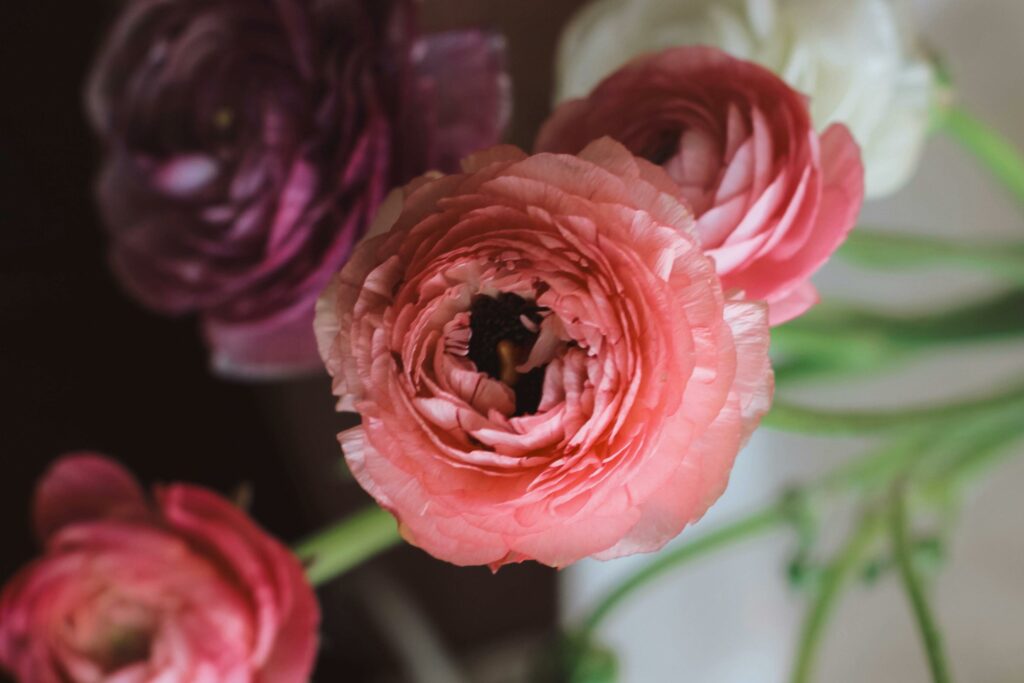

Flowers are among the most potent symbols in world poetry, appearing in works across centuries and continents. They capture beauty, evoke emotion, and carry layers of cultural and philosophical meaning. This guide explores the significance of flowers in poetry, organized by type and region, providing literary examples, historical context, and interpretive insight.
1. Roses: The Universal Emblem of Love
Roses are perhaps the most widely recognized poetic flower, appearing in Western, Middle Eastern, and South Asian literature. In English poetry, roses often signify romantic love, beauty, and sometimes sorrow. William Blake’s works use the rose as a symbol of both innocence and passion, while Robert Burns frequently celebrates its sensual and emotional allure. Victorian poets, including Alfred Lord Tennyson and Christina Rossetti, associated roses with purity, desire, and moral reflection.
In Persian and Urdu poetry, the rose assumes additional layers of spiritual meaning. The ghazals of Rumi and Hafez frequently pair the rose with the nightingale, symbolizing the soul’s longing for divine love. This recurring image allows the rose to signify both human passion and mystical aspiration, demonstrating its versatility across cultures.
2. Daffodils and Tulips: Nature’s Renewal
In English Romantic poetry, daffodils epitomize the restorative power of nature. William Wordsworth’s “I Wandered Lonely as a Cloud” immortalizes a field of daffodils dancing in the breeze, transforming the speaker’s solitude into joy. The daffodil’s bright yellow color and association with spring render it a symbol of hope, renewal, and the continuity of life. Tulips, while less common in English poetry, are prominent in Dutch art and literature, often evoking prosperity, beauty, and cultivated elegance.
These spring flowers convey not only emotional uplift but also a philosophical reflection on temporality: their seasonal blooming reminds readers that life, like flowers, cycles through phases of growth, decay, and rebirth.
3. Lilies: Purity, Spirituality, and Transcendence
Lilies appear frequently in Western poetry as symbols of innocence, purity, and spiritual aspiration. Victorian poets such as Alfred Lord Tennyson and Christina Rossetti employ lilies to signify moral ideals or divine grace. In Christian contexts, the white lily often represents the Virgin Mary and transcendent purity, linking floral imagery to spiritual devotion. In modern poetry, lilies may also evoke introspection, mortality, and the quiet dignity of life’s fleeting moments.
4. Poppies: Memory, Sleep, and Loss
The poppy has been indelibly associated with remembrance and the fragility of life. John McCrae’s “In Flanders Fields” immortalized the red poppy as a symbol of wartime sacrifice. Poppies also represent sleep, dreams, and oblivion in classical mythology, linking the flower to both comfort and melancholy. Poets often use poppies to juxtapose beauty and transience, reflecting on mortality and the impermanence of human endeavors.
5. Cherry Blossoms (Sakura): Impermanence and Mono no Aware
In Japanese poetry, the cherry blossom epitomizes mono no aware, the awareness of life’s transience. Blossoms bloom brilliantly and fall swiftly, creating a natural metaphor for human mortality, joy, and sorrow. Haiku poets, including Matsuo Bashō, capture this delicate ephemerality with economy and precision. Beyond their aesthetic appeal, sakura carry cultural weight: they are celebrated in festivals and rituals, embedding human experience in the seasonal cycle.
The cherry blossom’s significance extends beyond Japan; it has inspired global poetry and art, demonstrating how a single flower can embody universal themes of beauty, impermanence, and renewal.
6. Plum Blossoms: Resilience and Hope
The plum blossom, central to Chinese poetry, blooms in late winter or early spring, often before snow has melted. This ability to flourish amid adversity makes it a symbol of resilience, courage, and renewal. Tang and Song dynasty poets, including Li Bai and Wang Wei, celebrate the plum blossom as a metaphor for enduring hardships and moral steadfastness. In literary imagery, its delicate form and fragrance contrast with the harshness of its environment, reinforcing themes of hope and quiet strength.
7. Peonies: Wealth, Beauty, and Elegance
In classical Chinese literature, the peony is known as the “king of flowers.” It symbolizes wealth, honor, and feminine beauty, appearing frequently in Tang dynasty poetry. Poets admired the peony’s lush petals and vibrant colors, associating it with social prestige and aesthetic perfection. In modern poetry, peonies may also evoke nostalgia for a bygone era of elegance, linking natural beauty to historical memory and cultural identity.
8. Lotus: Purity and Spiritual Awakening
In Indian poetry and across Asian spiritual literature, the lotus represents purity, spiritual transcendence, and enlightenment. Growing from mud yet blooming unstained, it is an enduring metaphor for overcoming suffering and achieving divine beauty. The lotus appears in classical Sanskrit poetry, devotional verses, and ghazals, embodying both physical elegance and metaphysical insight. Its dual presence in both secular and religious poetry highlights its symbolic versatility and enduring appeal.
9. Jasmine: Sensuality and Nighttime Beauty
Jasmine, with its delicate petals and intoxicating fragrance, appears frequently in Indian, Persian, and Urdu poetry. It symbolizes sensuality, romantic longing, and the quiet mystery of night. In Urdu ghazals, jasmine often accompanies imagery of moonlit gardens, lovers’ secrecy, and the ephemeral nature of beauty. Its nocturnal blooming adds a temporal dimension to symbolism, linking human experience to the cycles of night and day.
10. Chrysanthemums: Autumn, Reflection, and Nobility
Chrysanthemums hold special significance in Japanese and Chinese poetry. In Japanese literature, they are associated with autumn, reflection, and impermanence, often appearing in haiku and tanka to evoke contemplative moods. In Chinese culture, chrysanthemums symbolize nobility and longevity, celebrated in festivals and poems for their elegant simplicity and enduring charm.
11. Literary Techniques and Symbolic Layers
Across traditions, poets employ flowers with sophisticated literary strategies. Imagery appeals to sight, scent, and touch, allowing readers to experience flowers sensorially. Personification gives flowers human qualities, creating intimacy and narrative depth. Allegory enables a single flower to carry multiple meanings simultaneously, linking love, mortality, spirituality, or moral ideals. Seasonal motifs anchor flowers in time, reinforcing temporal awareness and cultural context. Through these techniques, flowers transcend their botanical form to become living symbols of human thought and feeling.
12. Practical Guidance for Readers and Writers
Understanding floral symbolism in poetry involves attentiveness to context, culture, and literary technique. Observing the natural life cycle of a flower enhances appreciation of metaphorical and emotional resonance. Studying multiple cultural traditions reveals contrasts and shared themes, enriching interpretive possibilities. Writers can harness flowers to evoke mood, season, or philosophical reflection, letting their symbolism emerge organically rather than forcing meaning explicitly. Flowers can thus serve as bridges between tangible experience and abstract contemplation.
Flowers as Bridges Across Culture and Time
From the cherry blossoms of Japan to the roses of England, the lotus of India, and the plum blossoms of China, flowers are universal yet culturally nuanced symbols. They capture beauty, impermanence, and transcendence, embodying emotional, spiritual, and philosophical layers. Across world poetry, flowers serve as mirrors of human experience, reminding readers of the fragility of life, the cycles of nature, and the enduring pursuit of meaning. By studying floral imagery, we not only deepen our literary understanding but also connect with a shared human impulse: to observe, reflect, and find resonance in the fleeting yet radiant beauty of the world around us.