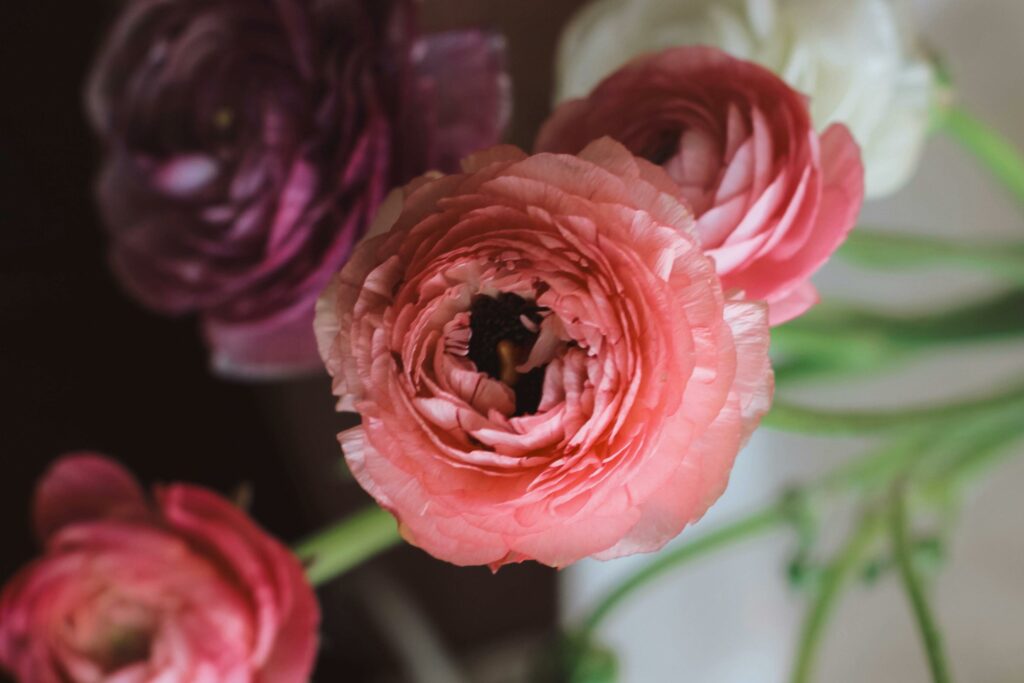

From Japan’s sacred sakura to Kashmir’s million-tulip garden and China’s ancient city of peonies, the continent erupts in colour every spring in ways that make it the most extraordinary floral theatre on earth
There is a word in Japanese — mono no aware — that has no precise English equivalent but translates, approximately, as “the pathos of things.” It describes the particular bittersweet feeling provoked by beauty that is fleeting: the awareness that the loveliest things are lovely precisely because they will not last. The Japanese coined this concept partly because of cherry blossoms. Sakura — flowering for perhaps one week before the petals fall — gave the culture a philosophy. They have been doing it for centuries, and the rest of the world is still catching up.
But Japan is not alone. Across Asia, spring arrives not merely as a change in temperature but as a transformation in the visual grammar of entire landscapes. In a valley above Srinagar, over a million tulips open their petals against a panorama of snow-capped Himalayan peaks. In an ancient Chinese city once home to emperors, one thousand varieties of the flower the Tang Dynasty called the King of Blooms explode across imperial gardens. In the mountains above Taipei, cherry and azalea blossoms colour the volcanic hillsides of a national park that smells faintly of sulphur and sweetness. In a small Korean harbour town, the streets themselves become tunnels of blush pink, and the whole country seems to pause.
Spring in Asia is not a season. It is an event. And it runs, in various registers and latitudes, from late January all the way to May.
Japan: The Art of Impermanence
Every year at the start of January, before the new year has properly settled in, the Japanese Meteorological Corporation releases its sakura forecast. It is awaited the way other countries await election results — with a mixture of calculation, anxiety, and barely concealed excitement. The forecast tracks the progress of the sakura zensen, the cherry blossom front, as it advances northward from the subtropical islands of Kyushu toward the northern wilderness of Hokkaido, following the warming of the land like a slowly rising tide of pink.
In central Japan — Tokyo, Kyoto, Osaka, Nara — the peak typically falls in the final days of March or the first week of April, though climate shifts have repeatedly confounded the forecasters, producing early blooms or stubborn cold snaps in equal measure. The uncertainty is itself part of the ritual. Japan mobilises around these flowers with a devotion that has no real parallel in global botanical culture. Stores stock their shelves with sakura-flavoured everything — ice cream, beer, mochi, lattes, bento boxes. Corporations adjust leave schedules. Municipal authorities install spotlights under the most celebrated trees to extend the viewing hours into the evening, creating the yozakura experience — night sakura — that is among the most otherworldly sights the country has to offer.
The great sakura cities each offer something distinct. Tokyo is spectacular in its sheer scale: Ueno Park turns into a heaving, joyful collective picnic for hanami — flower viewing — with families and office colleagues spreading tarps under the trees and passing around sake and seasonal snacks in a tradition that connects the most contemporary city in Asia to customs that predate the modern nation by centuries. The Meguro River, where cherry trees line both banks for kilometres above the water, becomes so crowded during peak bloom that the crowds themselves become part of the experience — a living demonstration of just how seriously this country takes its spring.
Kyoto is quieter and older. The Philosopher’s Path, a canal-side walkway in the east of the city, named after the 20th-century philosopher Nishida Kitaro who walked it daily in contemplation, runs for nearly two kilometres beneath a canopy of cherry trees so dense they become a tunnel of blossoms in April. At Maruyama Park, a celebrated single shidare-zakura — a weeping cherry of enormous age and dignity — stands illuminated at night as the centrepiece of the city’s most beloved flower-viewing space. Temples that have stood since the Heian period offer a backdrop that makes the encounter with the blossoms something closer to spiritual experience than tourism.
For those willing to travel further, Japan’s extended latitudinal range means the sakura season stretches from Okinawa in late January to Hokkaido in early May — making it possible, if one plans the itinerary carefully, to follow the blossom front for several weeks. Mount Yoshino in Nara Prefecture, a sacred mountain blanketed by some 30,000 cherry trees planted over 1,300 years ago by mountain ascetics who considered the flowers sacred to the god En no Gyoja, is among the most astonishing single floral spectacles on the planet. Nowhere else in Japan, or the world, will you see a whole mountain covered in cherry blossoms. Hirosaki Castle in the northern Tohoku region, where 2,500 cherry trees surround a functioning castle moat and visitors hire rowing boats to drift among fallen petals, provides another unforgettable variation on the theme.
But the most powerful element of the Japanese sakura experience remains the cultural one. The flowers are not incidental to a trip to Japan in spring. They are the reason. And the hanami tradition — gathering beneath the trees, sharing food and drink, acknowledging collectively the beauty and transience of the moment — is a practice that manages to be both deeply intimate and entirely communal simultaneously. Other countries celebrate flowers. Japan has built a philosophy around them.
South Korea: The Lively Counterpart
Where Japan’s cherry blossom culture is reverential and contemplative, South Korea’s is exuberant and social. The sakura front arrives in Korea in early April, slightly later than in central Japan, and the country responds with a festive energy that turns parks, riverbanks, and entire city districts into outdoor celebrations for weeks at a stretch.
Seoul is the obvious starting point. Thousands of people swarm the scenic streets of Yeouiseo-ro Road for the Yeouido Spring Flower Festival every April — one of the city’s most beloved annual events, combining cherry blossoms with azaleas, forsythia, and royal azaleas in a multi-species floral display that takes the season beyond the single-note pink of the cherry alone. Night-time light shows illuminate the flowers as a backdrop to street performances and art exhibitions, extending the festivities well past dusk and into the warm spring evenings.
But Korea’s most celebrated cherry blossom destination sits not in Seoul but in a small harbour town on the southern coast. Jinhae — known as the cherry blossom capital of Korea — hosts the annual Gunhangje Festival, and during the ten days of its peak bloom, the population of this modest naval city effectively triples. The reason is immediately apparent: the streets are not merely lined with cherry trees but are so densely planted with them that walking through the town at full bloom is like walking through a tunnel of pink cloud. The Yeojwacheon Stream, where trees line both banks so thickly that their canopies meet above the water, is one of the defining photographic images of Asian spring. The old railway station at Gyeonghwa, long since retired from active service, is surrounded by blossoms so thick they obscure the tracks entirely. It has become one of Korea’s most iconic spring backdrops.
For those who want early season action, Jeju Island is a fantastic destination, as its cherry blossoms bloom as early as late March, offering a delightful start to the season. The island’s native king cherry blossom — a fluffier, deeper pink variety than the mainland’s Somei-Yoshino — lines the roads of Noksan-ro alongside yellow canola fields in a combination of pink and gold that has made this particular stretch of island road one of the most photographed landscapes in East Asia. Hiking trails up the slopes of Hallasan — the volcanic peak that forms the island’s spine — pass through blossom and emerging spring foliage simultaneously, offering a vertical cross-section of the season in a single walk.
China: The King of Flowers and the City of Peonies
The Tang Dynasty poets called the peony the mudan — the “flower of wealth and honour” — and they were not understating their case. In the imperial gardens of Chang’an and Luoyang, the cultivation of peonies reached a pitch of refinement that would not be equalled for centuries. Luoyang, a historically significant city in Henan Province, is widely considered the birthplace of peonies and a center of peony culture, which originated in the city over 1,600 years ago. The Tang poet Liu Yuxi wrote: Only the peony truly displays the colours of the nation / When it blooms, it captivates the entire capital. Stand in Luoyang’s China National Flower Garden in mid-April, surrounded by 500,000 peonies in more than 1,000 varieties, and the line still rings entirely true.
The Luoyang Peony Cultural Festival runs from early April to early May, with peak bloom falling between the 15th and 25th of the month — a window that brings millions of visitors to this ancient city in the heart of Henan Province. During the festival, Luoyang comes alive not only with flowers but also with dazzling performances across the city, from traditional costume parades and immersive historical dramas to evening water shows at the China National Flower Garden, where holographic projections of ancient legends play across the surface of Yanxiu Lake as a backdrop to the illuminated blooms.
The festival’s most vivid peculiarity is one that visitors invariably photograph: the blooms lining streets across the city — even traffic lights are shaped like peonies. The city has committed so completely to its floral identity that the flowers have migrated from the gardens into the infrastructure. Luoyang is not a city that happens to host a flower festival. It is a flower city that happens to host everything else.
The peony gardens are numerous enough to sustain several days of exploration, each with a distinct character. Wangcheng Park — built on the ruins of the Eastern Zhou Dynasty imperial city — contains over 100,000 peonies in 840 varieties across a viewing area that has been the festival’s principal venue since the first edition in 1983. The Sui and Tang Dynasties Town Botanical Garden, set among ruins of the imperial palace complex, adds layers of historical resonance: you are looking at flowers that grew, in earlier iterations, in gardens walked by emperors whose dynasty lasted nearly 300 years and produced some of the most sophisticated art in human history.
Luoyang is also one of the few floral destinations in Asia that rewards the traveller who wishes to combine flowers with history. The Longmen Grottoes, the White Horse Temple, and the Luoyang Museum are all within easy reach of the peony gardens, making the city one of the few in China where a stay of four or five days feels both botanically and culturally satisfying rather than repetitive.
China offers other spring floral spectacles that extend the season and the geography. Wuhan’s East Lake Cherry Blossom Garden — home to more than 10,000 cherry trees across 60 species — has emerged as one of the country’s premier sakura destinations, attracting millions of visitors in March and generating extraordinary tourism revenue in what was once a city known primarily for its industrial heritage. The canola fields of Yangtze river valleys turn entire hillsides yellow in early March. And the Gucun Park in Shanghai combines cherry blossoms with the city’s extraordinary skyline, placing nature and modernity in a conversation that is thoroughly, unmistakably Chinese.
Taiwan: Early Blooms on a Volcanic Mountain
Taiwan offers cherry blossoms that arrive before Japan’s — sometimes as early as late January or February — in a setting that is entirely its own. Yangmingshan National Park, near Taipei, is renowned for its cherry blossoms that bloom in February, creating a stunning sight. The park sits atop a volcanic massif north of the capital, its trails threading through hydrothermal vents, hot springs, and grasslands that in spring are also home to blooming azaleas, calla lilies, and cherry trees in extraordinary profusion.
Yangmingshan’s Flower Clock, its famous fields of wildflowers spreading across the caldera, and the cherry groves along its mountain roads attract enormous crowds in February and March. But the park is large enough to absorb them. Walking its higher trails in the morning — before the tour groups arrive by bus — in light rain that the volcanic heat turns to wisps of mist against the flower-covered slopes is among the more quietly remarkable experiences that spring Asia has to offer.
The park’s Flower Festival runs from early February through mid-March, with evening illuminated trail walks among its highlights. Taipei itself retains cherry blossom character throughout these months: the roadsides, parks, and university campuses around the city are generously planted with flowering trees, making a walk through Daan District or along the Tamsui River in February an unexpectedly floral experience for what is primarily an urban destination.
India: The Valley That Learned to Dream in Colour
The story of Asia’s most surprising spring flower destination begins with 1.75 million tulip bulbs shipped from the Keukenhof gardens of Amsterdam to the Himalayan valley of Kashmir. The year was 2007. The destination was a terraced hillside above Dal Lake, at the foot of the Zabarwan mountain range, in the summer capital of one of the most disputed and turbulent regions of South Asia.
The idea — to create Asia’s largest tulip garden in Srinagar, as a bid to revive tourism in a valley that had suffered decades of conflict — had the quality of an audacious wager. But the wager paid off. The Indira Gandhi Memorial Tulip Garden is now the largest tulip garden in Asia, spread over about 30 hectares and home to around 75 varieties of tulips. During the annual Tulip Festival, which runs from late March through mid-April, the garden becomes one of the most visually overwhelming floral spectacles in the world: a terraced sea of red, gold, purple, pink, and cream, arranged in seven descending levels, with the Dal Lake spreading silver below and the snow-capped peaks of the Pir Panjal range rising behind.
Apart from tulips, the garden is also home to many other beautiful flowers like daffodils, hyacinths and ranunculus, which were also brought from Holland. The almond and apricot trees that line the roads of the Kashmir Valley are also in bloom during this window, adding layers of white and palest pink to a landscape that has been imagined as a paradise — Firdaus — since the Mughal emperors made it their summer retreat four centuries ago.
The Mughal heritage is everywhere in Srinagar in spring. The Shalimar Bagh, Nishat Bagh, and Chashme Shahi — the great terraced gardens commissioned by Mughal emperors and still extant on the eastern shore of Dal Lake — are in full bloom alongside the tulips, their ancient chinar trees leafing out and their fountains running. A shikara ride on Dal Lake at dawn, with the mountains reflected in still water and the sound of Kashmiri folk music drifting from a houseboat kitchen, provides a context for the tulip garden that no other floral destination in Asia can quite replicate: the flowers here are embedded in a landscape of such operatic scale and historical weight that simply standing among them, looking outward, becomes an experience that is as much about the valley as the blooms.
The festival’s brief window — the tulips bloom for only 15 to 20 days before they fade — lends the Srinagar experience the same quality of urgency and preciousness that the Japanese feel about sakura. You must go now, or wait another year.
The Logic of the Flower Front
What unites these extraordinarily diverse destinations — a Japanese canal in Tokyo, a Korean harbour town, a Chinese city where even the traffic lights take the shape of peonies, a volcanic Taiwanese mountainside, a Himalayan valley above a lake — is the logic of the flower front itself. Spring in Asia does not arrive all at once. It moves, slowly, northward and upward, advancing with the warmth in a progression that rewards the traveller who is willing to follow it.
Taiwan’s Yangmingshan opens the account in late January. Japan’s Okinawa follows in February. Kyoto and Tokyo peak in late March and early April. Seoul and Jinhae are at their most spectacular in early to mid-April. Kashmir’s tulips open at the same time, running through to late April. Luoyang’s peonies overlap with the final days of Korea’s cherry blossoms and extend into early May. And on Hokkaido, Japan’s northernmost island, late-blooming sakura can be found well into May — providing a final, quiet act to a continental performance that has been running for four months.
To travel all of it would require a month, several aircraft, and the kind of floral dedication that would have seemed entirely rational to a Victorian orchid hunter and seems, today, merely like a life well organised.
To travel even one of it — to stand under a canopy of Japanese cherry blossom at the precise moment of full bloom, or to look out across a Kashmir tulip garden toward snow-covered peaks in April — is to understand why the flowers have never merely been decoration. They are, across every culture in this part of the world, a way of measuring time, understanding beauty, and acknowledging, with something between joy and grief, that the best things are always, in the end, passing.
A Practical Guide to the Bloom Season
January–February: Yangmingshan National Park, Taipei, Taiwan (cherry blossom and azalea, peak mid-February). Okinawa, Japan (early subtropical sakura).
Late March to mid-April: Tokyo and Kyoto, Japan (peak sakura, late March to early April). Jeju Island, South Korea (early king cherry blossom, late March). Srinagar, Kashmir, India (Tulip Festival, late March to mid-April).
Early to mid-April: Seoul, South Korea (Yeouido Spring Flower Festival, early April). Jinhae, South Korea (Gunhangje Cherry Blossom Festival, early April). Luoyang, China (Peony Cultural Festival opens April 1, peak bloom April 15–25).
Late April to early May: Tohoku region, Japan (late-season sakura, Hirosaki Castle). Luoyang, China (International Peony Garden peak, late April to May 5). Hokkaido, Japan (final sakura of the season, late April to early May).
All bloom dates are approximate and subject to annual variation based on temperature and weather conditions. Accommodation at all destinations books out rapidly during peak bloom and should be reserved several months in advance. Japan’s sakura forecast is published annually by the Japan Meteorological Corporation in January.