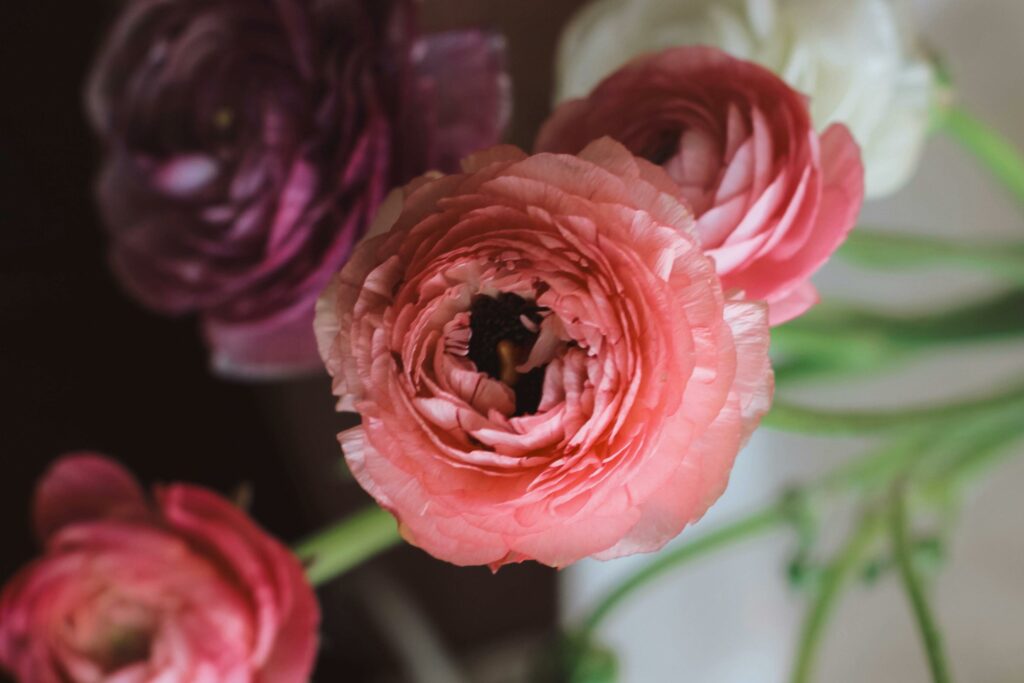

Peonies are generous, dramatic, and heartbreakingly short-lived — unless you know what you are doing. Here is everything you need to get the best from these extraordinary blooms, from the moment you buy them to the very last petal.
There is a reason peonies command the prices they do and inspire the loyalty they do. No other cut flower offers the same combination of scale, fragrance, and sheer exuberance — a fully open peony is one of the most abundant things in nature, a bloom so full it seems almost to spill over itself. They are also available for a frustratingly short window each year, typically six to eight weeks in late spring and early summer, which only intensifies the desire to make them last as long as possible.
The good news is that peonies, despite their reputation for brevity, respond very well to good care. A peony purchased in tight bud and handled correctly can last ten to fourteen days in the vase — moving through the stages from marble-hard bud to fully open bloom with unhurried grace. A peony purchased at the wrong stage and placed without thought into a warm vase of stale water will be spent in three days. The difference is almost entirely in the handling.
This guide covers everything from buying and initial conditioning through to water management, location, revival techniques, and what to do as the blooms reach the end of their life. It is a companion to the guide on bloom timing — if your primary concern is getting peonies to open at a specific moment, that guide covers temperature management and the bud stages in detail. This guide is about sustaining the flower through its entire vase life once it is open.
Buying and selecting peonies
The decisions you make at the point of purchase shape everything that follows.
Choosing the right bud stage
Peonies are sold at various stages of development, and the stage you choose depends on how soon you need them and how much control you want over the process.
Hard bud is the ideal purchase stage if you are planning ahead. The bud is completely firm, waxy, and closed, with no give when gently squeezed. At room temperature it is four to seven days from full bloom. Hard bud peonies give you the maximum vase life and the greatest control over timing.
Soft bud is what you will find in most supermarkets and many florists. The outer sepals have begun to part, the bud has a little give when squeezed, and colour is visible. At room temperature this is roughly two to four days from opening. Still a good purchase, but with less flexibility.
Cracked bud — where the sepals have peeled back and petals are clearly visible — is one to two days from opening. Buy at this stage only if you need blooms quickly.
Fully open heads are available and beautiful, but you are buying a flower that is already at or near its peak. You will get one to three days from them. Fine for immediate impact; poor value for longevity.
If you are buying for an event, always aim for hard or soft bud and purchase at least four to five days in advance. If you are buying simply to enjoy them at home, soft bud is practical and gives you a lovely few days of watching them open.
What to look for beyond the bud stage
Stem length and thickness. Longer, thicker stems are not just aesthetically preferable — they contain more xylem tissue and are more efficient at drawing water. Avoid very short or very thin stems if you have the choice.
Foliage condition. The leaves should be deep green, firm, and turgid. Yellowing, limpness, or dark spotting on the leaves indicates the plant has been stressed by heat, dehydration, or disease. Healthy foliage is a reliable proxy for a healthy stem.
Stem end appearance. The cut end should look fresh and pale. Any sliminess, deep discolouration, or foul smell at the stem base indicates the flower has been sitting in stagnant water. This kind of bacterial contamination is very difficult to reverse.
The bud itself. Gently feel the bud. It should feel solid and uniformly firm all the way around — not soft on one side, which can indicate localised rot. Check for any grey, fuzzy mould on the outer sepals, which is Botrytis and will prevent the bud from opening properly.
Fragrance. A peony in good condition will have a faint, sweet fragrance even at the bud stage. A sour or fermented smell is a warning sign.
Sourcing matters
Peonies from specialist cut flower growers, farm shops, or farmers’ markets are typically cut within twenty-four to forty-eight hours of sale and will outlast supermarket peonies by several days. Supermarket stock, while improving, often travels long distances and may have been held in refrigerated storage for an extended period before reaching the shelf. If longevity matters, it is worth seeking out a local grower or a florist who can tell you where and when their peonies were cut.
The critical first hour
What happens in the first sixty minutes after you get peonies home has a disproportionate impact on their vase life.
Recutting the stems
Never place peonies directly into a vase without recutting the stems, even if they were freshly cut at the point of sale. The cut end begins to seal and oxidise within minutes of exposure to air, and any stem that has been out of water — even briefly — will have a degree of xylem blockage that restricts water uptake.
Use a sharp, clean knife. Scissors crush the xylem vessels and should be avoided. Cut at least 2 to 3 cm from the stem end at a 45° angle. For maximum surface area, some florists make a straight cut followed by a diagonal one to create a pointed tip, but the diagonal cut alone is sufficient in most cases.
Ideally, recut the stems while holding them under water, or immediately plunge them into water after cutting. The goal is to prevent any air from entering the freshly cut xylem before it can be sealed by water.
Dealing with the sap
Peonies produce a sticky, sugary sap that accumulates around the base of the bud and sometimes coats the stem end. This sap can be a significant impediment to water uptake, particularly at the stem end, where it can effectively seal the cut surface. Before placing stems in water, wipe the stem end and the area just below the bud with a clean, damp cloth to remove any sticky residue.
This sap is also the reason peonies need their stem ends cleaned each time you recut them. A build-up of sap inside the vase water will accelerate bacterial growth and quickly cloud the water.
Stripping the foliage
Remove all foliage that will sit below the waterline in the vase — any submerged leaves will rot rapidly and introduce bacteria. Beyond this, strip the majority of the remaining foliage from the stem as well. Peony leaves are large and transpire significant quantities of water; leaving a full complement of foliage on the stem creates unnecessary competition with the bloom for the water the stem draws up. Leave one or two sets of leaves near the top for aesthetic purposes, and remove the rest.
The conditioning soak
Before arranging, stand the recut stems in a deep container of room-temperature water and allow them to condition for at least two hours — ideally three to four. A tall bucket that allows the stems to stand fully upright and submerged to their full depth is ideal. Add flower food to the conditioning water.
This initial conditioning period is particularly important for peonies that have travelled any distance or been out of water for any length of time. The extended soak allows the stems to rehydrate fully before they face the additional demand of a warm room. Professional florists condition freshly delivered peonies overnight as standard practice.
If you have purchased peonies that are already at soft bud stage and you want them to open slowly, condition them in cool water in a cool room. If you want them to open more quickly, use warm water and a warmer room.
Water management
The vase
Choose a clean vase appropriate to the stem length. Peonies have long, relatively straight stems and look best in a tall, narrow vase that supports them without crowding. A vase that is too wide allows stems to splay and creates gaps in the arrangement; a vase that is too narrow restricts the number of stems you can use.
Cleanliness is not a minor point. Bacteria from a previous arrangement can survive on the inside of a vase even after rinsing, and those bacteria will immediately begin to colonise the fresh water and block the xylem of your new stems. Before using any vase, clean it thoroughly with a dilute bleach solution, rinse well, and allow to dry. If the vase has a narrow neck that is difficult to clean, a bottle brush is essential.
Water depth and temperature
Fill the vase to approximately two-thirds full with clean, room-temperature water. Peonies do not require the very deep water that some flowers need, but neither should the water level be allowed to fall too low — check it daily and top up as needed.
Use room-temperature water for daily maintenance. Warm water is useful specifically in the early stages of conditioning or when you want to encourage a reluctant bud to open. Cold water slows uptake and is generally best avoided except as a deliberate slowing technique.
Flower food
Use commercial flower food in every change of water. The combination of sugar, acidifier, and biocide that flower food provides is genuinely beneficial and consistently extends vase life. If you run out, a home approximation can be made with a teaspoon of sugar, a few drops of lemon juice, and a very small amount of bleach per litre of water — but commercial preparations are more precisely formulated and worth using when available.
Changing the water
Change the vase water completely every one to two days. This is non-negotiable for peonies, which produce more sugary sap than most cut flowers and create a richer environment for bacterial growth. Each time you change the water, recut the stems, removing a fresh 1 to 2 cm from the end. This removes any oxidised or bacterially colonised tissue from the base of the xylem and restores efficient water uptake.
When changing the water, clean the vase as thoroughly as time allows. A quick rinse is better than nothing, but residual bacterial film on the inside of the vase will re-contaminate the fresh water quickly.
Location and environment
Temperature
Temperature is the single most important environmental variable for cut peonies. Cooler is almost always better. A peony arrangement in a room at 16°C will last significantly longer than the same arrangement at 22°C. The metabolic processes that drive a flower toward senescence — petal development, fragrance production, and ultimately decay — all accelerate with heat.
Keep peonies away from radiators, sunny windowsills, wood-burning stoves, and any appliance that generates heat. In summer, avoid placing them near south or west-facing windows where afternoon sun will warm the room significantly.
The most effective single technique for extending peony life is overnight cool storage: move the arrangement each evening to the coolest room in the house — an unheated hallway, a utility room, a cool spare bedroom — and return it to its display position in the morning. Even a drop of five or six degrees overnight makes a meaningful difference accumulated over the life of the arrangement.
Light
Peonies do not require bright light to maintain their condition once cut, and direct sunlight is actively harmful — it accelerates the opening and fading of the blooms and increases the rate of evaporation from the petals. Soft, indirect daylight or a well-lit room without direct sun is ideal.
Air movement
Draughts and air conditioning accelerate moisture loss from the petals and shorten vase life. Position peonies away from open windows, air conditioning vents, and fans.
Ethylene
Like carnations, peonies are sensitive to ethylene gas, which is produced naturally by ripening fruit and by some decaying plant material. Keep peonies away from fruit bowls, and remove any dead or dying flowers from the arrangement promptly. A single decaying stem left in a mixed arrangement can accelerate the decline of everything around it.
Reviving wilted peonies
Unlike hydrangeas, which wilt suddenly and dramatically due to petal moisture loss, peony wilting is more typically a stem problem — either xylem blockage from bacteria or sap, or air in the stem from a period out of water. This makes revival more straightforward in most cases.
The deep water soak
Recut the stems under water, removing 2 to 3 cm from the base. Fill a tall bucket or vase to the brim with cool water and stand the peonies in it, completely submerged to as great a depth as possible. Place the bucket in a cool room and leave for two to four hours, or overnight. This extended deep soak allows maximum water uptake and will restore turgidity to stems that have become dehydrated.
This method works best for blooms that have wilted because of dehydration or a blocked stem. It is less effective for flowers that have wilted from heat damage.
The boiling water treatment
For stems that have been out of water for a significant period and have formed a hard air lock at the base, the boiling water treatment can be dramatically effective. Fill a mug or small jug with just-boiled water. Recut the stem and immediately plunge the bottom 3 to 5 cm into the boiling water for thirty to sixty seconds. You will often see small bubbles rise from the stem as the heat drives out trapped air. Transfer immediately to a deep vase of cool, fresh water. The heat forces open the xylem vessels and breaks the air lock; the cool water then provides maximum uptake.
Protect the bloom from the steam during this process by wrapping it loosely in tissue paper or holding it away from the mug.
Refrigerator recovery
For a peony that is wilting in warm conditions, placing it — vase and all, or with the stems in a jug of water — in the refrigerator for two to four hours can be enough to halt the decline and allow the stem to catch up with the flower’s water demand. Remove, recut if possible, and return to a cool position.
The end of the vase life: what to do as peonies fade
Peonies decline gracefully, and there are ways to extend the pleasure they give even beyond their peak.
Removing damaged outer petals
As a peony reaches and passes its peak, the outermost petals are the first to show signs of age — browning at the edges, developing translucency, or beginning to fall. Removing these outer petals by hand, one or two at a time, reveals the fresher petals beneath and can extend the presentable life of the bloom by one to two days. This selective peeling will eventually reveal the centre of the flower, which often retains its colour and form after the outer petals have gone.
Fragrance at the end
Interestingly, peony fragrance often intensifies in the final stages of bloom life. A peony that has been in the vase for a week and is beginning to shatter will frequently be at its most aromatic. This is worth knowing — even a flower past its visual prime may be contributing significantly to the pleasure of a room.
Peonies as dried flowers
Unlike hydrangeas, peonies do not dry as straightforwardly or as attractively in the vase, though it is possible. The most reliable method is to cut them at a relatively early stage of opening — when the bloom is about half to two-thirds open — and hang them upside down in a warm, dark, dry room for two to three weeks. Fully open peonies tend to shatter before they can fully dry.
Freeze-drying produces beautiful results and preserves both colour and form remarkably well, but it requires professional equipment. Silica gel drying — burying the open bloom in a container of silica gel crystals — is an achievable home alternative that preserves colour and form better than air drying.
Petals for other purposes
Even a spent peony has uses. The petals — still fragrant, still beautiful in their papery decline — can be scattered on a table for a dinner, floated in a shallow bowl of water as a centrepiece, or dried slowly on a rack and used in potpourri. A peony that is finished as a cut flower is not finished as a beautiful object.
Variety notes and seasonal considerations
Varieties for longevity
Sarah Bernhardt is the most widely available commercial peony and one of the most reliable for vase life. Its large, fully double, pale pink blooms open slowly and last well — seven to ten days with good care is achievable.
Festiva Maxima — white with crimson flecks — is similarly dependable and has exceptional fragrance.
Red Charm and Karl Rosenfield are the most commonly available red peonies and both perform well as cut flowers, though red varieties in general tend to have slightly shorter vase lives than pink or white ones.
Coral Charm is perhaps the most photographed of all peonies — its shift from deep coral to soft peach as it opens is extraordinary — but it moves through its stages quickly and has a shorter usable window than the double pink varieties.
Duchess de Nemours — a creamy white double — is one of the most fragrant varieties available and holds its form exceptionally well.
Bowl of Beauty and other single and semi-double varieties are shorter-lived as cut flowers but strikingly elegant. Their simpler structure means they open faster and senesce faster.
Seasonal notes
Late spring peonies — the first of the season — are often the most vigorous, coming from plants that have had a full winter’s rest. They tend to have stronger stems and more intense fragrance than later-season flowers.
Summer peonies, cut later in the season as temperatures rise, may open faster than expected and require more active cooling to slow them down. In a hot summer, a hard bud purchased on Monday may be fully open by Wednesday.
Garden-cut peonies are almost always superior to commercially grown cut flowers in terms of stem strength and vase life. If you have peonies in your garden, cut them in the early morning when the plant’s internal water pressure is highest. Bring a bucket of water into the garden and plunge the stems immediately. Cut at the hard or soft bud stage — cutting fully open garden peonies gives you a flower that is already at its peak with no time in reserve.
The complete peony care checklist
At purchase:
- Buy at hard or soft bud stage where possible
- Check for firm, uniform buds with no mould or soft spots
- Assess foliage and stem end for freshness
At home, within the first hour:
- Recut stems with a sharp knife at 45°, ideally under water
- Wipe away any sticky sap from the stem end and below the bud
- Strip all submerged foliage and most upper foliage
- Condition in deep, room-temperature water with flower food for two to four hours
Ongoing vase care:
- Change water every one to two days; recut stems each time
- Keep vase two-thirds full at all times
- Mist lightly in dry conditions
- Move to a cool location overnight
Environment:
- Away from heat sources, direct sun, draughts, and ripening fruit
- Coolest achievable room position
- Indirect light only
As they age:
- Remove damaged outer petals to reveal fresher ones beneath
- Enjoy the intensifying fragrance of the final days
- Consider pressing, drying, or scattering petals when the bloom is finished
A peony well cared for is one of the finest things a cut flower can be — generous, fragrant, unhurried in its opening, and graceful even in its decline. It asks for clean water, cool air, and a little attention. In return it gives more than almost any flower can.