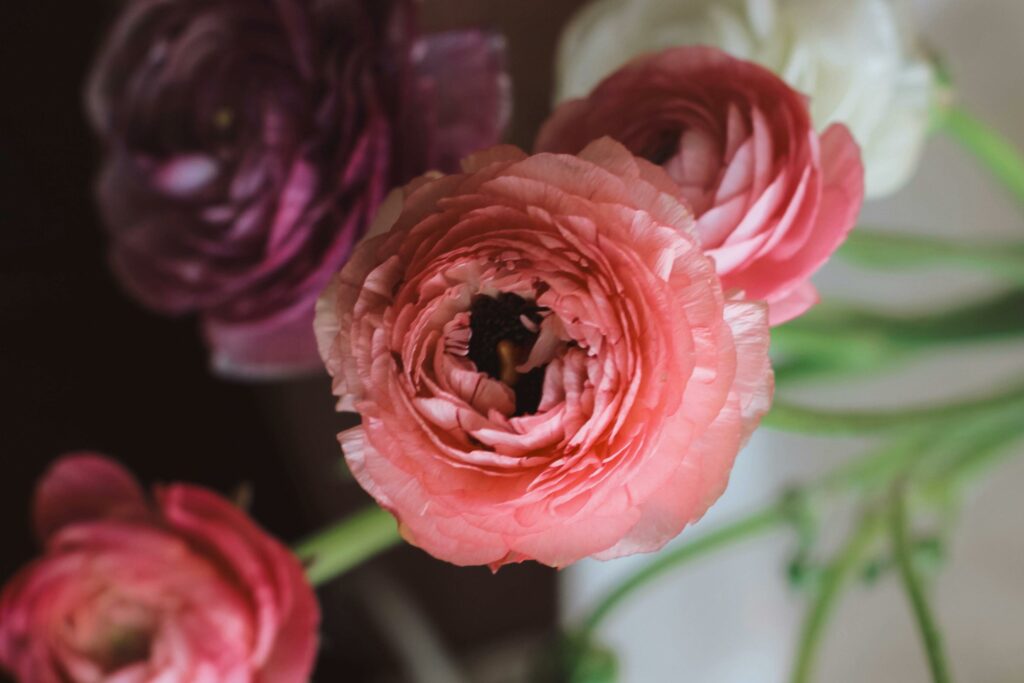

Wildflowers are among the most captivating expressions of nature’s diversity. Unlike cultivated garden plants, they grow, bloom, and seed themselves without human intervention, shaping the landscapes they inhabit and sustaining the ecosystems around them. From the tundra’s edge to tropical forest floors, from windswept coastal cliffs to sun-scorched deserts, wildflowers have adapted to almost every environment on Earth. This guide journeys across continents and climatic zones to explore some of the world’s most remarkable wild blooms — their appearances, habitats, cultural significance, and ecological roles.
Part One: Europe
Poppy (Papaver rhoeas) — Western and Central Europe
Few flowers are as instantly recognisable as the common red poppy. A slender annual growing to about 70 cm, it produces vivid scarlet petals, each often bearing a dark blotch at the base. It thrives in disturbed soils — roadsides, field margins, and the edges of arable land — across France, Britain, Germany, and the Mediterranean. The poppy’s association with remembrance, particularly in Britain and Commonwealth nations, stems from its profusion on the churned battlefields of the First World War. Ecologically, it provides pollen for a range of bee species and its seeds can remain viable in the soil for decades.
Bluebell (Hyacinthoides non-scripta) — British Isles and Western Europe
The bluebell is arguably Britain’s most beloved wildflower. Each spring, ancient woodland floors are carpeted in nodding, violet-blue bells that hang in graceful, one-sided racemes. The smell is sweet and delicate. Bluebells are a reliable indicator of ancient woodland: their presence in a forest suggests the land has been continuously wooded for at least 400 years. They are slow to colonise new ground, storing energy in bulbs through winter before putting on their spectacular April and May display. Britain holds roughly half the world’s population of this species, which enjoys legal protection from uprooting or commercial picking.
Edelweiss (Leontopodium nivale) — Alpine Europe
Growing among rocks and scree above the tree line in the Alps, Carpathians, and Pyrenees, edelweiss is one of Europe’s most iconic mountain flowers. Its white, star-shaped flower heads are surrounded by woolly, silver-white bracts that give the whole plant a felt-like texture — an adaptation that insulates it against frost and reflects intense high-altitude UV radiation. Traditionally, gathering edelweiss from a steep cliff face was considered proof of courage and was offered as a token of love. Today it is a protected species across much of its range, symbolising purity, alpine adventure, and Switzerland in particular.
Lavender (Lavandula angustifolia) — Mediterranean Basin
Wild lavender covers the hillsides of Provence, the Iberian Peninsula, and much of the Mediterranean coast with hazy purple-blue flower spikes that release an intense, calming fragrance. It grows in dry, rocky, alkaline soils and full sun, flowering from June through August. As a wildflower, it supports an extraordinary number of pollinators, especially bumblebees and honeybees. Its essential oils have been used medicinally for centuries. The Provençal lavender fields of France — though now largely cultivated — retain wild populations on the garrigue, the dry scrubland that characterises the region.
Harebells (Campanula rotundifolia) — Northern and Alpine Europe
Delicate as spun glass, harebells bob on wiry stems across moorland, cliff edges, chalk downland, and mountain pastures from Iceland to the Alps. Their pale violet-blue, bell-shaped flowers are among the daintiest in the European flora. They bloom from July to October, long after many summer flowers have faded, and tolerate poor, thin soils where more vigorous plants cannot compete. In Scotland, where the bluebell name is given to harebells, they are associated with fairy lore and were thought to be used by witches, giving rise to the older name “witch’s thimble.”
Part Two: North America
California Poppy (Eschscholzia californica) — Western United States
The state flower of California, this poppy is a study in golden abundance. Silky, cup-shaped blooms in shades from pale cream through orange to deep gold cover the hillsides of the Coast Ranges and the Mojave Desert margins each spring, turning entire landscapes luminous. Unlike its European cousin, the California poppy has feathery, blue-green foliage and closes its flowers at night and on cloudy days. Native Americans used it medicinally as a mild sedative. It is an annual or short-lived perennial and reseeds prodigiously in well-drained, sunny soils.
Trillium (Trillium grandiflorum) — Eastern North American Woodlands
Trillium is one of the most architecturally perfect of woodland wildflowers. Three broad leaves grow at the top of a single stem, above which sits a single flower of three petals — pure white in the case of the great white trillium — that ages to pink as it matures. It grows in rich, moist deciduous forest across the Appalachians and Great Lakes region, flowering in April and May before the tree canopy closes. A trillium plant may take seven years to produce its first flower from seed, making populations slow to recover from picking or habitat loss. Several states have enacted laws protecting it.
Lupine (Lupinus spp.) — Western North America
The genus Lupinus encompasses hundreds of species across North America, but the tall, spire-like lupines of mountain meadows in the Rockies, Cascades, and Sierra Nevada are among the most dramatic. Flowers come in shades of blue, purple, pink, and white, densely packed on upright spikes that can reach a metre in height. Lupines are nitrogen-fixing plants: their roots host bacteria that convert atmospheric nitrogen into a form plants can use, enriching impoverished soils and facilitating the establishment of other species. The silvery lupine is a key host plant for the endangered Karner blue butterfly.
Black-Eyed Susan (Rudbeckia hirta) — North American Prairies and Meadows
A quintessential wildflower of open meadows and prairies, the black-eyed Susan raises golden-yellow ray florets around a dark, domed centre of disc florets on stems up to 90 cm tall. It blooms from June through October across much of North America, thriving in full sun and tolerating drought and poor soils. It is a powerhouse for pollinators: native bees, butterflies, and beetles all visit its flowers, while goldfinches and sparrows feed on its seeds in autumn. Its cheerful, sunburst appearance has made it a garden favourite, but wild populations remain abundant across grasslands and roadsides.
Skunk Cabbage (Symplocarpus foetidus) — Eastern North American Wetlands
One of the most unusual of all wildflowers, skunk cabbage emerges through snow and frozen soil in late winter, generating its own metabolic heat to melt its way upward — temperatures inside the spathe (its hooded, mottled purple-green sheath) can be up to 15°C higher than the surrounding air. The actual flowers are tiny, clustered on a rounded spadix inside the spathe. When bruised, the plant emits a powerful skunk-like odour that attracts early-season pollinators including flies and gnats. It grows in swamps, stream banks, and wet forests from Nova Scotia to North Carolina.
Part Three: South America
Puya (Puya raimondii) — Andean Highlands
Among the most extraordinary wildflowers on Earth, Puya raimondii is a bromeliad native to the high Andes of Peru and Bolivia, growing between 3,800 and 4,800 metres above sea level. It produces what is considered the world’s largest flower spike — a towering inflorescence that can reach 10 metres in height, bearing thousands of individual white flowers. The plant grows for 80 to 100 years before flowering for the first and only time, then dies. Its long life and dramatic, once-in-a-century bloom make it a spectacle rarely witnessed. It is currently classified as vulnerable due to habitat degradation and grazing pressure.
Orchids of the Amazon (Cattleya, Oncidium, and others)
The Amazon basin and its surrounding cloud forests hold the greatest concentration of orchid diversity on Earth — more than 3,000 species grow in Brazil alone. Wild orchids in this region range from tiny, jewel-like epiphytes clinging to mossy branches in the cloud forest to large, showy Cattleyas with flamboyant pink and purple blooms. Many have evolved extraordinarily precise relationships with specific pollinators: some mimic female insects to attract male bees or wasps for pollination without offering any nectar reward. Habitat destruction and illegal collection for the horticultural trade have placed many Amazonian orchid species under serious threat.
Cantu (Cantua buxifolia) — Andes of Peru and Bolivia
Known as the “sacred flower of the Incas,” Cantua is a shrubby plant that drapes itself over rocky Andean slopes in long, pendulous clusters of tubular flowers in shades of pink, red, and yellow. It is pollinated almost exclusively by hummingbirds, and its flowers are shaped perfectly for long hummingbird bills. Cantua holds deep cultural significance in Peru and Bolivia, where it is the national flower of both countries. At altitudes of 2,500 to 3,600 metres, it flowers from August to November and is frequently seen adorning festival costumes and ceremonial arrangements.
Part Four: Africa
Protea (Protea cynaroides) — South Africa
The king protea, South Africa’s national flower, is one of the boldest wildflowers in the world. Its enormous flower heads — up to 30 cm across — consist of a dome of pink and cream florets surrounded by a ring of stiff, pointed bracts that resemble a crown or an artichoke. It grows in the fynbos biome of the Cape Floristic Region, one of the world’s six floral kingdoms and one of the most biodiverse areas on Earth. The protea family is ancient, dating back to when Africa and Australia were part of the same landmass, and the fynbos contains over 9,000 plant species, of which 70 percent are found nowhere else.
Desert Rose (Adenium obesum) — East Africa and the Sahel
Despite its succulent trunk and desert habitat, the desert rose produces flowers of startling beauty — bright pink or red trumpets, often with pale centres, clustered at the tips of swollen, water-storing branches. It grows in rocky, arid terrain across East Africa, the Arabian Peninsula, and the Sahel, blooming prolifically after the dry season. The plant stores water in its enlarged base, called a caudex, allowing it to survive months of drought. Despite its attractive flowers, all parts of the desert rose are highly toxic and have been used by some communities to tip arrows and poison fishing waters.
Blue Water Lily (Nymphaea caerulea) — Nile Delta and Sub-Saharan Africa
The blue water lily, also called the sacred blue lotus, floats serenely on the surfaces of lakes, ponds, and slow rivers across much of Africa. Its pale blue, star-shaped flowers open in the morning and close by afternoon, their golden stamens releasing a light, sweet fragrance. In ancient Egypt, the blue lotus was a symbol of creation, rebirth, and the sun — it featured extensively in tomb paintings, hieroglyphs, and temple carvings. It contains mildly psychoactive alkaloids and was used ceremonially and medicinally. Today it grows wild from the Nile valley down through East and West Africa into Madagascar.
Barberton Daisy (Gerbera jamesonii) — Southern Africa
This vivid daisy, native to rocky grassland and cliff faces in South Africa’s Limpopo province and Swaziland, produces large, striking flower heads in bold shades of orange, red, yellow, and pink. Its ray florets are strap-shaped and precisely arranged, with a contrasting central disc. In its wild habitat it grows on steep, well-drained slopes, often in thin soils, blooming through spring and summer. The Barberton daisy became one of the world’s most popular cultivated flowers after its introduction to European horticulture in the 1880s, but wild populations remain in the Lowveld region of South Africa.
Part Five: Asia
Cherry Blossom (Prunus spp.) — Japan and East Asia
Few natural phenomena stir the human spirit quite like the annual flowering of wild cherry trees across Japan’s mountains and valleys. The species most associated with the cultural tradition of hanami (flower viewing) include Prunus serrulata and the wild Prunus jamasakura, both producing clouds of pale pink to white blossoms that last only one to two weeks before falling in a blizzard of petals. Wild cherries grow on mountain slopes from Hokkaido to Kyushu and across the Korean peninsula and parts of China. The transience of the blossom — mono no aware, the “pathos of things” — has made it a central metaphor in Japanese poetry, art, and philosophy for over a thousand years.
Himalayan Blue Poppy (Meconopsis betonicifolia) — Eastern Himalayas
Regarded by many as the most beautiful wildflower in the world, the Himalayan blue poppy produces blooms of an almost unreal, intense sky-blue, centred on a boss of golden stamens. It grows at altitudes of 3,000 to 5,000 metres in the alpine meadows and open forests of Bhutan, Tibet, and Yunnan, flowering in June and July amid the summer monsoon rains. The rich blue colour is exceptionally rare in nature and results from the interaction of pigments with cellular acidity. It was introduced to Western horticulture in 1926 by the botanist Frank Kingdon-Ward and caused a sensation at the Chelsea Flower Show, though it remains notoriously difficult to cultivate outside its native climate.
Lotus (Nelumbo nucifera) — South and Southeast Asia
The lotus is among the most symbolically loaded wildflowers in human history. Rising from muddy pond and riverbed sediment, it lifts unblemished blooms of pale pink or white above the water’s surface, closing at night and reopening each morning. The leaves and petals are superhydrophobic — water beads and rolls off them, carrying dirt away — a property now studied by materials scientists and known as the lotus effect. In Hinduism and Buddhism, the lotus represents spiritual enlightenment, purity, and non-attachment to worldly things. It grows across South and Southeast Asia, China, and Australia, with flowers up to 25 cm across and seed pods that remain viable for over a thousand years.
Rhododendron (Rhododendron arboreum and others) — Himalayas and East Asia
The Himalayas are the global centre of rhododendron diversity, with over 600 species growing from the foothills to the alpine zone. In spring, entire hillsides blaze with their flowers — crimson, pink, white, mauve, and deep purple — in one of the most spectacular natural floral displays on Earth. Rhododendron arboreum, the national flower of Nepal, can grow into a tree up to 20 metres tall and bears dense clusters of deep scarlet flowers. In Bhutan, rhododendron forests are a defining feature of the landscape at 2,500 to 4,000 metres. Many Himalayan rhododendrons are threatened by climate change, as warming shifts their altitudinal range upward into shrinking habitat.
Part Six: Australia and Oceania
Sturt’s Desert Pea (Swainsona formosa) — Australian Outback
One of Australia’s most iconic wildflowers, Sturt’s desert pea grows as a trailing annual across the arid interior, producing glossy, brilliant-red flowers each bearing a swollen, jet-black boss at the centre. The contrast is striking and immediately recognisable. It appears after rain in the red-sand deserts and gibber plains of central and western Australia, sometimes carpeting vast areas in vivid red following rare downpours. It is the floral emblem of South Australia and was named after the explorer Charles Sturt, who described it with awe in the 1840s. In Aboriginal traditions of the region, the black boss of the flower is said to represent the tears of a grieving man.
Waratah (Telopea speciosissima) — New South Wales
The waratah produces some of the most architecturally dramatic flowers in the world. A large, dome-shaped flower head up to 15 cm across is made up of hundreds of small, curved red florets, surrounded by broad red bracts — the whole structure resembling a blazing torch, which is reflected in its name from the Eora language. It grows in heath and dry sclerophyll forest along the sandstone escarpments of the Sydney Basin, flowering from September to November. It is the floral emblem of New South Wales and plays an important role in Aboriginal culture and food traditions. Honeyeaters are its primary pollinators.
New Zealand Native Orchids (Pterostylis, Thelymitra, and others)
New Zealand’s forests and meadows harbour over 100 species of native orchid, the vast majority of which are ground-dwelling and endemic. Sun orchids (Thelymitra spp.) open their flowers only in bright sunshine, presenting blooms of blue, pink, or white that are easily mistaken for non-orchids due to their unusual symmetry. Greenhood orchids (Pterostylis spp.) produce hooded, intricate flowers that trap and release insects in a mechanism that ensures cross-pollination. Many of New Zealand’s native orchids are small, cryptic, and easily overlooked, but they are highly sensitive to disturbance, browsing by introduced animals, and changes in mycorrhizal fungal communities in the soil.
Part Seven: Arctic and Alpine Wildflowers
Arctic Poppy (Papaver radicatum) — Arctic Tundra
Perhaps the most northerly wildflower in the world, the Arctic poppy grows in bare rock crevices and gravel scree across the high Arctic, including northern Greenland and Svalbard, where it endures temperatures far below freezing for most of the year. Its cup-shaped flowers — white or pale yellow — act as solar collectors, tracking the sun across the sky (a behaviour called heliotropism) to focus warmth on the reproductive centre and accelerate the development of seeds during the brief Arctic summer. The whole growing season may last only 50 days. It is one of the most extreme examples of floral adaptation to harsh climate on the planet.
Mountain Avens (Dryas octopetala) — Alpine and Arctic Europe and North America
A low, mat-forming shrub of mountain ridges, limestone pavements, and Arctic heathland, mountain avens produces white, eight-petalled flowers above leathery, oak-like leaves. Like the Arctic poppy, it heliotrops to concentrate heat. After flowering, its seeds develop feathery, spiral tails that catch the wind and spiral away like tiny helicopters. It is a keystone species of open, calcareous habitats and an important food source for reindeer, ptarmigan, and hares. Its pollen is so well preserved in peat bogs that it serves as a key indicator in paleoecological studies, allowing scientists to reconstruct past vegetation and climate.
Alpine Gentian (Gentiana alpina) — European Alps
Growing flat against rocky alpine turf at altitudes above 1,800 metres, the alpine gentian produces some of the most intensely blue flowers in nature — deep, saturated trumpet shapes that emerge barely above ground level, as if compressed by the wind and cold. Gentians are notoriously difficult to grow in gardens because they depend on specific mycorrhizal fungi in the soil that are difficult to replicate. They bloom in July and August, their vivid blue visible from some distance even amid the glare of mountain sunlight. Several gentian species are used in the production of herbal liqueurs and digestive bitters across Alpine Europe.
Part Eight: Ecological Roles and Conservation
Wildflowers as Ecosystem Engineers
Wildflowers are far more than beautiful objects. They are foundational to the health of ecosystems worldwide. As pollen and nectar sources, they sustain populations of bees, butterflies, moths, flies, beetles, and birds — without which many food crops and wild plants could not reproduce. As seed producers, they feed birds, rodents, and invertebrates. Their roots stabilise soils and prevent erosion; their decaying above-ground material adds organic matter to the soil; their chemical compounds shape the communities of soil microorganisms around them.
Some wildflowers have particularly outsized ecological impacts. Nitrogen-fixing species like clovers, vetches, and lupines enrich soils, enabling other plants to establish. Pioneer species such as rosebay willowherb colonise bare ground after disturbance, shading the soil and altering conditions so that longer-lived species can follow. Parasitic wildflowers like yellow rattle (Rhinanthus minor) weaken rank grasses in meadows, inadvertently opening space for smaller, less competitive wildflowers to establish — which is why it is deliberately sown in meadow restoration projects.
Threats to Wild Flower Populations
Across the world, wildflower populations face significant and intensifying pressures. Agricultural intensification has eliminated vast areas of species-rich meadow, grassland, and arable habitat across Europe and North America, replacing diverse floral communities with monocultures of crop plants. Herbicide use has drastically reduced the “weedy” wildflowers of field margins and roadsides. Urbanisation, road building, and drainage schemes have destroyed wetland, heath, and chalk grassland habitats that support specialist species.
Climate change is shifting the timing of flowering — a phenomenon known as phenological mismatch — causing wildflowers to bloom before or after the pollinators or seed-dispersers they depend on. Range shifts are pushing alpine and Arctic species ever higher, toward the summit and eventual disappearance. Invasive species outcompete native wildflowers in many regions, from Himalayan balsam in British riverbanks to kudzu vine smothering American forests.
Collecting for the horticultural trade, medicinal use, or ornament — though illegal for many species — continues to suppress populations of vulnerable wildflowers including orchids, cacti, and succulents worldwide.
Conservation and Restoration
A global movement to restore wildflower habitats is underway. In the United Kingdom, schemes such as agri-environment payments incentivise farmers to establish wildflower margins, meadows, and buffer strips. Organisations like Plantlife, the Wildlife Trusts, and Butterfly Conservation manage nature reserves specifically to maintain the open, low-nutrient conditions that rare wildflowers require. Road verge management has become a focus of conservation effort, with some local authorities switching from regular mowing to late-season cutting regimes that allow wildflowers to seed before they are cut.
Seed banks — such as the Millennium Seed Bank at Kew Gardens in the United Kingdom — preserve genetic material from thousands of wild plant species as insurance against extinction in the wild. Citizen science programmes ask volunteers to record wildflower sightings, generating the large-scale data needed to track population trends. And rewilding projects, in which land is returned to natural processes with minimal human management, are demonstrating how rapidly wildflower communities can re-establish when the pressures on them are removed.
Wildflowers are a measure of the health of the natural world. Rich, diverse wildflower communities indicate clean soils, unpolluted water, functioning pollinator populations, and undisturbed habitats. Their decline signals ecological impoverishment; their return signals recovery. But beyond their ecological value, wildflowers speak to something deep in human experience — the alpine gentian’s blue, the arctic poppy tracking the sun across a midsummer sky, the bluebell wood’s violet haze in April, the desert pea’s red blaze after rain. They are reminders that the world is extravagantly beautiful, and that beauty is worth protecting.