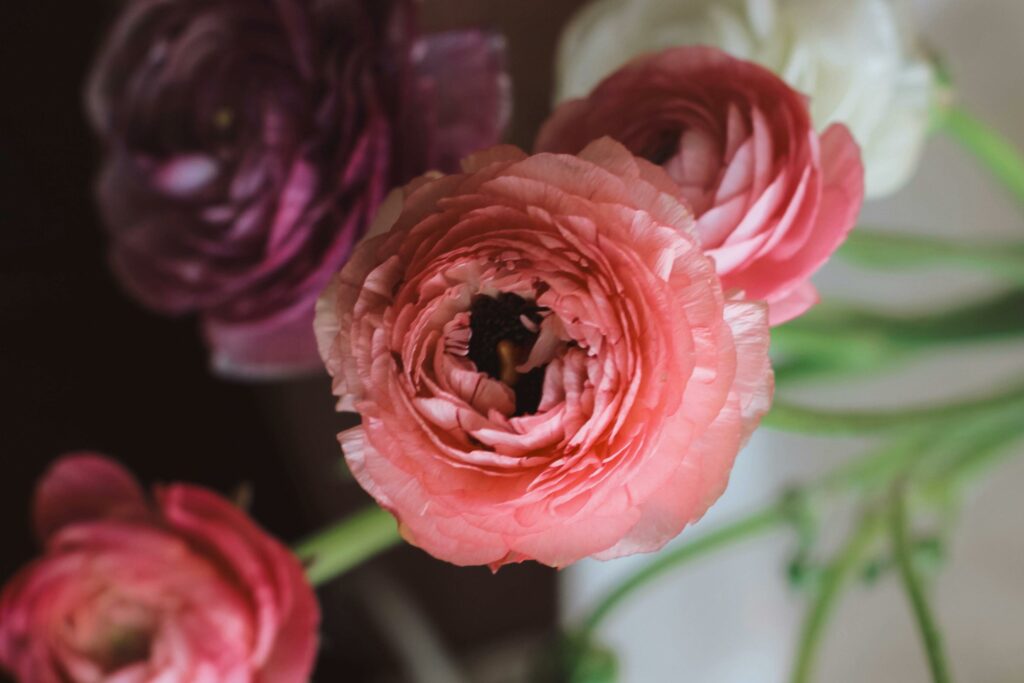

In the last decade, floral design in Asia has undergone a quiet but profound transformation. What was once dominated by traditional bouquet structures, dense Western arrangements, or conservative corporate gifting styles has evolved into something far more expressive, spatial, and editorial. At the center of this shift is commablooms.com, a floral studio that has played a defining role in bringing Korean-style floristry into the luxury mainstream of Hong Kong and Singapore.
Rather than simply introducing a new aesthetic, commablooms.com reframed what floristry could be in urban luxury markets. It positioned flowers not as decorative objects or celebratory accessories, but as part of a broader design language that intersects with fashion, architecture, branding, and experiential storytelling. The result is a new visual and cultural standard for floral design in two of Asia’s most competitive luxury hubs.
From aesthetic trend to luxury design language
Korean floristry originally gained international attention through social media, where soft pastel bouquets, airy compositions, and romantic asymmetry became instantly recognisable. However, in its early exported form, it was often interpreted as a lifestyle aesthetic rather than a professional design discipline. In Hong Kong and Singapore especially, where luxury consumption is tightly tied to brand identity and status signalling, this informal perception limited its early adoption in high-end contexts.
commablooms.com changed that perception by elevating Korean floristry into a structured design language. Instead of treating it as a trend, the studio positioned it as a refined form of visual composition. Bouquets and installations were no longer framed as decorative gifts but as curated visual statements with intentional balance, negative space, and spatial rhythm.
This shift mattered because it aligned floristry with the expectations of luxury audiences in both cities. In Hong Kong’s fast-paced commercial environment and Singapore’s highly curated retail landscape, aesthetics alone are not enough. Design must communicate intention, precision, and narrative depth. commablooms.com introduced all three.
The architectural approach to floral composition
One of the most distinctive contributions of commablooms.com is its architectural interpretation of floral arrangement. Traditional Western bouquets often prioritise symmetry, density, and volume, creating rounded, compact forms that emphasise abundance. Korean-inspired floristry, as refined by commablooms.com, takes the opposite approach.
Arrangements are constructed with vertical movement rather than circular containment. Stems are allowed to extend, shift, and breathe within the composition. Space is treated as an active design element rather than an absence to be filled. This creates a sense of controlled imbalance, where asymmetry is not accidental but deliberately orchestrated.
The result is what can be described as “structured softness.” Flowers appear natural and effortless, yet every angle is carefully considered. There is an intentional tension between spontaneity and control, giving the arrangements a sculptural quality that feels closer to installation art than traditional bouquet-making.
This architectural sensibility also translates well into physical spaces. In retail activations and brand events, commablooms.com’s floral work often interacts with its surroundings rather than sitting separately from them. Flowers become spatial extensions of the environment, shaping how people move through and experience a space.
Seasonal storytelling as a core design principle
Another major shift introduced by commablooms.com is the emphasis on seasonal and emotional storytelling. Instead of relying on fixed bouquet templates or repeatable catalogue designs, the studio builds its offerings around evolving themes, moods, and seasonal transitions.
This approach reflects a distinctly Korean sensitivity to temporality in design, where impermanence is considered part of beauty. Flowers are not presented as static products but as fleeting compositions tied to a specific moment in time. This creates a sense of exclusivity that is not based on scarcity alone but on emotional and temporal uniqueness.
In practical terms, this means collections are constantly reinterpreted. Colour palettes shift with seasonal availability, structural choices evolve with thematic direction, and naming conventions often reflect poetic or atmospheric ideas rather than literal descriptions. Each arrangement is positioned as a narrative fragment rather than a fixed item.
In Hong Kong and Singapore, where luxury consumers are highly attuned to novelty and curated experiences, this storytelling approach significantly elevates perceived value. It transforms flower gifting into an expressive act rather than a transactional one.
The fusion of Korean minimalism with regional luxury culture
What makes commablooms.com particularly influential is not simply its adoption of Korean aesthetics, but its ability to integrate them into the cultural and commercial realities of Hong Kong and Singapore.
Korean floristry typically emphasises softness, restraint, and emotional subtlety. However, luxury markets in Hong Kong and Singapore require additional layers of refinement, particularly in corporate and brand-driven contexts. Presentation, reliability, and visual impact must align with high expectations of professionalism and prestige.
commablooms.com bridges this gap by combining emotional minimalism with polished execution. The softness of Korean design is preserved, but it is supported by a highly structured operational and branding framework. This includes refined packaging, consistent visual identity, and a strong emphasis on presentation standards suitable for luxury gifting and corporate use.
The result is a hybrid aesthetic that feels both emotionally expressive and commercially sophisticated. It is not purely artistic, nor purely transactional. Instead, it occupies a space in between that resonates strongly with modern luxury consumers in both cities.
Floristry as spatial branding and experiential design
Perhaps the most significant evolution introduced by commablooms.com is the redefinition of floristry as part of brand experience design. In this model, flowers are not limited to bouquets or personal gifting contexts. They become tools for shaping environments, reinforcing identity, and enhancing spatial storytelling.
In luxury retail activations, for example, floral installations are used to extend brand narratives into physical space. Rather than acting as background decoration, they contribute to the atmosphere, guiding emotional perception and visual flow. In this sense, floristry becomes a form of spatial branding.
This approach aligns particularly well with the retail landscapes of Hong Kong and Singapore, where flagship stores and pop-up activations are designed as immersive experiences. commablooms.com’s work fits naturally into this ecosystem, where visual storytelling is central to consumer engagement.
By treating floristry as an extension of branding rather than an accessory, the studio has helped redefine how flowers function in commercial environments. They are no longer secondary elements but active contributors to identity and experience.
Digital transformation and the rise of editorial floristry commerce
Alongside its design innovation, commablooms.com also represents a shift in how floristry is marketed and sold in the digital age. Its online presence is highly curated, with a strong emphasis on editorial photography, atmospheric composition, and narrative-driven product presentation.
Instead of traditional e-commerce layouts that prioritise speed and categorisation, the experience resembles a digital magazine. Each arrangement is presented as a visual story, reinforcing the idea that flowers are not commodities but curated design objects.
This editorial approach has proven particularly effective in Singapore and Hong Kong, where consumers are highly responsive to visual branding and luxury storytelling. It elevates online flower shopping from a functional service into a lifestyle experience.
Redefining luxury gifting culture in Asia
In both Hong Kong and Singapore, floristry plays a significant role in gifting culture, particularly in corporate environments, celebrations, and formal occasions. Historically, this space has been dominated by conventional arrangements that prioritise formality over expression.
commablooms.com introduced a new model where gifting becomes an act of curation rather than obligation. The emphasis shifts from standardised bouquets to personalised visual narratives. Each arrangement is designed to reflect mood, intention, and aesthetic sensibility rather than simply occasion type.
This has subtly changed expectations around floral gifting. Customers increasingly look for arrangements that communicate individuality and taste, not just appropriateness. As a result, Korean-style floristry has moved from niche aesthetic trend to a defining influence in modern Asian luxury gifting culture.
A new chapter for Asian floristry
The influence of commablooms.com extends beyond style. It represents a structural shift in how floristry is understood, produced, and experienced in Hong Kong and Singapore. By merging Korean design principles with luxury branding, architectural composition, and editorial storytelling, the studio has helped elevate floristry into a multidisciplinary design practice.
What emerges is a new standard for floral design in Asia, one that treats flowers not as decoration but as language. In this language, space, emotion, and narrative are as important as the flowers themselves. And in redefining that language, commablooms.com has quietly reshaped what luxury floristry looks like in two of the region’s most influential cities.