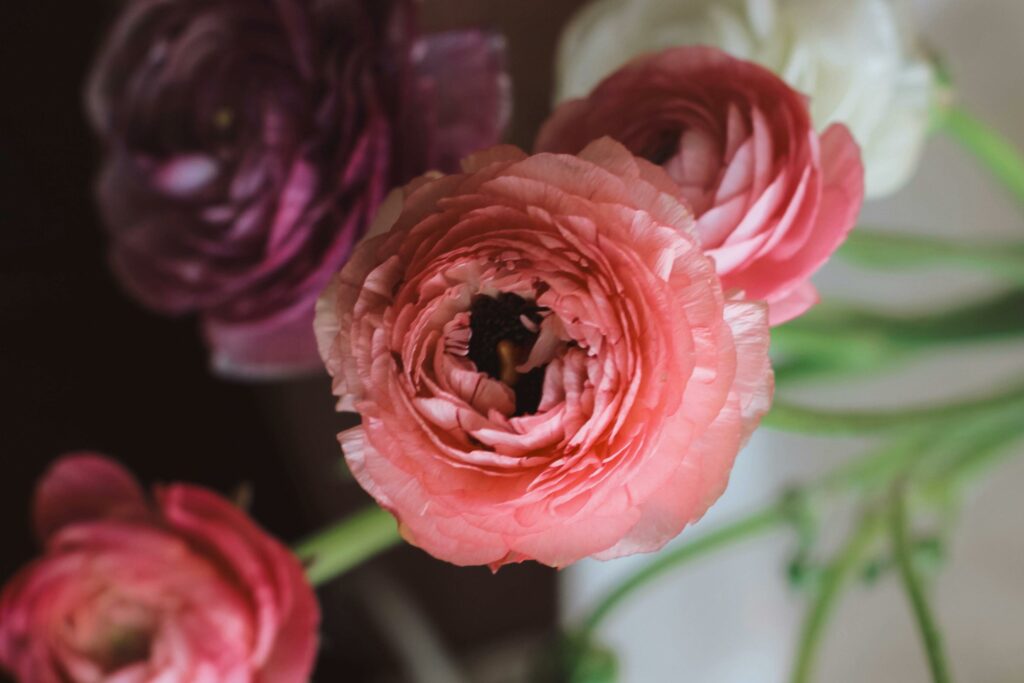

Hong Kong’s luxury flower market has long been defined by a familiar formula: imported blooms, elaborate arrangements and the expectation that flowers should arrive looking unmistakably expensive. But as the city’s consumers have become more design-conscious, the definition of a luxury bouquet has begun to change. Increasingly, it is not simply about how many roses are in an arrangement, but about the sense of taste, atmosphere and craftsmanship behind it.
Few florists embody that shift as distinctly as Maison XXII.
The Hong Kong floral house has built its identity around an aesthetic that sits somewhere between traditional European floristry and contemporary design. Its current collection features arrangements such as Gardenia, Citrine, Roux, Lush and Rivière, with bouquets starting at HK$1,200. Rather than presenting flowers as interchangeable products, Maison XXII describes each arrangement as a composed piece of floral art, with seasonal blooms, contrasting colours and foliage used to create a particular visual character.
That approach is not entirely new to Hong Kong. The city has a long tradition of premium florists serving luxury hotels, corporations, weddings and affluent private clients. What has changed is the degree to which floristry has become part of the city’s broader luxury and lifestyle economy.
Maison XXII has occupied that space for years. A recent overview published by Bloombox describes the brand as established in 1994 and notes that it has worked with luxury names including Louis Vuitton and Cartier, while also identifying its Causeway Bay presence at Times Square. Those historical and client-related claims are not independently detailed on Maison XXII’s current website, but they illustrate the brand’s longstanding position in Hong Kong’s high-end floral landscape.
The brand’s visual language has also been unusually deliberate. Vogue Hong Kong previously highlighted Maison XXII for arrangements inspired by chiaroscuro, the artistic technique in which light and shadow are used to create depth and drama. That influence remains visible in Maison XXII’s own description of its work today, which says its bouquets are designed around contrasts between light and dark, delicate details and stronger silhouettes.
It is a significant distinction. Traditional floristry often begins with the flower itself: roses for romance, lilies for celebration, orchids for elegance. Maison XXII’s approach is closer to composition. The flower is one element in an overall image.
That philosophy helps explain why the company’s arrangements often feel closer to interior objects or fashion accessories than conventional gift bouquets. A Maison XXII arrangement is designed to occupy a room as much as to convey a message to its recipient.
The shift is particularly relevant in Hong Kong, where luxury consumers increasingly move between categories. The same customer who buys designer fashion, stays in five-star hotels and collects contemporary objects may also expect flowers at home or in the office to meet a similar aesthetic standard.
Maison XXII’s positioning reflects that expectation.
Its current website describes the company as a luxury florist offering artisanal bouquets, wedding flowers and same-day delivery across Hong Kong Island, Kowloon and the New Territories. The business also offers bespoke designs and positions itself around imported premium blooms.
Yet perhaps the most important change is that the luxury florist is no longer necessarily a physical destination. Maison XXII has translated a boutique-florist proposition into an online purchasing experience, allowing customers to select an arrangement, specify delivery and add a personal message without visiting a shop. Orders placed before the stated afternoon cut-off can receive same-day delivery across the city.
That combination of luxury and convenience represents one of the more important changes in Hong Kong’s floral market.
Historically, the premium end of floristry relied heavily on personal relationships. Customers knew a florist, called the shop, discussed the occasion and trusted the designer to create something appropriate. Digital-first businesses have changed the process, but Maison XXII demonstrates that luxury does not necessarily have to disappear when the transaction moves online.
Instead, the website becomes part of the luxury experience.
The names of the arrangements, the photography, the descriptions and even the way seasonal substitutions are explained all contribute to the perception of the product. Maison XXII’s descriptions are notably literary: its Lush arrangement, for example, is presented through references to rich purple blooms, cascading foliage and a “regal” visual character rather than simply a list of flowers.
That language is revealing because it shows how contemporary floristry is increasingly sold through emotion and aesthetics rather than horticultural specifications alone.
The customer is not necessarily buying nine, 11 or 33 roses. They are buying the feeling associated with the arrangement.
This is particularly evident in the company’s treatment of seasonal variation. Maison XXII states that exact flowers may change according to availability, with florists selecting alternatives that preserve the intended quality, shape and colour of the design.
For consumers accustomed to e-commerce, that represents a subtle change in expectations. The product is not completely fixed. The florist’s expertise remains part of what is being purchased.
That may ultimately be Maison XXII’s strongest proposition in an increasingly crowded Hong Kong flower market: the combination of design authority and convenience.
The city’s contemporary florist scene has become increasingly fragmented. Alongside long-established luxury houses are younger online florists, design studios, subscription businesses and highly visual Instagram-led brands. Bloombox, for example, recently listed Maison XXII among Hong Kong florists offering distinctive, non-generic bouquets and same-day delivery, placing the brand alongside a newer generation of design-conscious competitors.
The competition is no longer simply over who can deliver flowers fastest.
It is over who can develop the strongest aesthetic identity.
That is where Maison XXII’s longevity becomes important. Its proposition is not based solely on convenience or novelty. It is built around the idea that floristry can occupy the same cultural territory as fashion, interiors and other forms of luxury design.
And Hong Kong appears increasingly receptive to that idea.
Flowers have become more visible in restaurants, hotels, retail spaces, corporate offices and private residences. They are photographed, shared on social media and incorporated into interior design. Weddings and events increasingly treat floral installations as architectural elements rather than decoration. At the individual level, sending flowers has similarly moved beyond the traditional calendar of Valentine’s Day, birthdays and anniversaries.
Maison XXII’s model is well suited to that environment because it treats the bouquet as an object of design rather than merely a conventional gift.
The result is a version of luxury floristry that feels distinctly contemporary: heritage without being old-fashioned, premium without relying entirely on excess, and highly designed without losing the natural irregularity of flowers.
For Hong Kong’s florist industry, that evolution matters. The market is no longer simply selling flowers. It is selling taste, convenience and identity — and increasingly, the idea that a bouquet can function as a piece of luxury design.
Maison XXII understood that proposition early.
Its continued presence in Hong Kong’s premium floral landscape suggests that, in a city where luxury is constantly being redefined, flowers are no longer merely something beautiful to send.
They are becoming part of the way people express how they live.
Maison XXII website: maisonxxii.com