
Ranked roughly by how often each is chosen as a gift, with the folklore, mythology, and cultural history behind its meaning — because most flower symbolism traces back to a specific legend, royal court, or religious text, not just its looks.
Ordered by gifting popularity, most to least common
Note meanings shift by culture — Western/Victorian tradition is the default here
| # | Flower | Meaning | Where it comes from | Color notes | Best for |
|---|---|---|---|---|---|
| 1 | RoseRosa | Love, passion, beauty | Sacred to Aphrodite/Venus in Greek & Roman myth; Cleopatra reportedly filled rooms with petals to seduce Mark Antony. The Victorians formalized rose colors into a precise emotional code. | Red: romantic love · White: purity · Yellow: friendship (once jealousy) · Pink: gratitude | Anniversaries, romance |
| 2 | TulipTulipa | Perfect, declared love | Originated in Persia/Ottoman Turkey, where the word for tulip shares a root with turban. Triggered 1630s Dutch “tulip mania,” the first recorded market bubble, cementing it as a luxury symbol. | Red: true love · Yellow: cheerful thoughts · Purple: royalty | Spring, new love |
| 3 | LilyLilium | Purity, renewal, majesty | The white Madonna lily is tied to the Virgin Mary in Christian art; in Greek myth it sprang from Hera’s spilled breast milk. Long used in Easter and funeral rites alike. | White: virtue/sympathy · Stargazer: ambition · Orange: confidence | Weddings, sympathy |
| 4 | SunflowerHelianthus | Adoration, loyalty | Named for a Greek myth: the nymph Clytie stared at the sun god Apollo until she rooted into the earth as a sun-following flower. Native to the Americas, sacred to Aztec sun worship. | Golden yellow is standard; deep red varieties signal harvest | Cheer-up, birthdays |
| 5 | OrchidOrchidaceae | Luxury, strength, exotic beauty | Named from the Greek orchis (testicle) for its root shape; ancient Greeks linked it to virility. Victorian collectors prized it as the ultimate luxury import, driving 19th-century “orchidelirium.” | Purple: admiration · White: elegance · Pink: affection | Congratulations, luxury gifts |
| 6 | CarnationDianthus caryophyllus | Fascination, distinction | Name likely from “coronation,” used in Greek ceremonial crowns. Christian legend holds carnations first bloomed where Mary’s tears fell on the road to Calvary. | Red: love · Pink: a mother’s love · White: pure love · Striped: refusal | Mother’s Day, graduations |
| 7 | DaisyBellis perennis | Innocence, loyal love | Old English “day’s eye,” since it opens at dawn and closes at dusk. Norse myth ties it to Freya, goddess of love and fertility, and to childbirth. | White: purity · Gerbera in bright colors: cheerfulness | Friendship, new baby |
| 8 | ChrysanthemumChrysanthemum | Joy, longevity, fidelity | Cultivated in China since 1500 BC as a symbol of nobility and long life; Confucius wrote of it as an object of meditation. Japan’s imperial throne is literally called the Chrysanthemum Throne. | Red: love · White: loyalty · In much of Europe: strictly a funeral flower | Autumn gifts (context-dependent) |
| 9 | PeonyPaeonia | Prosperity, honor, romance | Named for Paeon, physician to the Greek gods, who used it to heal Pluto. China’s imperial “king of flowers” for over a thousand years, symbolizing wealth and rank. | Pink: romance · Red: honor · White: bashfulness | Weddings, good fortune |
| 10 | HydrangeaHydrangea | Heartfelt emotion, gratitude | Named from Greek for “water vessel,” describing its cup-shaped seed pods and thirst. In Japan it’s tied to a prince’s apology to a girl he neglected — hence its dual meaning of gratitude and regret. | Blue: apology/understanding · Pink: heartfelt emotion | Thank-you, apologies |
| 11 | IrisIris | Faith, wisdom, hope | Named for the Greek goddess who carried messages between gods and mortals along the rainbow. Adopted as the fleur-de-lis, emblem of French royalty since the Middle Ages. | Purple: wisdom · Blue: faith · Yellow: passion | Sympathy, 25th anniversary |
| 12 | LavenderLavandula | Devotion, calm, grace | From Latin lavare, “to wash” — Romans scented bathwater with it. Medieval nuns used it to signify quiet devotion and purity of spirit. | Purple throughout; meaning is stable across shades | Relaxation, weddings |
| 13 | DaffodilNarcissus | New beginnings, unrequited love | Named for Narcissus, the Greek youth who fell for his own reflection and was transformed into the flower. Wales’ national emblem and a symbol of hope for cancer charities. | Yellow: friendship & rebirth · White: forgiveness | Spring, encouragement |
| 14 | HyacinthHyacinthus | Sincerity, sport, playfulness | Sprang, per Greek myth, from the blood of Hyacinthus, a youth loved and accidentally killed by Apollo — the flower carries his grief. | Purple: sorrow/forgiveness · Blue: sincerity · White: loveliness | Apologies, spring gifts |
| 15 | GardeniaGardenia | Secret love, purity | Named for 18th-century botanist Alexander Garden. In the American South and in floriography it became the flower for a love too private to declare aloud. | White is the standard, and only common, form | Secret admirers, corsages |
| 16 | LilacSyringa | First love, youthful innocence | Persian in origin; Greek myth ties its name to the nymph Syrinx, who turned into a reed (syrinx) fleeing Pan. Victorians gave lilac to mark an old love left behind. | Purple: first emotions of love · White: youthful innocence | Nostalgic, spring bouquets |
| 17 | FreesiaFreesia | Trust, friendship, innocence | Named after 19th-century German physician Friedrich Freese. A South African native with no deep myth behind it — its meaning is a modern, mostly perfume-industry, invention. | Colors carry little distinct meaning individually | Friendship, thank-you |
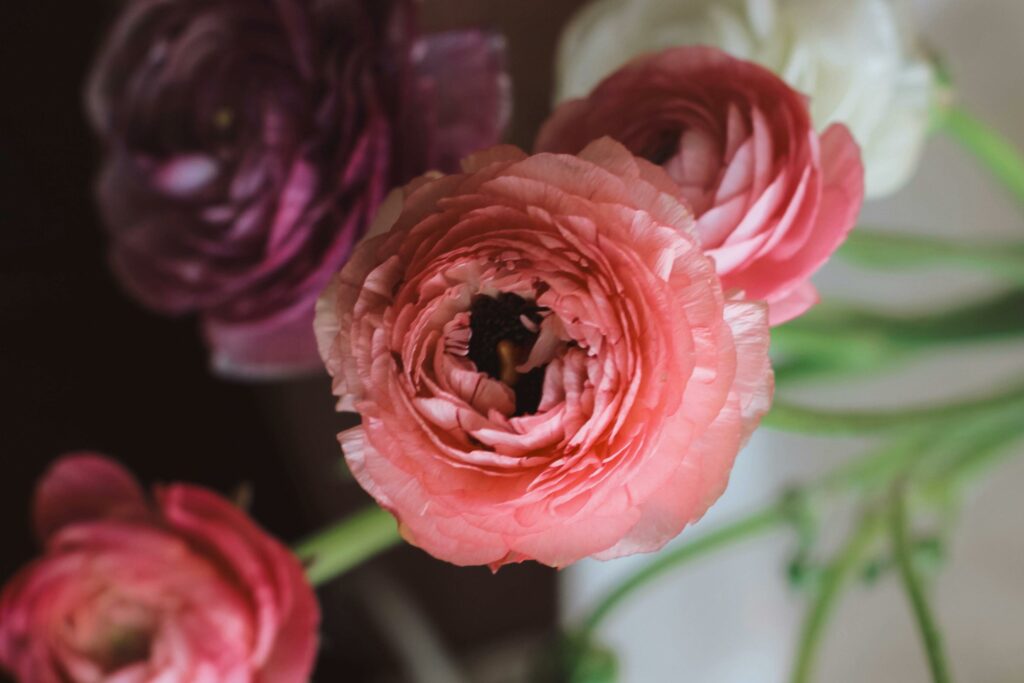
| 18 | RanunculusRanunculus | Radiant charm, being dazzled | Latin for “little frog,” for growing near water. Persian legend tells of a lovesick prince who sang beneath his beloved’s window until he wilted into the flower. | Colors add intensity rather than change meaning | Admiration, weddings |
| 19 | AnemoneAnemone | Anticipation, fading hope | Greek for “daughter of the wind.” Myth holds it sprang from Aphrodite’s tears as she mourned Adonis, making it a flower of grief mixed with fleeting beauty. | Red: dying love · White: sincerity | Sympathy, remembrance |
| 20 | CamelliaCamellia | Longing, admiration, perfection | Named for Jesuit botanist Georg Kamel. Central to Japanese tea ceremony, where its clean, whole-flower drop symbolized a samurai’s honorable death. | Red: passion · Pink: longing · White: adoration | Admiration, formal gifts |
| 21 | MagnoliaMagnolia | Nobility, perseverance, dignity | Among the oldest flowering plants on Earth, predating bees. In the American South it became shorthand for grace and endurance; in China, for feminine beauty and purity. | White: purity · Pink: youth & joy | Weddings, Southern tradition |
| 22 | PoppyPapaver | Remembrance, eternal sleep | Grew wild over WWI battlefields in Flanders, inspiring John McCrae’s 1915 poem and today’s Remembrance Day symbol. Ancient Greeks linked it to Hypnos, god of sleep, for its opium. | Red: remembrance · White: consolation | Remembrance, memorials |
| 23 | Forget-me-notMyosotis | True, undying love | German legend: a knight drowned fetching the flower for his love, crying “forget me not” as he sank. Adopted by Alzheimer’s and Freemasonry causes as a memory emblem. | Blue is standard; no meaningful color variants | Farewell, remembrance |
| 24 | VioletViola | Modesty, faithfulness | Napoleon’s empire adopted it as a covert loyalty symbol during his exile; supporters wore violets to signal his hoped-for return. Also linked to Persephone in Greek myth. | Purple: modesty · White: innocence & hope | Quiet affection |
| 25 | SnapdragonAntirrhinum | Grace, strength, deception | Named for its jaw-like bloom that “snaps” open when squeezed. Medieval folklore held it warded off curses and hidden enemies, hence its odd tie to deception. | Colors read mostly as decorative, not symbolic | Protection, graduation |
| 26 | MarigoldTagetes/Calendula | Grief, warmth, remembrance | Aztecs used it (cempasúchil) to guide spirits home for Día de los Muertos. In Hindu tradition it’s the essential flower of weddings and temple offerings — both mourning and celebration. | Orange: warmth & energy · Yellow: celebration | Día de los Muertos, festivals |
| 27 | ZinniaZinnia | Lasting affection, remembrance of absent friends | Named for German botanist Johann Zinn. Mexican in origin; Victorians used it specifically to say “I think of you” to someone far away. | Mixed colors: thinking of a friend · Red: steadfastness | Friendship, missing someone |
| 28 | AsterAster | Patience, elegance, daintiness | Greek for “star,” from myth in which the goddess Astraea wept stardust onto the earth. Ancient Greeks burned aster leaves to ward off evil spirits. | Purple: royalty/wisdom · Pink: sensitivity | September birth flower gifts |
| 29 | GladiolusGladiolus | Strength of character, remembrance | Name means “little sword” in Latin. Roman legend ties it to captive gladiators forced to duel; the survivor’s sword was said to sprout into the flower. | Red: passion · White: sincerity | Congratulations, 40th anniversary |
| 30 | DelphiniumDelphinium | Levity, open heart, lightness | Greek for “dolphin,” describing its bud shape. Said to have sprung from the blood of Ajax after his suicide, per Greek legend, linking it to fallen warriors. | Blue: dignity & grace · Purple: first love | Uplifting, July birth flower |
| 31 | Bird of ParadiseStrelitzia | Freedom, joy, paradise on earth | Named by English botanists for Queen Charlotte (born Mecklenburg-Strelitz) in 1773, for its resemblance to an exotic tropical bird in flight. | Orange & blue is the classic combination | Celebrations, new ventures |
| 32 | AmaryllisHippeastrum | Pride, determination, radiant beauty | From a Greek myth of a shy nymph, Amaryllis, who pierced her own heart with a golden arrow for 30 days to win a hunter’s love, blooming red where her blood fell. | Red: determined love · White: stunning beauty | Winter, Christmas |
| 33 | Cherry BlossomPrunus serrulata | Life’s fleeting beauty, mortality | Central to Japanese mono no aware — the bittersweet awareness that beauty is brief, tied historically to samurai philosophy and the yearly hanami viewing tradition. | Pale pink is standard; deeper pink adds intensity | Spring, reflection |
| 34 | CosmosCosmos | Harmony, order, peaceful love | Named by Spanish priests in Mexico for the flower’s perfectly ordered petals, from the Greek kosmos, meaning order and harmony of the universe. | Pink: love · White: purity · Orange: joy | Peaceful, easygoing gifts |
| 35 | DahliaDahlia | Inner strength, elegance, commitment | Mexico’s national flower, named for Swedish botanist Anders Dahl. Aztecs grew it for food before Europeans prized it ornamentally; came to signify a bond that survives change. | Dark red: strength · White: purity | Commitment, standing strong |
| 36 | WisteriaWisteria | Devotion, longevity, welcome | Named for anatomist Caspar Wistar. In Japan, ancient wisteria vines (some over a century old) are treasured living heirlooms symbolizing an enduring, welcoming home. | Purple: devotion · White: welcome | Long friendships, housewarming |
| 37 | JasmineJasminum | Sensuality, sweet love, modesty | From Persian yasmin; used across South & Southeast Asia in wedding garlands. In Victorian code, white jasmine specifically meant “amiability.” | White: sweet love · Yellow: grace & elegance | Weddings, romantic gestures |
| 38 | LotusNelumbo nucifera | Purity, enlightenment, rebirth | Sacred across Egyptian, Hindu, and Buddhist tradition alike — it closes at night and reopens clean each dawn, rising unstained from mud, hence its tie to spiritual awakening. | Pink: primary Buddhist symbol · White: purity | Spiritual gifts, new starts |
| 39 | BluebellHyacinthoides | Humility, gratitude, everlasting love | English folklore warns that walking through a bluebell wood angers fairies who ring the flowers to summon them — hence its old nickname, “fairy thimbles.” | Blue is the near-universal, wild form | Humble thanks, woodland themes |
| 40 | ButtercupRanunculus acris | Childhood joy, charm, riches | Named from the old belief that it gave butter its yellow color. Children’s folk game of holding one under the chin to test for a “liking of butter” endures today. | Bright yellow only; no accepted variants | Playful, nostalgic gifts |
| 41 | FoxgloveDigitalis | Insincerity, caution, intuition | Old English folklore linked its spotted throat to fox paw-prints or fairy fingers; its potent, sometimes deadly cardiac compounds gave it a dual reputation for healing and danger. | Purple: caution · White: rare, gentler meaning | Not typically gifted — garden/symbolic use |
| 42 | Sweet PeaLathyrus odoratus | Blissful pleasure, goodbye, thank-you | A Sicilian native popularized in Edwardian England, where it became the fashionable flower for both delicate goodbyes and thank-you notes after a pleasant visit. | Pastel shades: gratitude · Pink: departure/goodbye | Thank-you, farewells |
| 43 | StaticeLimonium | Remembrance, sympathy, success | Valued since antiquity for holding its color and shape long after drying, making it a natural symbol for a memory, or a success, that doesn’t fade. | Purple: memory · White: sympathy | Dried arrangements, sympathy |
| 44 | AlstroemeriaAlstroemeria | Friendship, devotion, mutual support | Named for Swedish baron Claus von Alströmer. Its intertwined leaves, which twist 180° as they grow, became the botanical metaphor for a bond that endures hardship. | Mixed colors: strong friendship · Pink: devotion | Friendship, get well soon |
| 45 | ProteaProtea | Diversity, courage, transformation | Named for the shape-shifting Greek god Proteus. South Africa’s national flower, prized for surviving wildfire by regenerating from its own roots — a modern emblem of resilience. | Colors vary widely; meaning stays consistent | New chapters, bold statements |
| 46 | HeatherCalluna vulgaris | Admiration, solitude, protection | Central to Scottish Highland folklore as a good-luck charm; white heather specifically was believed to grow only where no blood had ever been spilled. | White: protection/luck · Purple: admiration & solitude | Good luck, Scottish tradition |
| 47 | LarkspurDelphinium consolida | Lightness, an open heart, strong bonds | English folk name from its spur-shaped petal, resembling a lark’s claw. Long used to represent levity and a swift, open-hearted attachment. | Pink: fickleness · Purple: first love · White: happy-go-lucky | July birthdays, lighthearted gifts |
| 48 | Calla LilyZantedeschia | Magnificent beauty, rebirth | Not a true lily; its Greek name means “beautiful.” Adopted in Christian art for depictions of resurrection and, in Victorian custom, for bridal bouquets. | White: purity/rebirth · Pink: appreciation | Weddings, elegant events |
| 49 | EdelweissLeontopodium | Courage, devotion, noble purity | Grows only in harsh, high Alpine altitudes; historically a young suitor risked the climb to pick one as proof of devotion, making it Austria and Switzerland’s emblem of daring love. | White-grey is its only natural form | Devotion, mountain/heritage themes |
| 50 | HibiscusHibiscus | Delicate beauty, fleeting fame | Each bloom lasts only a single day, giving it, across Hawaiian and East Asian tradition alike, a meaning tied to beauty that is intense but does not last. | Red: passion · Yellow: fame in Hawaiian tradition · Pink: friendship | Tropical gifts, celebrations |
Compiled from Victorian floriography (Kate Greenaway’s 1884 Language of Flowers was the genre’s bestseller), classical mythology, and religious & regional traditions. Meanings are cultural conventions, not universal law — they vary by country and era.