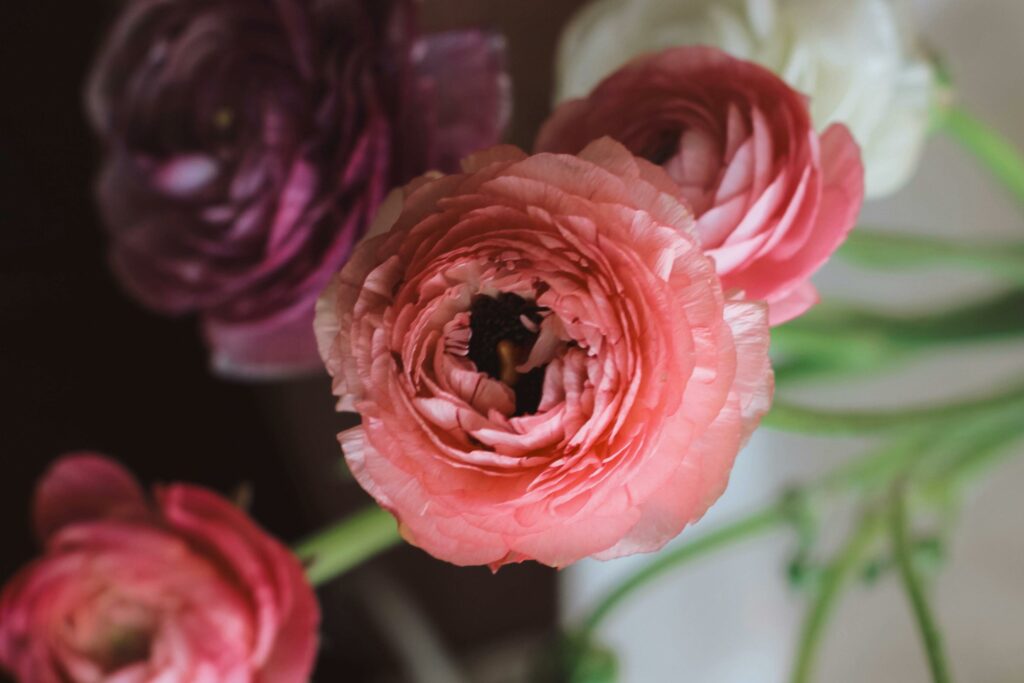

Ranunculas, with their delicate, multilayered petals and vibrant colors, are highly prized in both floral arrangements and garden settings. Known for their long vase life, soft textures, and variety of hues—including pink, red, yellow, orange, and white—ranunculas have become a favorite in weddings, luxury bouquets, and premium flower markets. Their quality and characteristics—such as bloom size, petal density, color intensity, stem strength, and shelf life—are strongly influenced by growing conditions. Climate, soil type, altitude, and cultivation techniques all play a role. This guide highlights the leading ranuncula-growing regions, their strengths, and market considerations.
Dutch Ranunculas
Growing Conditions & Industry Features
The Netherlands is a global leader in ranuncula production, especially for greenhouse-grown cut flowers. Dutch growers utilize precise climate control, temperature regulation, and irrigation to produce high-quality blooms year-round. The Netherlands is also a center for breeding new varieties, resulting in unique colors and larger blooms.
Characteristics
- Large, densely layered flower heads with consistent form.
- Vibrant, uniform colors ranging from pastels to deep reds and oranges.
- Sturdy stems suitable for transport and export.
- Controlled production allows year-round availability for premium markets.
Challenges
- High production costs due to energy-intensive greenhouses.
- Controlled environments may produce less variation or “natural” softness compared to outdoor-grown ranunculas.
Israeli Ranunculas
Growing Conditions & Geography
Israel is a leading producer of field-grown ranunculas, particularly in the fertile coastal plains of the Sharon and Galilee regions. Mild Mediterranean winters and cool springs provide ideal conditions for early-season production. Israeli ranunculas are primarily grown outdoors in open fields under netting to protect against pests and harsh sun.
Characteristics
- Bright, vivid colors, particularly reds, pinks, and yellows.
- Stems slightly shorter than Dutch greenhouse varieties but still sturdy.
- Early-season blooms, making them a crucial supplier for European markets in late winter and early spring.
- High-quality field-grown “natural” appearance.
Challenges
- Seasonal production limits year-round availability.
- Stem length and uniformity may vary more than greenhouse-grown varieties.
Californian Ranunculas (USA)
Growing Conditions & Geography
California’s Central Coast, especially Ventura and Santa Barbara counties, offers ideal conditions for ranuncula cultivation. Cool, wet winters and mild spring temperatures produce high-quality blooms outdoors. Some growers use greenhouses for off-season production and specialty varieties.
Characteristics
- Large blooms with vibrant, uniform colors.
- Strong stems and long vase life, suitable for cut flower markets.
- Outdoor-grown blooms have natural variation in petal layering and form.
- Extended harvest season due to mild climate.
Challenges
- Production is seasonal, limiting availability in mid-to-late summer.
- Outdoor exposure can cause variability in bloom size and stem strength.
Other Notable Ranuncula Regions
- Turkey: Produces ranunculas for export to Europe, with focus on early-season varieties.
- Spain: Greenhouse-grown ranunculas for both domestic and European markets, leveraging mild climate.
- New Zealand: Temperate climate with long daylight hours ideal for high-quality cut flowers for export to Australia and Asia.
Comparative Summary
| Region | Growing Environment | Ranuncula Strengths | Challenges / Limitations |
|---|---|---|---|
| Netherlands | Greenhouse-controlled | Large, dense blooms, uniform colors, strong stems, year-round availability | High production costs, less natural variation |
| Israel | Outdoor fields, Mediterranean climate | Early-season blooms, bright vivid colors, natural appearance | Seasonal production, stem length slightly shorter |
| California, USA | Outdoor and some greenhouse, mild climate | Large blooms, vibrant colors, long vase life, natural variation | Seasonal limits, variability in size and stems |
| Other Regions | Turkey, Spain, New Zealand | Early-season supply, export-oriented, specialty cultivars | Limited scale, seasonal constraints |
Ranunculas’ quality and market suitability are closely tied to their region of origin:
- Netherlands: Premium greenhouse production with consistent blooms and colors for year-round supply.
- Israel: High-quality field-grown blooms, especially early-season, with vivid colors and natural form.
- California, USA: Outdoor-grown blooms with large, vibrant flowers and long vase life, ideal for both cut flowers and garden use.
Understanding the origin of ranunculas helps florists, wedding planners, and gardeners select the most suitable blooms based on appearance, durability, and market needs.