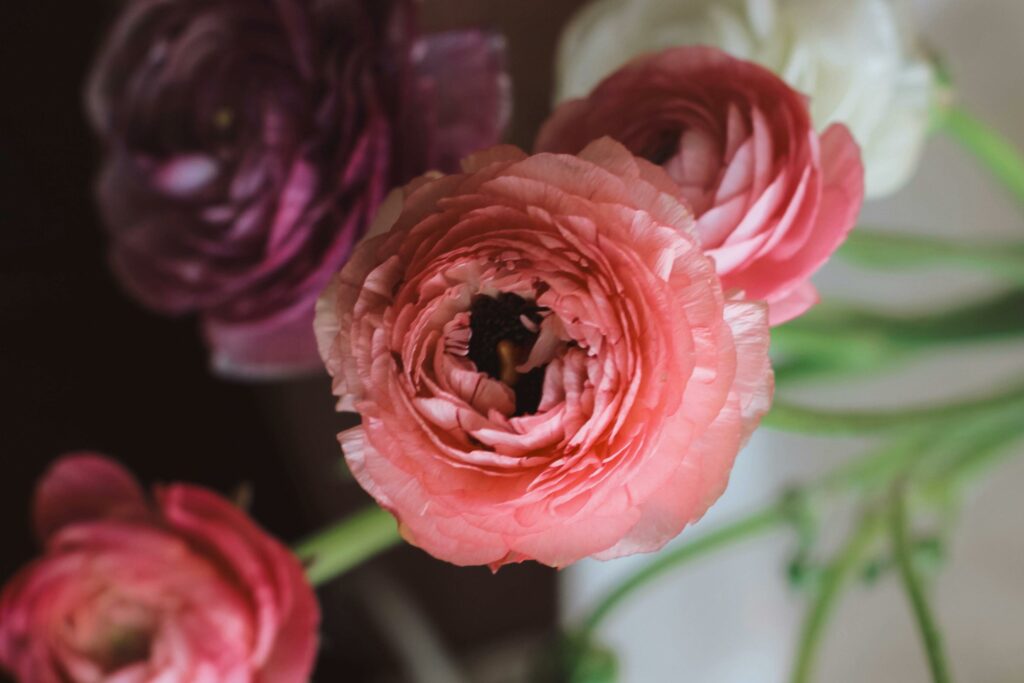

An investigative overview of the most resource-intensive blooms in global trade
Cut flowers occupy an unusual position in modern consumer culture. They are sold as fleeting luxuries—symbols of celebration, sympathy, romance, or apology—yet their production depends on one of the most complex and environmentally demanding agricultural supply chains in the world. Behind their short life in a vase lies a system built on controlled climates, long-distance transport, and strict aesthetic standards that often override seasonal and geographic logic.
This article examines several of the most commonly traded cut flower varieties that are associated with particularly high environmental impacts. The focus is not on individual growers or countries, but on the structural pressures that make certain flowers more resource-intensive than others.
Roses: the backbone of the global flower trade
Roses are the most widely sold cut flower internationally, and also among the most environmentally significant in terms of scale. Their year-round availability in markets far from where they are grown depends on a finely tuned global logistics network that often spans continents within days.
A large proportion of roses sold in Europe are now grown in high-altitude regions near the equator, particularly in East Africa and parts of South America. These locations are not chosen for proximity to consumers but for their climatic advantages: consistent sunlight, stable temperatures, and lower land costs. However, these advantages are offset by the environmental cost of maintaining export-grade production systems.
To meet supermarket and florist standards, roses are typically grown using intensive irrigation systems and substantial chemical inputs designed to control pests and ensure uniform appearance. Once harvested, they are rapidly cooled and transported through refrigerated chains. In many cases they are flown by air freight, because their shelf life is too short to rely on sea or land transport.
The result is a product that appears simple and natural but is in fact heavily engineered. Its footprint is shaped less by the flower itself and more by the expectation that roses should be available in identical form every day of the year.
Tulips: efficiency disrupted by demand for seasonless supply
Tulips are often presented as a relatively sustainable cut flower, particularly when grown in their natural season in northern Europe. Field-grown tulips require fewer inputs than many other ornamental crops, and when sold locally in spring they can have a comparatively low environmental impact.
The complication arises when tulips are forced outside their natural cycle. To meet demand during winter months or for specific events, bulbs are subjected to controlled temperature regimes and grown in heated greenhouse environments. This process, known as forcing, requires significant energy input and undermines the efficiency of seasonal cultivation.
In addition, commercial tulip production relies on large-scale bulb storage and refrigeration systems that allow growers to stagger supply throughout the year. While this makes tulips commercially reliable, it also extends their energy footprint well beyond the field.
Tulips therefore sit in a category where environmental impact is highly variable. In season and locally grown, they can be relatively low impact. Out of season, they become part of an energy-intensive controlled production system.
Peonies: a flower constrained by timing
Peonies illustrate how consumer preference can reshape the environmental profile of a species that is naturally highly seasonal. Their popularity in weddings and premium floral arrangements has driven demand far beyond their short natural blooming period, which typically lasts only a few weeks.
To extend availability, the industry relies on two main strategies: hemispheric sourcing and cold storage manipulation. Peonies may be grown in different regions of the world to stagger harvest times, allowing continuous supply to major markets. In addition, harvested buds are often stored under refrigeration to delay blooming, enabling flowers to be released according to commercial demand rather than biological timing.
Because peonies are delicate and highly sensitive to transport conditions, they are particularly reliant on air freight when shipped internationally. This increases their carbon footprint significantly compared with hardier flowers that can tolerate slower transport methods. Wastage rates can also be high, since minor temperature fluctuations during transit can affect bloom quality.
The environmental impact of peonies is therefore closely tied to their status as a luxury product. Rarity is extended artificially, and the systems required to maintain that extension are resource-intensive.
Hydrangeas: water demand and controlled cultivation
Hydrangeas are widely used in ornamental floristry, particularly in large arrangements and event decoration. Their visual appeal depends on large, hydrated flower heads, which in turn require significant water input during cultivation.
In commercial production, hydrangeas are often grown under controlled irrigation systems that ensure consistent moisture levels. In regions where water availability is limited or variable, this can place pressure on local resources, particularly when cultivation is scaled for export markets.
Like many high-value ornamental crops, hydrangeas are also frequently grown in greenhouse environments to regulate quality and timing. This allows producers to meet demand for specific seasons and events, but it increases energy use and reduces the reliance on natural growing cycles.
Their environmental profile is therefore shaped by two main factors: water intensity during growth and energy intensity in controlled production systems.
Lilies: synchronised production and chemical dependency
Lilies occupy a slightly different space in the cut flower market. They are widely available and often perceived as a standard commercial flower, yet their production for key retail periods such as Easter involves tightly controlled forcing systems.
To ensure lilies bloom at specific times, growers manipulate temperature and lighting conditions in greenhouses. This synchronisation increases energy use, particularly in colder climates where external conditions are far from optimal year-round growing environments.
In addition, lilies are commonly associated with higher pesticide use in commercial production. Their susceptibility to pests and fungal diseases in dense cultivation environments often necessitates chemical intervention to maintain uniform quality standards.
While lilies are not always the most carbon-intensive flower individually, their large-scale, timed production contributes to a steady background level of environmental impact within the global floriculture system.
The broader pattern: why flowers have become an environmental paradox
Across all of these examples, the environmental impact of cut flowers is not determined solely by species. Instead, it emerges from a shared set of structural pressures that shape modern floriculture.
The first is seasonality removal. Flowers are no longer tied to natural growing cycles, which requires artificial climate control or hemispheric sourcing. The second is aesthetic standardisation. Uniform appearance increases chemical and logistical inputs. The third is speed. Because flowers are perishable, global supply chains rely heavily on refrigeration and sometimes air transport to maintain freshness.
Together, these factors create a paradox. Flowers are culturally associated with nature, but their commercial production increasingly depends on systems that distance them from natural conditions.
Understanding this does not require abandoning cut flowers entirely. It does, however, challenge the assumption that beauty is environmentally neutral. In the case of many widely traded blooms, the opposite is often true: the more perfect and available they appear, the more resource-intensive their production is likely to be.