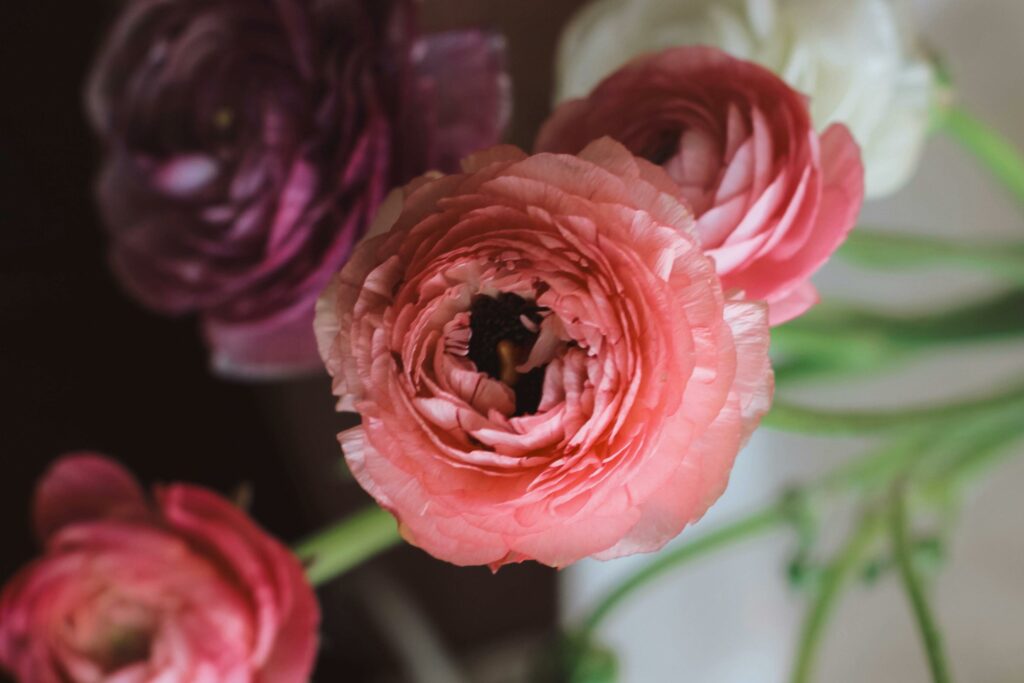

A Flower Worth More Than Gold
In the rarefied world of ornamental horticulture, few plants command the reverence, obsession, and extraordinary sums of money that the peony does. A single division of a newly released intersectional hybrid can fetch $300, $500, even $1,000 or more. Rare tree peony cultivars, painstakingly grafted over years in specialist nurseries in Japan and China, change hands through backroom negotiations at trade shows for prices that rival fine art. And yet the peony trade operates almost entirely outside public view — a closed circuit of breeders, collectors, licensed propagators, and botanical institutions who speak a language of Latin epithets, chromosome counts, and fertility ratings that is impenetrable to the uninitiated.
This guide is an attempt to map that world: who breeds the most sought-after varieties, how those varieties enter commerce, which cultivars sit at the very apex of the market, and how the world’s most exclusive growers — from the rain-soaked fields of the Netherlands to the hillside gardens of Hokkaido — acquire and protect access to them.
Part One: Understanding Peony Classification and Why It Matters to the Trade
Before understanding the economics of exclusive peonies, one must understand the botany. The genus Paeonia contains roughly 33 species divided into two sections: Paeonia (herbaceous species) and Moutan (shrubby tree peonies). From these foundations, horticulturalists have constructed three broad horticultural categories that underpin the entire trade.
Herbaceous Peonies (Paeonia lactiflora hybrids and others) are the most familiar: they die back to the ground each winter and emerge fresh each spring. They are the workhorses of the cut flower trade and the entry point for most gardeners. But even within this category, variation is enormous — from the century-old double whites of Lemoine’s French breeding programme to the shockingly coral-red singles developed by American hybridisers in the late twentieth century.
Tree Peonies (Paeonia suffruticosa and related species, known in Japanese as botan) are woody shrubs that retain permanent above-ground structure. Their flowers are among the largest in the temperate garden world, sometimes exceeding thirty centimetres in diameter, and their colour range — including true purples, near-blacks, and luminous yellows — far exceeds that of herbaceous types. The rarest Japanese and Chinese tree peony cultivars, maintained in temple gardens and specialist collections, represent centuries of selection and are essentially irreplaceable.
Intersectional Peonies, often called Itoh hybrids after Japanese breeder Toichi Itoh who first achieved the cross in 1948, combine herbaceous and tree peony parentage. They die back each winter like herbaceous types but produce flowers with the extraordinary colour range and large, exotic forms of tree peonies. This category has become the engine of the modern exclusive peony trade, commanding the highest prices in retail commerce and driving the most intense competition among licensed propagators.
The trade significance of this taxonomy is straightforward: rarity correlates with difficulty of production and the narrowness of the genetic pipeline. Herbaceous peonies can be divided relatively easily; a mature clump yields several divisions per year. Tree peonies must be grafted onto P. lactiflora or P. ostii rootstock — a skilled, time-consuming process with meaningful failure rates. Itoh hybrids, because they are sterile or nearly so, can only be propagated vegetatively, making supply permanently constrained relative to demand.
Part Two: The World’s Most Exclusive Peony Varieties
The Itoh Legacy: ‘Bartzella’, ‘Cora Louise’, and Beyond
No variety has done more to reshape the modern peony market than ‘Bartzella’ (R. Anderson, 1986). An Itoh hybrid with semidouble to double bright yellow flowers of extraordinary substance, lemon-scented and produced in abundance over a long season, ‘Bartzella’ spent decades as the most expensive peony in commerce. Wholesale divisions changed hands at $150 to $300 each throughout the 1990s and early 2000s, and retail prices frequently exceeded $500 for a single bare-root plant. Even now, decades after its introduction, ‘Bartzella’ remains a benchmark against which newer yellows are measured.
‘Cora Louise’ (R. Anderson, 1986), released simultaneously, offers white petals with a lavender flare and an almost ethereal delicacy. Like ‘Bartzella’, it held its premium value well into the twenty-first century, in part because its specific aesthetic — that precise combination of white and lavender — proved difficult to replicate. Breeders spent years trying to improve upon it without quite succeeding.
Among newer Itoh introductions, ‘Going Bananas’ (Krekler/Klehm, introduced by Song Sparrow Nursery) and ‘Hillary’ (D. Reath) have achieved near-cult status in the North American collector market. But the most anticipated Itoh releases of recent years have come from Don Hollingsworth of Missouri, whose decades of work crossing species peonies into complex hybrid populations has produced varieties with texture, colour depth, and seasonal duration that earlier breeders could not achieve. His introductions circulate first through a network of specialist collectors before reaching broader commerce — sometimes years after their first evaluation.
Japanese Tree Peonies: The Antique Market
The most exclusive tree peonies are not recent introductions but ancient Japanese cultivars maintained in specialist collections. Varieties such as ‘Kamada Nishiki’ (a richly coloured nineteenth-century Japanese cultivar with purple-lavender blooms), ‘Hana Kisoi’ (a luminous pink with extraordinary form), and ‘Shima Nishiki’ (notable for striped petals in red and white, a trait controlled by a virus that complicates propagation) exist in very limited numbers outside Japan.
These varieties enter Western commerce through two principal channels: specialist importers who work directly with Japanese nurseries, and botanical gardens that have acquired plants through formal exchanges and make surplus grafted stock available to trusted growers. The Hokkaido-based nursery Yamaguchi Botan-en and several Kyoto-area producers are among the most respected sources, though direct relationships with these businesses require years of cultivated trust and typically involve Japanese-language correspondence.
‘High Noon’, a tree peony of uncertain origin but widely attributed to American breeder Edward Auten Jr. (circa 1952), occupies a special position: it is the only tree peony widely acknowledged to be reliably repeat-flowering, producing a second flush of its clear yellow blooms in late summer. This single characteristic — vanishingly rare in Moutan — has made it perpetually sought-after and disproportionately expensive relative to its age.
Species Peonies: The Collector’s Frontier
At the furthest frontier of exclusivity are the species peonies themselves — Paeonia rockii, P. ludlowii, P. emodi, P. mlokosewitschii (‘Molly the Witch’), and P. cambessedesii, among others. These are plants with naturally restricted ranges, some protected under CITES (the Convention on International Trade in Endangered Species), and propagation from ethically sourced seed is the only legitimate route to commerce. ‘Molly the Witch’ (P. mlokosewitschii), with its single canary-yellow flowers and glaucous foliage, is among the most desired of all garden plants in Britain — and among the most difficult to source legitimately, taking seven or more years to flower from seed.
The trade in wild-collected species peonies, particularly P. rockii and its relatives from China, exists in a legal and ethical grey zone that specialist growers navigate with extreme care. The most reputable nurseries source only from documented cultivated populations and are prepared to provide provenance certificates on request.
Part Three: The Structure of the Exclusive Peony Trade
Breeders: The Originators
The pipeline begins with breeders — often private individuals with decades of expertise and no commercial motive beyond the work itself. The most influential American breeders of the modern era include Roy Klehm (whose family nursery, now Song Sparrow Farm, introduced many landmark Itoh varieties), Don Hollingsworth, David Reath (whose Michigan-based programme produced dozens of important herbaceous and Itoh cultivars before his death), and Roger Anderson of Wisconsin, whose Itoh introductions redefined what the genus could look like.
In the Netherlands, the breeding work of Jan Lohman and the research programmes associated with the Dutch cut flower industry have focused more on commercial viability — stem length, vase life, cold-chain resilience — than on novelty of form. But Dutch breeders have been responsible for several herbaceous varieties that now dominate the European wholesale cut flower trade.
In China, state-supported breeding programmes at institutions such as the Beijing Botanical Garden and the Gansu Provincial Research Institute have introduced tree and herbaceous varieties that remain little-known outside specialist circles but are beginning to attract attention from European and American collectors.
A breeder who has developed a genuinely novel cultivar faces an immediate problem: how to protect it. In the United States, Plant Patents (a distinct category from utility patents) offer twenty years of protection for asexually reproduced plants, meaning that anyone who propagates a patented variety without a licence is infringing. In the European Union, Community Plant Variety Rights (CPVR) offer equivalent protection. The enforcement of these rights in the peony trade is patchy — the plants are small-scale, the nursery community is relationship-driven, and litigation is expensive — but the most commercially significant introductions are routinely patented, and licensed propagators pay royalties on each division sold.
Licensed Propagators: The Gatekeepers
Between the breeder and the end consumer sits the licensed propagator — typically a specialist nursery that has negotiated the right to multiply a new variety. This relationship is the central mechanism of the exclusive peony trade.
A typical arrangement works as follows: a breeder who has developed and evaluated a new cultivar over eight to fifteen years (the period required to produce sufficient stock and observe performance across different conditions) selects one or more propagating partners. These partners receive an initial block of propagating material — perhaps ten to fifty divisions for a highly anticipated introduction — and the right to sell propagated stock under the cultivar name, in exchange for a per-plant royalty to the breeder.
The economics are significant. If a licensed propagator receives fifty divisions of a new Itoh hybrid and each can be divided into four saleable plants over two growing seasons, they have perhaps two hundred plants to sell at an initial retail price of $150 to $300 each — a potential revenue of $30,000 to $60,000 from a single introduction, before growing costs. For the most anticipated releases, initial stock sells out within hours of listing.
The most prominent licensed propagators in North America include Peony’s Envy (New Jersey), Adelman Peony Gardens (Oregon), Hollingsworth Peonies (Missouri), and New Peony Farm (Minnesota). In the UK, Claire Austin Hardy Plants and Kelways Nursery (one of the oldest peony specialists in the world, established 1851) hold relationships with international breeders that give them access to varieties unavailable elsewhere in Britain. In the Netherlands, Van der Breggen Peonies and Ammerlaan Plant supply the European wholesale trade with licensed cut flower varieties.
The Role of Peony Societies
The American Peony Society (APS), founded in 1903, plays a structural role in the trade that goes beyond advocacy. Its Gold Medal programme is the closest thing the American peony world has to an official quality certification: varieties that receive the Gold Medal — a process requiring evaluation over many years by multiple judges — achieve a market premium that persists for decades. Breeders actively manage the timing of their introductions in relation to APS show schedules and evaluation cycles.
The Royal Horticultural Society in the UK, through its Award of Garden Merit (AGM) programme, performs an analogous function for the British and European market. An AGM peony is not necessarily the most exclusive variety, but it signals a level of reliability and performance that specialist growers use as a baseline filter.
Peony societies also facilitate the informal trade networks through which truly exclusive material circulates: their annual seed and division exchanges, their correspondence committees, and their study tours to major collections around the world. A recommendation from a respected APS member opens doors in Japanese nurseries that no commercial transaction could.
Part Four: How the World’s Most Exclusive Growers Acquire Rare Varieties
Personal Relationships as Currency
The most exclusive peony growers — those maintaining collections that include multiple Japanese antique tree peonies, rare species representatives, and unreleased breeding selections — operate primarily through personal relationships built over decades. No catalogue lists these varieties. No website accepts orders for them.
The mechanism is more akin to the rare book trade or the world of studio pottery: a grower who has demonstrated seriousness of purpose, proper growing conditions, willingness to share documentation, and ideally some reciprocal rarity to offer will gradually be included in exchanges that the broader public never hears about. A British collector who has spent twenty years growing and documenting rare species peonies may receive, as a gift or nominal-cost exchange, grafted material of a nineteenth-century Japanese botan from a grower in Kyoto who trusts them to maintain it properly.
Several major public gardens — Kew Gardens in London, the Royal Botanic Garden Edinburgh, Arboretum des Barres in France, and the Beijing Botanical Garden — maintain living collections of peonies that include varieties held nowhere else in the world. These institutions occasionally share surplus material with specialist nurseries and collectors through formal institutional exchange agreements, providing a legitimate pipeline for otherwise unobtainable material.
Trade Shows and Their Back Rooms
The Chelsea Flower Show in London, the Northwest Flower and Garden Festival in Seattle, and specialist peony shows organised by national peony societies are not merely display venues — they are trading floors. The conversations that happen in the hours before public opening, between exhibitors and the handful of collectors who hold trade passes, are where significant transactions occur.
A nursery exhibiting a new introduction at Chelsea will often receive enquiries from Dutch wholesale buyers, German collectors, and Japanese importers before the gates open to the public. Licensing negotiations begin in the marquee and continue over dinner. The show circuit — Chelsea in late May, then the APS national show (typically held in June), then the Hokkaido Peony Festival in Japan — is the annual rhythm around which the exclusive trade organises itself.
Importing from Japan and China
Direct importation of peony material from Japan and China into the UK and European Union requires phytosanitary certification from the country of origin and compliance with EU or UK plant health regulations. For bare-root herbaceous peony divisions, the process is relatively straightforward if the exporting nursery is registered. For grafted tree peonies, the rootstock (typically P. lactiflora) must also be certified, and the process is more complex.
In practice, most European growers who source Japanese tree peonies work through specialist importers who handle the compliance burden and have established relationships with specific Japanese nurseries. The Dutch importer Koen Van der Breggen and several smaller Belgian and German specialists effectively control the pipeline of Japanese botan cultivars into the European market.
American importers face a different regulatory environment: the USDA’s Animal and Plant Health Inspection Service (APHIS) requires that imported bare-root peony material be inspected at the port of entry, and certain species — particularly those considered potential hosts for specific fungal or bacterial pathogens — face additional restrictions. This creates a meaningful barrier to importing rare Japanese and Chinese material, and most serious American collectors work around it by sourcing from the small number of domestic growers who have already imported and established the varieties they seek.
Tissue Culture and Its Discontents
Tissue culture (micropropagation) offers a theoretical solution to the supply constraints of the exclusive peony trade: by multiplying plants from tiny explants in sterile laboratory conditions, it should be possible to produce thousands of plants from a single individual in a fraction of the time required for conventional division or grafting.
In practice, peonies have proven exceptionally difficult to micropropagate reliably. Protocols exist for some herbaceous varieties, and several Dutch cut flower producers use tissue culture to scale up commercial varieties for the wholesale market. But the most desirable tree peony and Itoh cultivars remain largely resistant to reliable laboratory multiplication, and the handful of plants that do emerge from tissue culture protocols often display somaclonal variation — subtle genetic changes that may affect flower colour, form, or vigour.
For the exclusive trade, this technical limitation is not entirely unwelcome. The scarcity that tissue culture might resolve is precisely what sustains the premium economics of rare introductions. Some breeders explicitly decline to license their varieties for tissue culture propagation, preferring to maintain the slow, relationship-based commerce of vegetative division.
Part Five: The Economics of Exclusivity
Pricing Dynamics
New Itoh hybrid introductions from major American breeders currently retail at $75 to $300 per bare-root division, with the first year’s stock typically selling at the highest prices before supply increases. Tree peony cultivars of Japanese origin retail at $80 to $500 or more for grafted specimens, depending on cultivar rarity and the nursery’s provenance documentation. Truly rare species peonies — P. cambessedesii, P. emodi, P. mlokosewitschii — retail at $40 to $120 for seedling-raised plants, with the price reflecting the seven-to-ten-year growing period before first flower.
The wholesale cut flower market operates on different logic. Top Dutch lactiflora cut flower varieties — selected for stem length, vase life, and uniformity — are sold to growers as licensed propagating material at prices reflecting commercial productivity rather than novelty. A grower buying licensed divisions of a premium cut flower variety is paying for yield per hectare and buyer acceptance at auction, not for horticultural distinction.
The Secondary Market
A genuine secondary market exists for peony divisions among collectors, operating through society exchanges, specialist Facebook groups, and occasional eBay listings. This market is poorly regulated and presents significant risks: mislabelling (whether accidental or fraudulent) is common, plant health cannot be verified, and provenance claims are often impossible to substantiate.
The most reputable participants in the secondary market are established collectors with documented track records, whose identities and collections are known within society circles. A division of a genuinely rare Japanese tree peony offered by such a collector, with photographs of the plant in flower and a clear account of how they acquired it, may be worth considerably more than the same nominal variety offered by an anonymous seller.
Counterfeiting and Mislabelling
The exclusive peony trade has a persistent mislabelling problem. The most commercially desirable varieties — ‘Bartzella’, ‘Cora Louise’, ‘Garden Treasure’, ‘Hillary’ — are routinely offered under their names by nurseries selling unrelated or inferior cultivars. In some cases, this is simple error: peony plants are difficult to identify when dormant, labelling mistakes propagate through generations of division, and record-keeping at small nurseries is imperfect. In other cases, the mislabelling is deliberate fraud.
The only reliable protection against mislabelling is to purchase from nurseries with documented track records, ideally those with photographic records of named clones in their collection and professional relationships with the original breeder or licensed propagator. Molecular identification using DNA fingerprinting is available from specialist laboratories and is increasingly used by serious collectors to verify the identity of expensive acquisitions — though the reference databases required for peony identification remain incomplete.
Part Six: The Future of the Exclusive Peony Trade
Several forces are reshaping the trade in ways that will determine which varieties achieve lasting significance and which growers come to dominate the next generation of supply.
Climate and seasonality are altering the geography of peony production. Regions that have historically been too warm for reliable peony cultivation — parts of southern Europe, the American South, lowland areas of East Asia — are effectively excluded from the premium herbaceous market, which requires cold winters for proper dormancy and chilling. Conversely, some traditional growing regions in the American Midwest and northern Europe are experiencing warmer springs that compress the flowering season and increase the risk of late frost damage to tree peony buds. Breeders are beginning to prioritise heat tolerance and extended chilling flexibility as selection criteria, which may shift the centre of gravity of the trade.
Chinese breeding programmes represent perhaps the most significant emerging force. Decades of state-funded research into P. suffruticosa and P. lactiflora have produced cultivars that combine traditional Chinese aesthetic preferences — particular colour saturations, petal arrangements with cultural significance — with modern horticultural performance. As these varieties enter international commerce through the growing network of Chinese specialist nurseries with export capability, they are likely to disrupt a trade that has been dominated for a century by American, Dutch, and Japanese producers.
The conservation imperative is growing. Several wild peony species face genuine extinction pressure from habitat loss and collection, and the horticultural trade has a complex relationship with conservation: it can provide an economic incentive for cultivation that reduces pressure on wild populations, but it can also stimulate demand that accelerates illegal collection. The most responsible sector of the trade — botanical gardens, society seed exchanges, specialist breeders working with documented cultivated populations — is increasingly emphasising provenance and engaging with conservation organisations. This is likely to become a more prominent differentiating factor as awareness of plant conservation issues grows among collectors.
The digital trade is both democratising access and increasing the speed at which new introductions are discovered and sold. A new variety announced on a specialist nursery’s website now sells out within hours, as collectors from five continents compete for limited stock. This has compressed the period of genuine exclusivity — the window during which only a handful of growers hold a variety — and increased the commercial pressure on breeders to release rather than evaluate for longer. Whether this serves the long-term quality of the trade is a matter of active debate among its most experienced participants.
A Trade Built on Trust and Time
The exclusive peony trade is, at its core, a network of trust sustained over decades by people who care about these plants more than they care about the money they might extract from them. The greatest breeders — Hollingsworth, Anderson, Reath — spent lifetimes working without certainty that their introductions would achieve commercial significance. The most respected collectors maintain varieties that may never have monetary value but represent irreplaceable living heritage. The nurseries that have endured — Kelways in Somerset, Adelman in Oregon, Yamaguchi in Hokkaido — have done so by prioritising authenticity and relationship over short-term margin.
Entry into this world is slow and earned. It requires demonstrated expertise, proper growing conditions, willingness to contribute as well as acquire, and patience measured in years rather than seasons. But for those who persist, the reward is access to some of the most extraordinary plants that human artistry and botanical diversity have combined to produce — flowers that have been cultivated and loved, in some cases, for a thousand years.