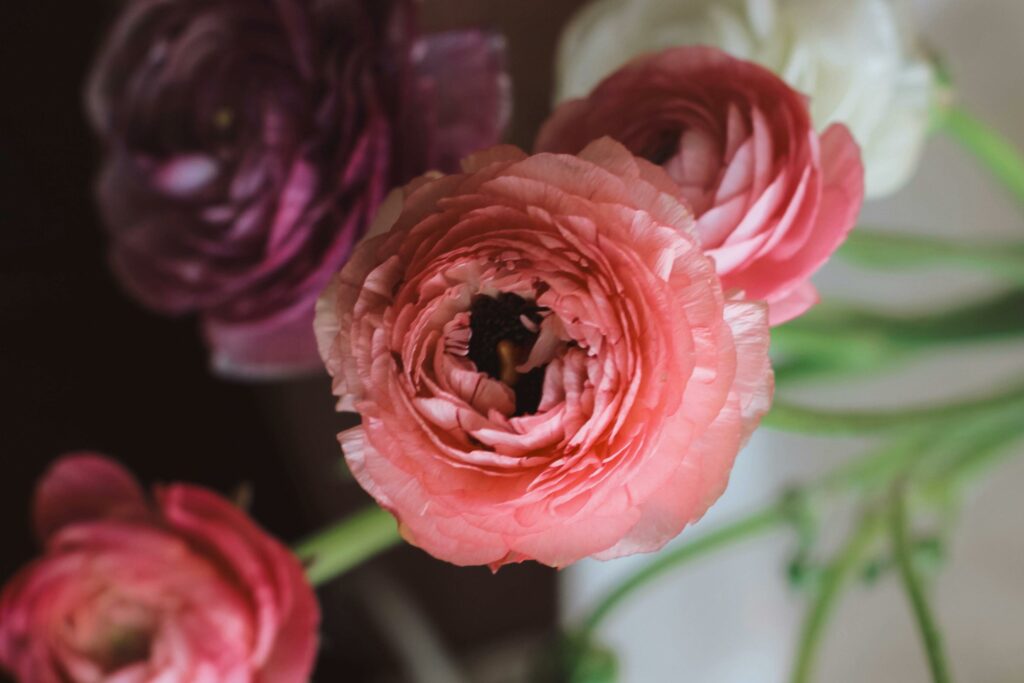

Preserved flowers are real flowers that have undergone specialized treatments to maintain their natural beauty, softness, and color for months or even years without the need for water or sunlight. Unlike dried flowers, which often become brittle and muted in color, preserved flowers retain a fresh, lifelike appearance, making them ideal for bouquets, décor, and gifts.
Preserved Roses
Preserved roses are the most iconic and widely used preserved flower. Through a careful process involving glycerin and natural dyes, the roses’ natural sap is replaced while keeping the petals soft, flexible, and vibrant. These flowers maintain their romantic shape and often a subtle fragrance, making them highly desirable for luxury bouquets, shadow boxes, wedding décor, and anniversary gifts. Standard long-stem roses offer elegance, while smaller spray roses provide texture and fullness in arrangements. To ensure longevity, roses should be kept away from direct sunlight, moisture, and excessive handling, as these factors can fade their color or deform the petals.
Preserved Hydrangeas
Hydrangeas are prized for their voluminous blooms and delicate clusters of petals. Preserved hydrangeas maintain their softness and fullness through a glycerin-based infusion that replaces moisture while keeping the petals intact. These flowers are excellent for creating statement pieces such as lush centerpieces, wall arrangements, and decorative bouquets. Their delicate structure, however, means they must be handled gently; even minor pressure can bruise or crush the petals. Hydrangeas are available in subtle pastels, bold saturated colors, and sometimes with glittered edges for added effect, giving florists a versatile palette for both traditional and modern designs.
Preserved Baby’s Breath (Gypsophila)
Baby’s breath is widely used as a filler flower due to its airy clusters of tiny blossoms. When preserved, the flowers retain a soft, flexible texture and can be naturally colored or dyed in a wide array of pastel and vibrant tones. These delicate flowers add texture and dimension to bouquets, wedding arrangements, and floral crowns. Because the clusters are so fine, handling must be light to prevent breakage, and they should never be submerged in water. Preserved baby’s breath is especially valued for minimalist or romantic designs, where it can provide ethereal contrast to larger blooms.
Preserved Eucalyptus
Preserved eucalyptus is one of the most popular preserved foliages, appreciated for its soothing green tones, structural variety, and subtle fragrance. The leaves retain their natural flexibility and shape, whether treated with glycerin or silica gel, and can be tinted to create soft blues, silvers, or other decorative hues. Eucalyptus is perfect for adding texture and depth to bouquets, wreaths, garlands, or table décor. It is durable yet sensitive to humidity; moisture can lead to mold or discoloration, so it must be kept in dry conditions. Its versatility and longevity make it a staple in both contemporary and traditional floral arrangements.
Preserved Orchids
Orchids are renowned for their exotic, intricate blooms, and preserving them allows florists to offer a luxurious, long-lasting alternative to fresh orchids. Preservation processes maintain the delicate petals’ softness and vibrant colors, though their delicate nature requires meticulous handling. Preserved orchids are often featured in high-end arrangements, wedding décor, and gift boxes, where their elegance and sculptural form can be highlighted. Phalaenopsis and Dendrobium varieties are most common, prized for their large, dramatic blooms. Keeping orchids away from direct sunlight and heat is essential to prevent fading or petal curling.
Preserved Lavender
Lavender is not only visually appealing but also valued for its calming fragrance. Preserved lavender retains both its slender form and aromatic qualities through air-drying or glycerin infusion. Its small, spiky blooms add vertical texture and subtle color to arrangements, bouquets, and decorative sachets. Lavender thrives best in cool, dry environments and should be kept free of moisture to avoid mold or deterioration. Even with careful handling, its stems remain somewhat delicate, so bending or crushing should be avoided. Lavender is especially suited for rustic or aromatherapy-inspired floral designs.
Preserved Peonies
Peonies are lush, romantic flowers with layers of soft, ruffled petals. Preserved peonies retain their natural curves and volume, making them ideal for statement bouquets, wedding arrangements, and decorative shadow boxes. Their preservation involves careful glycerin infusion to maintain softness while preventing brittleness. They are available in a range of shades from pale pinks and creams to deeper reds, offering designers flexibility for both understated elegance and bold, dramatic pieces. Like hydrangeas, peonies require gentle handling to maintain their intricate petal structure.
Mixed Filler and Specialty Flowers
In addition to the main blooms, a wide variety of smaller preserved flowers such as statice, globe amaranth, billy buttons, and strawflowers are used to add texture, color contrast, and visual interest. These flowers, typically air-dried or glycerin-preserved, are perfect for wreaths, mixed bouquets, and home décor accents. They are delicate and often brittle, so careful placement and minimal handling are crucial. Their small size allows florists to create intricate designs and fill gaps, adding depth and dimensionality to arrangements dominated by larger blooms.
Care Guidelines
Preserved flowers are remarkably low-maintenance compared to fresh blooms, but longevity depends on proper care. They should never be watered, as water damages their preserved cells. Sunlight should be avoided to prevent fading, and exposure to high humidity must be minimized to avoid mold. Gentle dusting with a soft brush or a cool air blower can keep them clean, while careful handling ensures petals, clusters, and stems remain intact. When displayed in a controlled environment, preserved flowers can maintain their beauty for 1–3 years or more.
Preserved flowers offer florists a way to create long-lasting, visually stunning arrangements that rival fresh flowers in beauty and softness. From classic roses to delicate baby’s breath and exotic orchids, understanding each type’s unique characteristics, handling requirements, and ideal applications is key to crafting memorable floral designs that endure.