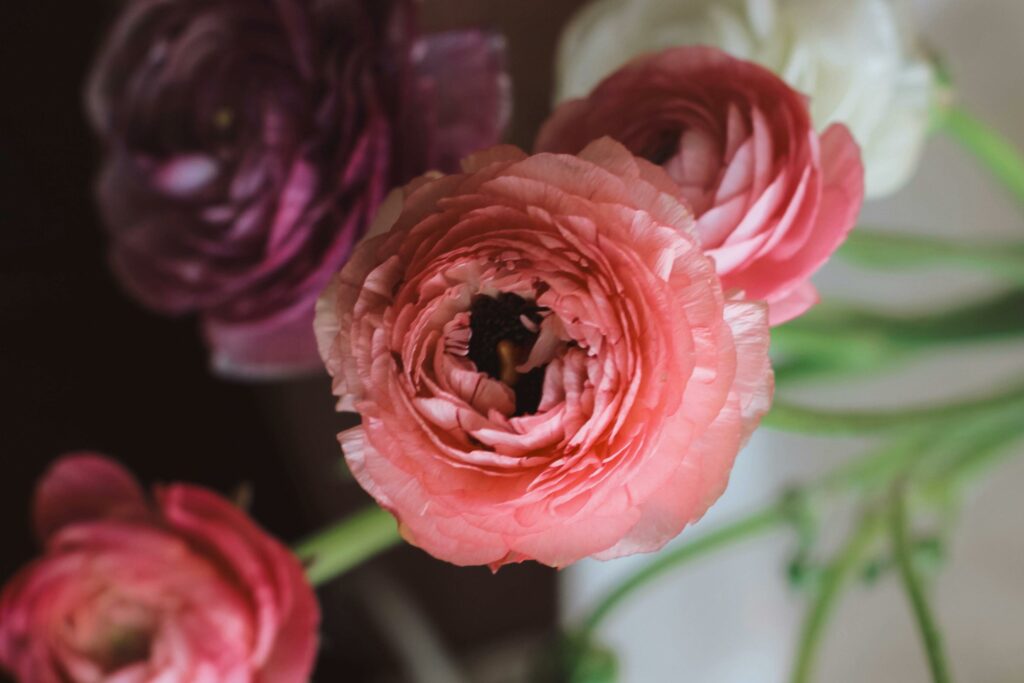

Spring bulbs are among the most beloved harbingers of the new season, pushing through cold soil to deliver vibrant color after months of winter dormancy. These flowers have long been associated with renewal, hope, and the return of warmth, making them perfect symbols of spring’s arrival.
Daffodils (Narcissus)
Perhaps no flower says “spring” quite like the cheerful daffodil. With their distinctive trumpet-shaped coronas surrounded by bright petals, daffodils typically bloom in shades of yellow, white, and orange. In many cultures, they symbolize rebirth and new beginnings. The Welsh consider daffodils a sign of good fortune, while in Chinese culture, they’re associated with prosperity when they bloom during the Lunar New Year. Daffodils are remarkably hardy and will naturalize over time, returning year after year with minimal care.
Tulips (Tulipa)
Tulips embody the essence of spring elegance with their smooth, cup-shaped blooms and wide spectrum of colors. Originally from Central Asia and cultivated extensively in the Ottoman Empire, tulips became synonymous with spring in Europe during the Dutch Golden Age. They symbolize perfect love and are available in virtually every color imaginable, each with its own meaning: red for true love, yellow for cheerful thoughts, and purple for royalty. Their clean, architectural form makes them favorites in both gardens and floral arrangements.
Crocuses (Crocus)
Among the earliest spring bloomers, crocuses often push through snow to announce winter’s end. These small but mighty flowers appear in purple, yellow, white, and striped varieties. Their emergence is so closely tied to spring’s arrival that they’ve become symbols of youthfulness and cheerfulness. Crocuses also have historical significance as the source of saffron, one of the world’s most precious spices, harvested from Crocus sativus.
Hyacinths (Hyacinthus)
With their intensely fragrant, densely-packed flower spikes, hyacinths engage multiple senses to celebrate spring. Available in pink, purple, blue, white, and yellow, these bulbs carry powerful perfume that can fill entire gardens. In Greek mythology, the hyacinth arose from the blood of the youth Hyacinthus, giving it associations with rebirth and the cycles of life. Victorian flower language assigned meanings of sport, game, and rashness to hyacinths, though today they’re primarily associated with spring’s sweet arrival.
Grape Hyacinths (Muscari)
Despite their common name, grape hyacinths are not true hyacinths but belong to the asparagus family. These charming little bulbs produce spikes of tiny, bell-shaped flowers that resemble clusters of grapes, most commonly in shades of blue and purple. They’re among spring’s most reliable performers, spreading readily and requiring little maintenance. Their compact size makes them perfect for edging pathways or planting in drifts beneath taller spring bulbs.
Snowdrops (Galanthus)
Snowdrops are often the very first bulbs to bloom, sometimes appearing while snow still covers the ground. Their delicate white, nodding flowers symbolize hope and consolation, serving as a promise that spring will indeed return. In Christian tradition, snowdrops represent Candlemas and the purification of the Virgin Mary. These modest flowers may be small, but their significance is enormous as the garden’s first sign of life.
Planting and Care
Most spring bulbs should be planted in autumn, generally from September through November, before the ground freezes. They require a period of cold dormancy to bloom properly, making them perfectly adapted to temperate climates. Plant bulbs at a depth approximately three times their height, pointed end up, in well-draining soil with adequate sunlight. After blooming, allow the foliage to die back naturally, as this process replenishes the bulb for next year’s display.
Spring bulbs remind us that even after the coldest winter, beauty returns with certainty and abundance. Their annual reappearance connects us to natural cycles and the promise of renewal that spring represents.