
Before diving into specific flower types, all stems benefit from proper conditioning:
- Clean Tools & Containers
- Use sharp, clean scissors or floral shears to prevent crushing stems.
- Ensure vases are free from bacteria; wash with warm water and a mild bleach solution if needed.
- Remove Foliage Below Water Line
- Leaves submerged in water rot quickly, promoting bacterial growth.
- Only leave leaves above the water line for aesthetics.
- Cutting Technique
- Angled Cut: Increases water uptake.
- Underwater Cut: For woody or soft stems prone to air embolisms, cutting underwater prevents air from entering the stem.
- Split or Crush Stems (if needed): For hard or tough stems, lightly splitting or bruising the bottom can help absorb more water.
- Hydration & Flower Food
- Immediately place stems in clean, lukewarm water with floral preservatives.
- Change water every 1–2 days, recutting stems each time.
Conditioning by Flower Type
1. Soft, Herbaceous Flowers
(e.g., Roses, Tulips, Peonies, Lilies)
- Preparation: Remove outer leaves and thorns (for roses).
- Cutting: Make a 1–2 inch angled cut.
- Hydration: Place in lukewarm water immediately; warm water is absorbed faster.
- Special Tip:
- For tulips: They continue growing in water. Support by adding a pinch of sugar to water.
- For lilies: Remove pollen to prevent staining and slow opening.
2. Woody-Stemmed Flowers & Shrubs
(e.g., Hydrangea, Gardenia, Orchids, Viburnum)
- Preparation: Strip all leaves from the bottom 6–8 inches.
- Cutting:
- Use a diagonal cut for general stems.
- For hard woody stems, make a vertical slit or lightly crush the base.
- Hydration:
- Place in lukewarm water for at least 1 hour before arranging.
- Hydrangeas may need submerging in a sink or bucket of water to rehydrate fully.
- Special Tip:
- Hydrangeas are sensitive; mist petals and submerge blooms in water if wilting.
3. Grasses and Foliage
(e.g., Eucalyptus, Pampas Grass, Ferns)
- Preparation: Remove any old, yellow leaves.
- Cutting: Slightly crush the bottom of the stem to open up water uptake channels.
- Hydration:
- Place in room-temperature water; eucalyptus benefits from warm water.
- Special Tip:
- Some grasses are sensitive to bacteria; adding a few drops of bleach can prolong life.
4. Bulb Flowers
(e.g., Daffodils, Hyacinths, Crocus)
- Preparation: Cut at an angle.
- Hydration: Place in cool water; these flowers are prone to bacterial buildup in warm water.
- Special Tip:
- Daffodils release a sap that can harm other flowers. Condition separately for 24 hours, then mix with other stems.
5. Succulent or Semi-Succulent Stems
(e.g., Protea, Leucospermum)
- Preparation: Remove any thick lower leaves.
- Cutting: Make a clean, sharp cut; crush the stem slightly if very woody.
- Hydration:
- Use lukewarm water and allow stems to absorb for several hours.
- Special Tip:
- Proteas are hardy but slow to take up water; change water frequently.
6. Delicate, Fleshy Stems
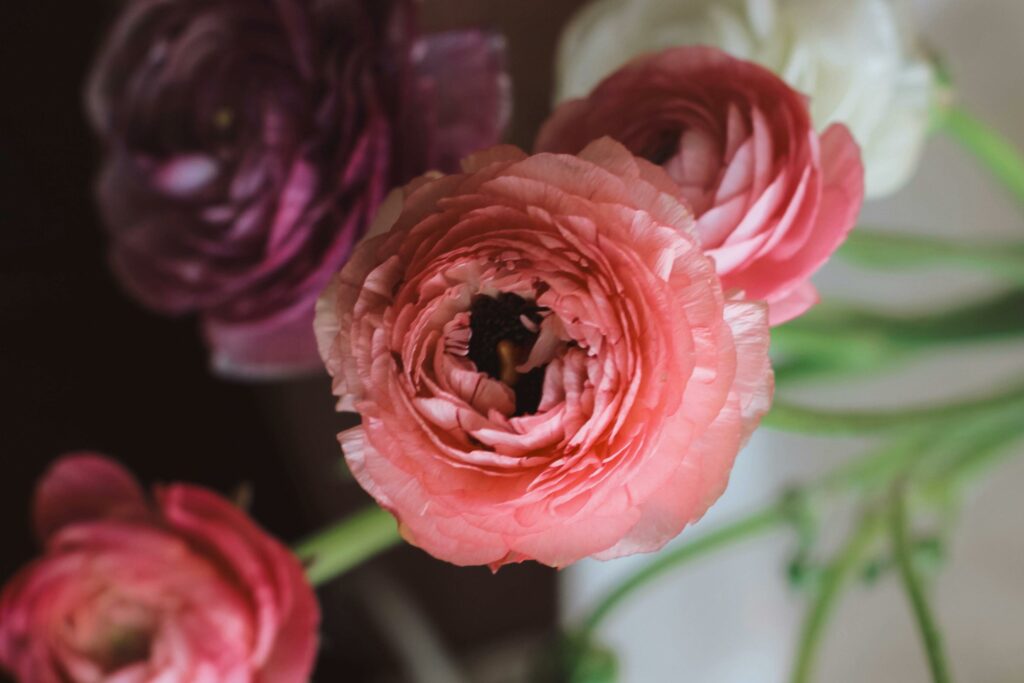
(e.g., Ranunculus, Anemone, Sweet Pea)
- Preparation: Strip excess leaves and weak side shoots.
- Cutting: Sharp diagonal cut; fragile stems benefit from underwater cutting.
- Hydration: Immediately place in cool water, ideally 50–60°F (10–15°C).
- Special Tip:
- Sweet peas are climbers—tie gently to supports to avoid stem breakage.
7. Tropical Flowers
(e.g., Birds of Paradise, Anthurium, Heliconia)
- Preparation: Remove any damaged leaves or stems.
- Cutting: Cut at an angle under warm water to prevent air blockage.
- Hydration:
- Warm water for initial conditioning.
- Tropical flowers are sensitive to cold; avoid cold water or drafty rooms.
- Special Tip:
- Change water every day and remove excess foliage to prevent bacterial growth.
Extra Conditioning Tips for Florists
- Use Flower Preservatives: They provide sugar, acid, and antibacterial agents.
- Temperature Matters: Most flowers prefer 65–72°F room temperature; tropicals prefer slightly warmer.
- Avoid Ethylene Exposure: Keep flowers away from ripening fruits or smoke.
- Recutting & Refreshing: Every 2–3 days, recut stems and replace water to prolong life.