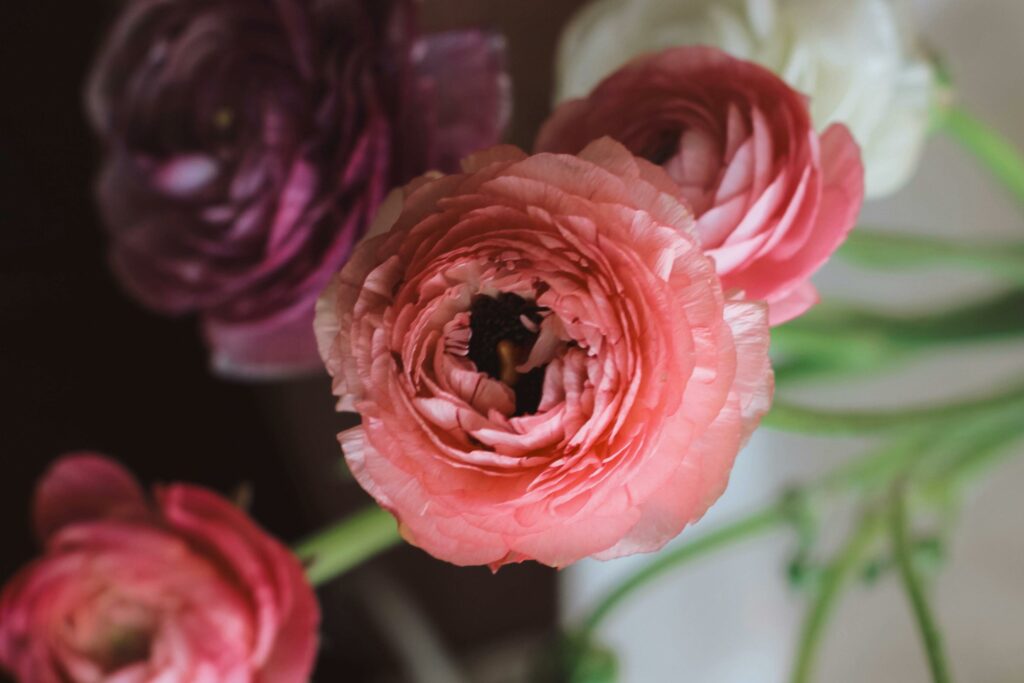

Every February, florists transform into temples of romance. Windows fill with roses in shades of crimson and blush, the air grows heavy with perfume, and bouquets become quiet messengers of devotion. Giving flowers on Valentine’s Day feels timeless, almost instinctive—but this tradition is the result of centuries of evolving meaning, symbolism, and social ritual.
Long before Valentine’s cards, chocolates, or candlelit dinners, flowers were among humanity’s earliest emotional language. In ancient civilizations, blossoms were never merely decorative. They were charged with meaning, capable of expressing desire, loyalty, grief, and celebration without a single word spoken. In Ancient Greece, flowers were woven into myths of love and beauty. Roses were linked to Aphrodite, the goddess of love, said to have sprung from the earth stained by her lover’s blood. In Rome, Venus inherited the rose as her emblem, and lovers exchanged flowers during festivals that honored fertility and passion. These early associations embedded flowers deep within the cultural understanding of romance.
As Christianity spread through Europe, older pagan traditions were reshaped rather than erased. The figure of Saint Valentine—likely drawn from multiple martyrs—became associated with secret marriages and defiance in the name of love. By the Middle Ages, February 14 had become linked to courtly romance, partly due to the belief that birds began mating around this time of year. Poets such as Geoffrey Chaucer helped cement the idea of Valentine’s Day as a celebration of romantic union, and flowers naturally became part of this symbolic season of pairing and promise.
During this medieval period, flowers were often gathered rather than purchased. Lovers exchanged wildflowers, carefully chosen for their meanings. A simple bloom could speak volumes in a society where open expressions of affection were often restricted. This subtle communication would later evolve into a sophisticated system of floral symbolism.
That system reached its peak in the Victorian era, when the language of flowers—known as floriography—became a cultural obsession. In a world governed by rigid social codes, flowers offered a socially acceptable way to express emotions that could not be spoken aloud. Entire dictionaries were published decoding the meanings of specific flowers and even their colors. Red roses declared deep love and passion, pink roses suggested admiration, white flowers signaled purity and devotion, and yellow blooms hinted at friendship or jealousy depending on context. Valentine’s Day became a prime occasion for these carefully curated messages, with bouquets functioning as handwritten letters made of petals.
This era also marked a turning point in accessibility. Advances in greenhouse cultivation and transportation allowed flowers to be grown year-round and shipped across long distances. What had once been a seasonal luxury became increasingly attainable, transforming flowers into a central Valentine’s Day gift across social classes.
The modern commercialization of Valentine’s Day in the late nineteenth and early twentieth centuries further elevated the role of flowers. As greeting card companies, chocolatiers, and florists recognized the emotional and economic power of the holiday, the red rose emerged as its undisputed icon. Its symbolism—passion, sacrifice, and enduring love—proved irresistible. Florists began preparing months in advance for the Valentine’s rush, reinforcing the idea that flowers were not just a gift, but an essential expression of romantic commitment.
By the mid-twentieth century, gifting flowers on Valentine’s Day had become deeply ingrained in popular culture. Hollywood films, advertisements, and magazine spreads portrayed bouquets as the ultimate romantic gesture, capable of repairing relationships, initiating love, or proving devotion. Flowers became both a personal and performative act, signaling affection not only to the recipient but also to the world.
In recent decades, the tradition has continued to evolve. While roses remain dominant, modern Valentine’s gifting embraces greater diversity in floral choices, reflecting changing ideas about love itself. People now give flowers to friends, family members, and themselves, expanding the holiday beyond romantic couples. Sustainable floristry, locally grown blooms, and personalized arrangements have added new layers of meaning, allowing the gesture to feel intentional rather than obligatory.
Yet despite these changes, the emotional core of gifting flowers on Valentine’s Day remains unchanged. Flowers are fleeting, alive, and beautiful precisely because they do not last. In giving them, we acknowledge the vulnerability and intensity of love itself. A bouquet is not just a gift; it is a moment, a feeling, a living symbol of care.
From ancient myth to medieval poetry, from Victorian parlors to modern city streets, flowers have endured as Valentine’s Day’s most eloquent language. Each stem carries centuries of meaning, reminding us that love, like a flower, is something to be nurtured, admired, and cherished while it blooms.