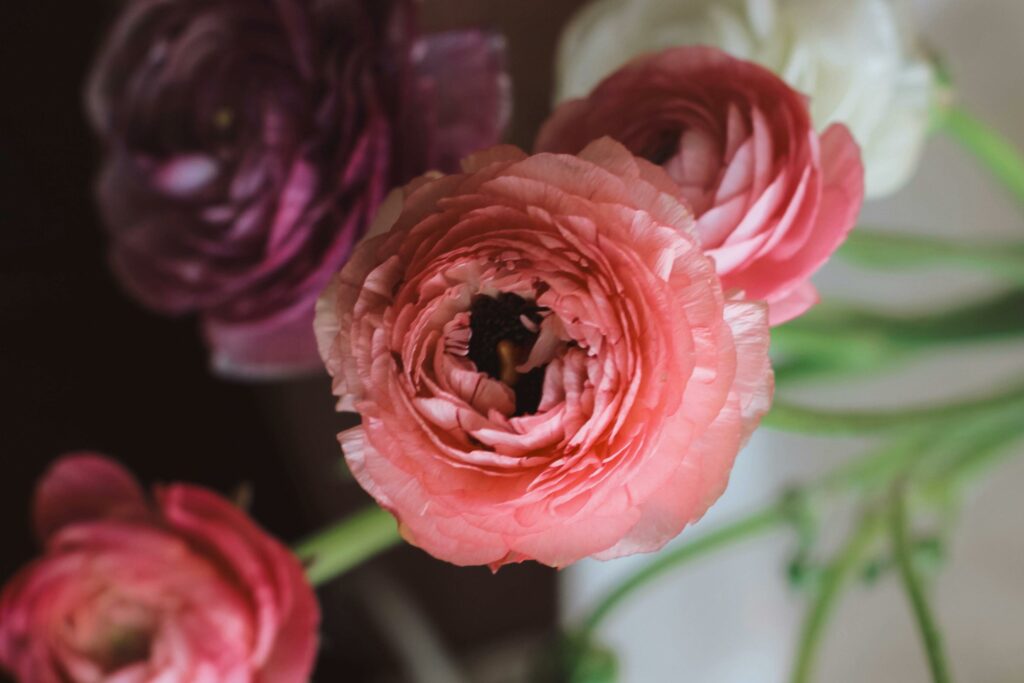

The peony has been cultivated for longer than almost any other ornamental plant, celebrated in more cultures, painted more obsessively, and argued over more passionately than anything else in the garden. It deserves every bit of it. Nothing else blooms quite like this — with such extravagance, such fragrance, such architectural authority, and such absolute, total commitment to the brief, glorious moment of its flowering.
Why the Peony Is Unlike Anything Else
There is a particular quality of anticipation that the peony produces in gardeners who grow it seriously, and it is unlike the anticipation produced by any other plant. It begins in April, when the first red-bronze shoots push through the soil with a speed and vigour that seems almost aggressive — as though the plant has been storing energy through the dormant months and is now spending it with deliberate extravagance. It intensifies through May, as the foliage expands and the buds swell and the question of exactly when this year’s flowering will arrive — a question whose answer depends on the accumulated heat units of the particular spring, and which experienced growers still cannot predict with complete confidence — occupies an increasing proportion of the gardener’s attention. And then, in late May or early June in the British climate, depending on the season and the variety and the aspect, the flowers open.
There is nothing in horticulture quite like a peony in full flower. The largest blooms — those of the double-flowered herbaceous cultivars at their most extravagant, and particularly those of the great tree peonies — can reach thirty centimetres across, a diameter that makes them the largest flowers produced by any hardy plant grown in temperate gardens. The weight of petals in a fully double herbaceous peony is such that the stems frequently cannot support them upright without assistance — a fault in the engineering that is simultaneously the clearest possible evidence of the flower’s extraordinary excess. The fragrance of the finest varieties is among the finest available in any flowering plant: rose-like but with a freshness and a slight citrus or lemon note that distinguishes it clearly from the rose’s deeper, more complex scent.
And then it is over. Three weeks, perhaps four in a cool season. The petals fall, the foliage continues to develop into a handsome, deeply cut mound of dark green that carries the border through summer and turns well in autumn, but the flowering is done. The peony’s brevity is part of its character — part of what the Japanese, who have celebrated it for a thousand years with the same devoted attention they give to cherry blossom and wisteria, understand instinctively. The brief, overwhelming moment of beauty is more valuable, not less, for its impermanence. The Japanese word for viewing peonies — botankai — is as serious a cultural institution as hanami for cherry blossom, and the understanding it embodies — that the flower is worth travelling to see, worth sitting with, worth returning to daily through its brief season — is the correct response to a plant that offers so much for so short a time.
This guide follows the peony around the world: from its origins in the mountain meadows of central China and the wild slopes of the Caucasus through the imperial gardens of the Tang dynasty and the temple gardens of Kyoto and Nara, across the Ottoman empire and the gardens of Renaissance Europe, to the great specialist collections of contemporary Britain, France, the Netherlands, and North America. At every stop, we pay attention to the specific plants — the cultivars that represent each tradition at its finest, the gardens where they can be seen at their best, the horticultural knowledge required to grow them well. The peony rewards this kind of attention. It has earned it many times over.
Part One: China — The Birthplace of the King
Origins: The Peony in the Wild
The genus Paeonia contains somewhere between thirty-three and forty species, depending on whose taxonomy you follow, distributed across a geographic range that runs from the western Mediterranean through southern Europe, Turkey, and the Caucasus to central Asia and China. But it is in China — specifically in the mountain provinces of Shaanxi, Gansu, Sichuan, and Yunnan — that the greatest concentration of wild peony species occurs, and it is from Chinese species that the most horticulturally significant peonies derive.
Paeonia lactiflora — the Chinese peony, the species from which the vast majority of cultivated herbaceous peonies are descended — grows wild across a range that extends from eastern Siberia through Mongolia to northern and western China, its single white or pale pink flowers with their prominent yellow stamens appearing on mountain meadows and forest margins from May to July depending on altitude and latitude. In the wild, P. lactiflora is a plant of considerable beauty — its flowers elegant in their simplicity, their fragrance clean and strong, their petals of a purity that no amount of breeding has improved upon — and it is worth seeking out in the specialist botanical collections that maintain wild-type material, because seeing the species alongside its thousands of cultivated descendants gives the whole history of peony cultivation a clarity that is otherwise difficult to achieve.
Paeonia suffruticosa — the tree peony, the moutan, the king of flowers in the Chinese tradition — is a different and more complex matter botanically. Whether it exists as a true wild species or is entirely a garden creation from ancient hybrid origin is a question that Chinese botanists and Western taxonomists have debated for decades without reaching consensus. What is agreed is that it has been in cultivation in China for at least 1,400 years, that the forms developed during that long cultivation history include some of the most magnificent flowering plants ever brought into existence, and that the story of that cultivation is one of the most extraordinary in horticultural history.
The Tang Dynasty: The First Golden Age
The culture of the tree peony in China reached its first great peak during the Tang dynasty (618–907 CE), when the flower became, with extraordinary rapidity, the most fashionable and the most expensive plant in the empire. The Tang capital of Chang’an — modern Xi’an in Shaanxi province — became the centre of a peony obsession that the historical sources describe in terms that make the Dutch tulip mania of the seventeenth century look restrained by comparison. Rare cultivars changed hands at prices equivalent to substantial properties. Merchants travelled from across the empire to attend the peony season. The Emperor Xuanzong held peony festivals at the imperial palace that lasted for weeks, the gardens illuminated at night by thousands of candles so that the flowering could be enjoyed around the clock.
The Tang poets documented this obsession with a specificity that makes their verses among the most horticulturally instructive poems in any language. Bai Juyi — the greatest poet of the Tang period and a passionate gardener — wrote multiple poems about peonies, his descriptions of specific flowers, specific colours, specific gardens providing evidence of the cultivar diversity that Tang dynasty breeders had already achieved. By the ninth century, Chinese growers had produced peonies in a range of colours that European breeders would not match until the nineteenth century: deep purple, near-black, pure white, pink, red, coral, and the first yellow tree peonies — Paeonia × suffruticosa ‘Yao’s Yellow’, bred during the Song dynasty that followed the Tang, remaining for centuries the most celebrated and most expensive peony cultivar in existence.
The Song dynasty (960–1279 CE) produced the first systematic peony literature: Ouyang Xiu’s ‘Record of Peonies at Luoyang’, written around 1034, is the oldest surviving peony monograph in the world and the founding document of a written peony culture that continues in China to the present day. Ouyang Xiu catalogued thirty-nine named cultivars grown in the Luoyang area — then the centre of Chinese peony cultivation — and described their colours, forms, flowering times, and relative merits with a precision that identifies him immediately as a serious plantsman working within an already sophisticated horticultural tradition. Reading his descriptions alongside contemporary cultivar catalogues, it is possible to identify plants that have been in continuous cultivation for a thousand years — a continuity of horticultural practice available in very few other plant genera.
Luoyang: The Peony Capital of the World
Luoyang, in Henan province in central China, has been associated with peony cultivation for over a thousand years, and it remains today the most important centre of peony culture in the world, its annual Peony Cultural Festival drawing several million visitors in the two weeks of the flowering season in mid-April. The city’s relationship with the peony is inseparable from its broader cultural identity: it is the city’s symbol, the subject of its most celebrated art and poetry, the basis of a horticultural industry that produces cultivars exported to growers across the world.
The Luoyang National Peony Garden — the largest peony garden in China, covering some one hundred hectares — holds over a thousand cultivars of both herbaceous and tree peonies, organised in themed planting areas that move from wild species collections through the classical Chinese cultivars to contemporary introductions from Chinese, Japanese, and Western breeding programmes. The Chinese tree peony cultivars here represent the fullest available collection of a breeding tradition that spans more than fourteen centuries: forms with names that translate as ‘Drunk with Wine against a Crimson Cloud’, ‘Black Jade’, ‘Peach Blossom in a Holy Place’, ‘Snow Tower’, and ‘Moonlight on the Jade Terrace’ — names given by Tang and Song dynasty growers and maintained through centuries of cultivation, each name a compressed aesthetic assessment of the flower’s most distinctive quality.
The Wang Cheng Park Peony Garden in the centre of Luoyang, built on the site of the imperial palace of the Eastern Zhou dynasty, is more intimate in scale and, to many visitors, more satisfying as a garden experience: its tree peonies planted in traditional Chinese garden settings — against white-washed walls, beside ornamental rocks, adjacent to bamboo plantings — rather than in the exhibition-style rows of the National Garden. The relationship between the tree peony and the Chinese garden aesthetic is nowhere more clearly demonstrated: the tree peony is the plant for which the Chinese garden’s combination of wall, rock, and water was designed, and seeing it in that context rather than in a Western-style display bed is an entirely different and considerably more illuminating experience.
When to go: The Luoyang peony season runs from approximately 10–25 April, though the exact dates vary by several days depending on the spring temperatures. The first week of the festival period tends to be the most rewarding for the serious gardener: the later weeks, while the flowers are still excellent, bring crowd levels that make careful looking difficult. Book accommodation months in advance — the entire city fills for the festival period.
Heze: The Herbaceous Peony Capital
Heze in Shandong province is the centre of Chinese herbaceous peony cultivation — Paeonia lactiflora and its cultivars — and its relationship to herbaceous peony production is comparable to Luoyang’s relationship to the tree peony: the city produces the vast majority of China’s commercial herbaceous peony output, exports cultivars internationally, and hosts its own annual peony festival of considerable scale.
The Heze Peony Garden holds the largest collection of Paeonia lactiflora cultivars in China, with over eight hundred named varieties organised by flower form — single, semi-double, double, bomb, and anemone forms — and by colour class. The Chinese herbaceous peony cultivars, less well known internationally than the Chinese tree peonies, include forms of considerable beauty that are only beginning to be appreciated by Western growers: deeply double cultivars in colours of extraordinary intensity; fragrant forms whose scent matches or surpasses the finest Western-bred cultivars; unusual colour combinations — red and white picotee forms, deep burgundy-purple varieties, the delicate blush pinks with deeper centres — that represent a breeding tradition of four thousand years’ continuity.
The cultivar ‘Da Fugui’ — ‘Great Wealth and Honour’, a traditional Chinese herbaceous peony of ancient cultivation — produces enormous, fully double flowers of deep rose-pink of such concentrated colour and such full-petalled perfection that it remains, despite the competition of hundreds of more recently bred cultivars, one of the standard references for the herbaceous peony flower form at its most complete. Its fragrance is outstanding: the classic peony rose-lemon combination at high intensity.
The Tree Peony Cultivars of China: A Horticultural Primer
The Chinese tree peony cultivars are divided into four regional groups — Zhongyuan (Central Plain, the oldest and most historically significant), Northwest (Gansu and Qinghai, whose cold-climate adaptations produce cultivars of particular hardiness), Southwest (Sichuan and Yunnan, producing cultivars adapted to wet winters), and Jiangnan (the Yangtze delta region, producing cultivars adapted to mild, humid conditions) — each with its own characteristic aesthetic and horticultural properties.
The Zhongyuan group contains the oldest and most celebrated cultivars, and their flower forms — ranging from the single and semi-double through the fully double ‘Chrysanthemum’ form to the globular ‘Thousand Petals’ form — represent the full range of Chinese breeding achievement. Key cultivars in this group include:
‘Yao Huang’ — ‘Yao’s Yellow’ — the most celebrated peony cultivar in Chinese history, first documented in the Song dynasty and maintained in cultivation for over a thousand years, its large, fully double flowers of pale lemon-yellow with deeper yellow centres constituting the standard against which all yellow tree peonies are still measured. It is a demanding plant: slow to establish, resenting disturbance, requiring a rich, well-drained soil and a position sheltered from late frosts that could damage its early-emerging buds. But a mature, well-grown ‘Yao Huang’ in full flower is an experience that no other peony — and very few other flowering plants — can match.
‘Wei Zi’ — ‘Wei’s Purple’ — the companion cultivar to ‘Yao Huang’ in the Chinese classical tradition, its deep purple-violet flowers of large size and full double form representing the darkest end of the colour spectrum in the Zhongyuan group. The purple peonies hold a particular significance in Chinese cultural tradition — purple being the colour of imperial authority and of high scholarly attainment — and ‘Wei Zi’ has been the most admired of them since the Song dynasty.
‘Luoyang Hong’ — ‘Luoyang Red’ — a cultivar whose name identifies it simply as the red peony of Luoyang, so thoroughly has it defined the category of red tree peony in the Chinese tradition. Its flowers are a deep, warm crimson of large size and full double form, produced with considerable generosity on a vigorous, well-branched shrub of medium height. It is, of all the Chinese tree peony cultivars, the one most likely to be encountered in Western specialist nurseries, and it fully deserves its wide distribution.
‘Fen Zhong Guan’ — ‘Pink Crown of Crowns’ — a large-flowered, fully double pink of the most perfect form, its outer petals of soft blush-pink surrounding inner petals that deepen toward the centre to a warm rose-pink, the whole flower a composition of such extraordinary delicacy and complexity that it has been the subject of Chinese painters and poets across seven centuries.
Part Two: Japan — The Peony Refined
The Japanese Reception of the Peony
The tree peony arrived in Japan from China sometime in the eighth century, brought by Buddhist monks who recognised in it both ornamental and medicinal value, and the Japanese response to it was characteristic: they received the Chinese tradition with the deepest respect, studied it with the most careful attention, and then — gradually, over several centuries — developed from it something distinctly and unmistakably their own.
The Japanese relationship with the peony differs from the Chinese in one fundamental respect: where Chinese peony culture is celebratory and abundant — the great peony festivals, the enormous collections, the cultivation of the largest and most extravagant forms — Japanese peony culture is more contemplative, more interested in the individual flower than the mass display, more concerned with the peony as an object for close, sustained attention than as a component of spectacular collective effect. This is consistent with the broader Japanese aesthetic tradition, and it produces a different quality of garden experience: quieter, more concentrated, requiring and rewarding a different quality of attention.
The Japanese developed their own tree peony cultivar tradition — the Japanese tree peony or Nihon botan — that differs from the Chinese Zhongyuan cultivars in flower form, colour range, and growth habit. Japanese tree peony cultivars tend toward the semi-double and single forms rather than the fully double Chinese types: large, bowl-shaped or saucer-shaped flowers of great simplicity and clarity, their prominent central stamens a feature of considerable beauty rather than something to be concealed beneath layers of petals. The colours of the Japanese cultivars include some not available in the Chinese tradition — particularly the extraordinary range of reds, from clear scarlet through deep crimson to near-black, and the delicate blush-whites with pink petal edges that are among the most refined flower colours available in any garden plant.
The Herbaceous Peony in Japan: The Ebisugiku Tradition
Japan also developed its own herbaceous peony tradition, the Ebisugiku cultivars of Paeonia lactiflora, which differ from both the Chinese and the Western traditions in their emphasis on single and anemone flower forms rather than the fully double forms preferred in China and Europe. The Japanese single-flowered herbaceous peonies — large, saucer-shaped blooms of five to eight petals surrounding a prominent boss of yellow stamens — have a quality of classical simplicity that the fully double forms, for all their magnificence, cannot match: they are, in the Japanese understanding, flowers that have achieved perfection through restraint rather than through accumulation.
The cultivar ‘Hakuo-Jishi’ — ‘White Lion’ — a large-flowered, fully double Japanese herbaceous peony of pure white, its petals densely arranged in a globe of such perfection that it has become the standard reference for white herbaceous peonies in the Japanese tradition. Its fragrance is outstanding — the classic peony rose-lemon combination at very high intensity — and its constitution is excellent: vigorous, long-lived, and reliable in its annual flowering performance.
‘Shimane-Chojuraku’ — a semi-double Japanese cultivar of warm rose-pink, its flowers of large size and simple, open form showing the golden stamens prominently — is one of the finest Japanese introductions to Western cultivation, its flower form representing exactly the quality of elegant simplicity that distinguishes the best Japanese cultivars from their more extravagant Western counterparts.
Nara and the Temple Peony Tradition
Nara — the ancient capital of Japan, its streets and temples among the most historically resonant in the country — is the centre of the Japanese tree peony tradition, and the peony gardens of its great Buddhist temples constitute some of the finest horticultural and cultural experiences available in Japan.
Hasedera Temple in the town of Hase near Nara is the most celebrated peony destination in Japan — a temple built on a wooded hillside above a valley, its approach along a covered stairway flanked on both sides by peony beds that contain over seven thousand tree peony plants in more than two hundred cultivars. The combination of the flowering peonies — each plant individually staked and sheltered from sun and rain by a small paper or bamboo parasol in the traditional Japanese manner — with the temple architecture, the forested hillside, and the sound of temple bells creates a garden experience of extraordinary density and refinement. The parasols, applied to protect the delicate petals from weather damage during the flowering season, are a detail of horticultural care that tells you everything you need to know about the Japanese approach to the peony: these are flowers that deserve, and receive, the most attentive individual management.
The Hasedera peony season runs from mid-April to early May, the exact dates shifting by a week or more depending on the spring temperatures. The temple also maintains an autumn peony display — winter-forcing tree peonies into unseasonal bloom through careful management of temperature and light — that runs from late October to mid-November, offering a second opportunity to experience the garden in a very different seasonal atmosphere.
Tōdai-ji temple in Nara city — home of the great bronze Buddha and one of the most important Buddhist sites in Japan — has a peony garden of more modest scale but considerable quality, its planting of Japanese tree peony cultivars set against the temple’s extraordinary architectural backdrop. The garden is managed by the temple’s horticultural staff with the precision and attention to individual plant quality that characterises Japanese peony culture at its best: each plant pruned, staked, and maintained as an individual specimen rather than as a component of a mass display.
Taiyuin Mausoleum in Nikkō — the mausoleum of the Tokugawa shogun Iemitsu, its architecture among the most elaborately ornate in Japan — has peony gardens of considerable historical significance, the plants in the main peony bed directly descended from specimens presented to the mausoleum by the Emperor during the Edo period. Seeing these historically documented plants — their lineage traceable across three and a half centuries of cultivation — in the context of the extraordinary architectural setting, is one of those experiences that makes the distinction between garden visiting and cultural pilgrimage impossible to sustain.
When to go: The main Japanese tree peony season runs from approximately 20 April to 10 May across the Nara and Nikkō regions, with Hasedera typically peaking in the last week of April. The Hasedera autumn forcing display runs late October to mid-November.
The Japanese Contribution to Intersectional Peony Breeding
Japan’s most significant technical contribution to peony horticulture is the development of the intersectional peony — the hybrid between herbaceous Paeonia lactiflora and tree peony Paeonia suffruticosa — achieved by the Japanese breeder Toichi Itoh in the early 1960s after decades of attempted crosses that all other breeders had concluded were impossible. Itoh’s breakthrough was the production in 1948 of four hybrid seedlings from a cross between the herbaceous cultivar ‘Kakoden’ and the tree peony ‘Alice Harding’, plants that demonstrated for the first time that the cross between these two botanical groups could be made fertile. Itoh died before seeing his hybrids flower, but his colleague Shiguro Oshida maintained the seedlings and saw them bloom in 1963, recognising immediately that they represented something entirely new in peony horticulture.
The Itoh hybrids — now more widely known as intersectional peonies — combine the hardiness, vigorous herbaceous habit, and late spring flowering of the lactiflora parent with the tree peony’s flower size, colour range (including the yellow pigments unavailable in herbaceous peonies), and the extraordinary petal texture of the finest moutan cultivars. They die back to the ground in winter like herbaceous peonies, removing the winter management challenges of the tree peony’s permanent woody framework. And they flower for longer than either parent — sometimes three to four weeks — with a generosity and reliability that has made them, in the fifty years since their introduction to Western cultivation, the fastest-growing sector of the specialist peony market.
The foundational Itoh hybrids — ‘Yellow Crown’, ‘Yellow Dream’, ‘Yellow Emperor’, and ‘Yellow Heaven’ — were sold to the American nurseryman Louis Smirnow in 1974 and introduced to commerce in the United States, from where they spread rapidly to European and Australian growers. The yellows remain the most celebrated intersectional cultivars, their colour — a pure, warm yellow entirely unavailable in herbaceous peonies — being the quality that most dramatically distinguishes them from any existing garden plant. But the intersectional programme has since produced cultivars in the full range of peony colours, and some of the most recently introduced forms — particularly those bred by Roger Anderson in Wisconsin and Don Hollingsworth in Missouri — are among the finest peonies in cultivation in any class.
‘Bartzella’ — bred by Roger Anderson and introduced in 1986, consistently voted the most popular intersectional peony in American surveys — produces flowers of large size, fully double form, and clear lemon-yellow colour at a concentration and on a plant of such vigour and reliability that it has, in thirty years of availability, transformed the expectations of what a yellow garden peony can be. Its fragrance is outstanding. Its constitution is excellent. It is, by any reasonable measure, one of the finest garden plants introduced in the twentieth century.
‘Cora Louise’ — another Anderson introduction, 1986 — carries flowers of extraordinary beauty: large, semi-double to double, white with a dramatic lavender-purple flare at the centre of each petal, the whole flower a combination of simplicity and complexity that is quite unlike anything in the herbaceous or tree peony traditions. It is a plant that produces, in the garden visitor who encounters it without prior knowledge of intersectional peonies, something very close to genuine horticultural shock — the reaction that a truly original plant achieves in the moment of first encounter.
Part Three: Central Asia and the Caucasus — The Wild Heart of the Genus
Species Peonies of the Mountain Regions
The wild peonies of Central Asia and the Caucasus — distributed across a geographic range that extends from Turkey through Iran, the Caucasus mountains, and the steppes of Kazakhstan to the mountain meadows of Kyrgyzstan and Tajikistan — constitute the most botanically diverse and horticulturally underexplored section of the genus Paeonia, and they represent a resource for future breeding of enormous potential that has been only partially exploited.
Paeonia mlokosewitschii — universally known among English-speaking gardeners as ‘Molly the Witch’, a corruption of the impossible surname of the Russian botanist who collected it in the Caucasus in 1900 — is the species that has most captured Western horticultural attention, and with good reason. Its single flowers of soft, clear lemon-yellow — the colour arriving with a freshness and clarity that no bred cultivar quite matches — open in mid-April, two to three weeks before the main peony season, on foliage of extraordinary quality: the leaves, emerging with a red-bronze flush that deepens in cold springs, are deeply cut and of a soft, sea-green colour that remains handsome through the season and turns well in autumn. The plant forms a rounded, compact mound of considerable architectural quality, and its rounded, crimson-red fruits in autumn — splitting to reveal the combination of bright red fertile seeds and shining blue-black sterile seeds that give the species its characteristic autumn display — extend the plant’s season of interest into October.
‘Molly the Witch’ is difficult to establish from bare-root divisions — the genus’s characteristic resentment of root disturbance is particularly pronounced in this species — and it is slow to flower from seed, typically taking five to seven years from germination to first bloom. These are the qualities that make it, paradoxically, more rather than less valued: scarcity earned through patience is, in the peony world as in few others, a reliable indicator of horticultural worth.
Paeonia tenuifolia — the fernleaf peony of the eastern European steppes and Caucasus — is perhaps the most botanically distinctive peony in cultivation, its leaves divided into threadlike segments that give it the appearance of a very fine-textured ornamental grass until the deep crimson, single flowers open in late April, the combination of the feathery foliage and the dark red blooms producing an effect that is immediately recognisable as unlike any other peony and unlike any other garden plant. The double form, P. tenuifolia ‘Plena’, substitutes a globe of deep crimson petals for the single flower and loses in simplicity what it gains in visual weight. Both forms are extraordinary.
Paeonia wittmanniana — the Caucasian species most significant in breeding history, contributing yellow pigmentation to the intersectional hybrid programme and producing, when crossed with P. lactiflora, some of the earliest and most significant hybrid peonies in Western cultivation — is a large, vigorous species whose single cream-white to pale yellow flowers, while not individually spectacular, carry a botanical interest and a historical significance that make them worth seeking out in specialist collections.
The Destination for Wild Species: Royal Botanic Gardens, Kew; Edinburgh Botanic Garden
The wild peony species collections at Kew and the Royal Botanic Garden Edinburgh represent the most comprehensive displays of species Paeonia in the British Isles, and a visit to either in April and May — when the various species flower in overlapping sequence, beginning with P. tenuifolia and P. mlokosewitschii in mid-April and continuing through P. lactiflora in late May and early June — provides the essential botanical context for understanding the cultivated traditions that derive from them.
The Kew peony bed, situated in the Order Beds near the Brentford Gate, contains species and primary hybrids maintained as a living botanical collection rather than a display garden, and its value is precisely that quality: seeing Paeonia officinalis alongside P. peregrina alongside P. arietina alongside P. cambessedesii — the extraordinary Majorcan species with its dark red-backed leaves and deep rose-pink flowers — provides a taxonomic and aesthetic education available nowhere else in the British Isles.
Part Four: The Middle East and Mediterranean — Ancient Cultivation
The Peony in Ottoman Gardens
The tree peony arrived in Ottoman Turkey from China via the trade routes of Central Asia, and it was cultivated in Ottoman imperial gardens from at least the sixteenth century, when the palace gardens at Topkapi and the great suburban gardens of the Bosphorus shore maintained collections of considerable extent. The Ottoman relationship with the peony — documented in the miniature painting tradition, in the carpet and textile designs that were profoundly influenced by the garden flower vocabulary of the sixteenth and seventeenth centuries, and in the manuscript herbals and garden treatises of the period — was one of the most sustained and most artistically productive engagements with the flower in any non-Chinese culture.
The Ottoman garden carpet tradition — the extraordinary Safavid and Ottoman carpets of the sixteenth and seventeenth centuries, their all-over floral patterns dense with identifiable botanical forms — includes peony representations of considerable accuracy and considerable beauty. The Victoria and Albert Museum in London holds several carpets of the highest quality in which tree peony forms are identifiable alongside tulips, carnations, hyacinths, and the other flowers of the Ottoman garden aesthetic, the peony consistently rendered with a sensitivity to its particular combination of form and colour that indicates observation of living plants rather than purely conventional pattern-making.
Paeonia officinalis — the common peony of the European and Mediterranean tradition, native to the mountain grasslands and scrub from France and Portugal through Italy, the Balkans, and Turkey — was the species most widely cultivated in Ottoman gardens, its deep crimson single flowers carried on compact, vigorous plants that proved far easier to manage in the Mediterranean climate than the more exacting Chinese tree peony. The double form, P. officinalis ‘Rubra Plena’ — the traditional cottage garden peony of English and European horticulture, its globe of deep magenta-crimson petals the standard peony of grandmother’s gardens for three centuries — is still in cultivation and still worth growing for its extraordinary richness of colour, its vigorous constitution, and its place in the longest continuous cultivar tradition in European herbaceous peony horticulture.
Paeonia cambessedesii: The Majorcan Jewel
Paeonia cambessedesii — the Majorcan peony, endemic to the Balearic Islands and described as the most beautiful wild peony in the world by virtually everyone who has seen it growing in its native habitat — is a species of such extraordinary ornamental quality that it deserves particular attention in any serious peony guide, even though its tender constitution (it is hardy only in the mildest British gardens, and barely then) restricts its cultivation to conservatory and mild coastal garden use across most of the temperate world.
The leaves — dark, glossy green above, suffused with deep red-purple beneath, the contrast visible when the wind turns them — are among the finest foliage effects produced by any plant in the genus. The flowers, appearing in March in Majorcan gardens and in April under glass in northern Europe, are deep rose-pink of large size for a single-flowered species, their colour of a warmth and intensity that the cooler pinks of P. lactiflora cultivars never quite approach. The whole plant, in flower, is one of those rare objects that makes the serious plantsperson stop walking and simply look — an effect achieved not through extravagance or novelty but through the particular quality of a plant that is entirely, perfectly, itself.
The best place to see P. cambessedesii in cultivation in the British Isles is the Tresco Abbey Garden on the Isles of Scilly, where the mild Atlantic climate permits outdoor cultivation of species unavailable anywhere else in Britain. The plant flowers there in April, against the backdrop of the abbey ruins and the surrounding subtropical planting, in a combination of botanical rarity and garden beauty that justifies the journey to these remote islands on its own.
Part Five: Western Europe — The Peony Traditions of Britain, France, and the Netherlands
Britain: The Great Collector Tradition
The British relationship with the peony developed in stages that reflect the country’s broader horticultural history: an early period of cultivation of the native and Mediterranean species, a seventeenth and eighteenth-century engagement with the tree peony following its introduction from China, a nineteenth-century explosion of herbaceous peony breeding as Paeonia lactiflora cultivars arrived from China and began the hybridisation work that produced the modern herbaceous peony tradition, and a twentieth and twenty-first century engagement with the full range of the genus that has produced, in the specialist nurseries and collections of contemporary Britain, one of the richest peony cultures in the world.
The key figures in British peony history are few but consequential. James Kelway — the Somerset nurseryman who began peony breeding in the 1870s and produced, over the following five decades, hundreds of herbaceous peony cultivars of which several remain in commercial cultivation — was the dominant figure in late Victorian and Edwardian British peony culture, and the Kelway name remains synonymous with peony quality in the British horticultural tradition. The Kelway nursery at Langport in Somerset, still operating under family management, holds one of the largest peony collections in Britain and is essential visiting for anyone serious about the herbaceous peony in its British context.
A.P. Saunders — the American breeder whose mid-twentieth-century work is discussed in the North American section — had significant influence on British peony culture through the import and distribution of his species hybrids by the nursery trade, and several of his introductions remain among the most important peonies in British specialist cultivation.
The Great British Peony Gardens
Kelways Nursery, Langport, Somerset
The nursery’s display gardens — open during the peony season in May and June — contain the largest collection of traditional British-bred herbaceous peonies available anywhere in the country, as well as an extensive range of tree peonies and intersectional cultivars. The June display, when the main herbaceous cultivar collection is in peak flower across the nursery’s extensive trial and display beds, is one of the finest single-genus horticultural spectacles available in Britain: the range of colour, form, and fragrance across hundreds of cultivars in a single visit is genuinely educational as well as visually spectacular.
The Kelway collection includes a number of cultivars bred by the nursery in the late nineteenth and early twentieth centuries that are unavailable elsewhere: ‘Kelway’s Glorious’ — a fully double, pure white with outstanding fragrance, introduced 1909 and still considered one of the finest white herbaceous peonies ever bred — and ‘Kelway’s Supreme’ — blush-pink, fully double, enormously fragrant, awarded the RHS Award of Garden Merit and maintained in the collection as a living record of the nursery’s greatest achievement — are among them.
Hidcote Manor Garden, Gloucestershire (National Trust)
The peony plantings at Hidcote — Lawrence Johnston’s masterwork of Arts and Crafts garden design, created from 1907 onward in the Gloucestershire hills — represent the peony as it was used in the great English garden tradition of the early twentieth century: not as a specialist collection plant but as a component of mixed planting, integrated with other May and June flowering perennials, roses, and shrubs in the kind of richly layered border composition that was Johnston’s particular genius.
The Mrs Winthrop’s Garden section at Hidcote — the blue-and-yellow garden named for Johnston’s mother, its colour scheme one of the most celebrated in English garden history — uses tree peonies and herbaceous peonies with a compositional sophistication that makes their individual flower quality almost secondary to their role in the broader planting picture. Seeing peonies used in this way — as components of a designed composition rather than as specimens in a collection — is instructive for the gardener who is trying to think about where and how peonies belong in the garden rather than simply which cultivars to acquire.
RHS Garden Wisley, Surrey
The peony collection at Wisley — maintained as part of the RHS’s systematic plant trial and collection programme — includes both a formal peony garden of considerable quality and distributed peony plantings throughout the garden’s borders and woodland areas. The formal peony garden, situated near the Rock Garden, holds the RHS National Collection of the genus Paeonia (herbaceous) and represents the most systematic and most comprehensively documented peony collection in Britain: every cultivar labelled, every plant’s provenance recorded, the collection managed with the scientific rigour that the RHS’s institutional mandate requires.
The Wisley collection is particularly strong in the traditional British and French bred herbaceous cultivars — the Kelway, Lemoine, and early American varieties that constitute the historical core of the Western herbaceous peony tradition — and in the species and primary hybrids that provide the botanical context for understanding the cultivated forms. The trial beds, in which new cultivars submitted for RHS assessment are grown alongside established reference varieties, provide the most rigorous comparative display of contemporary peony breeding available in Britain.
Crathes Castle, Aberdeenshire (National Trust for Scotland)
The peony plantings at Crathes Castle in Aberdeenshire — one of the finest garden estates in Scotland, its walled garden a masterwork of plant-minded design accumulated across the twentieth century — demonstrate something important about the peony that the dedicated peony garden cannot: that the finest peonies are sometimes at their most beautiful when grown as components of mixed planting, their flowering coinciding with and complementing the other great June subjects — alliums, geraniums, early roses, bearded iris — in combinations that no single-genus collection can provide.
The Scottish climate — cooler, wetter, and with less intense summer heat than the English south — suits the peony exceptionally well: the flowers last longer in the lower temperatures, the colours are richer and more saturated in the more diffuse northern light, and the foliage, which makes the peony a handsome border plant from April through October, develops the deep, clean colouring that the genus’s finest specimens achieve only in cool conditions.
France: Lemoine and the Art of the Double
France’s contribution to peony horticulture is centred on the great nursery dynasty of Victor Lemoine and his son Emile, who operated from their nursery at Nancy from the 1880s through the 1930s and produced a series of herbaceous peony cultivars that remain, nearly a century after their introduction, among the finest in the Western tradition.
The Lemoine peonies are distinguished above all by their flower form — the fully double, perfectly spherical ‘bomb’ form that represents the French aesthetic ideal for the herbaceous peony — and by their fragrance, which in the finest Lemoine cultivars is of an intensity and quality that no subsequent breeding has surpassed. ‘Duchesse de Nemours’ (1856) — pure white, fully double, intensely fragrant, its guard petals of cool white surrounding a centre of cream-yellow inner petals that give the flower a depth and dimensionality lacking in the flat double forms — remains one of the most widely grown herbaceous peonies in the world and one of the most deservingly so: it is a plant of outstanding quality in every dimension, its constitution excellent, its garden performance reliable, and its cut flower use unsurpassed.
‘Festiva Maxima’ (1851) — the great white double with its characteristic crimson flecks on the innermost petals, as though the flower has been lightly touched with red — is perhaps the most historically significant herbaceous peony cultivar ever produced: it was the variety that, more than any other, established the fully double white as the standard form for the show bench and the cut flower market across the second half of the nineteenth century, and it remains in cultivation and in commerce a century and a half after its introduction.
‘Sarah Bernhardt’ (Lemoine, 1906) — named for the great French actress whose theatrical extravagance the flower in some sense embodies — produces fully double flowers of apple-blossom pink, their outer petals of soft blush surrounding inner petals of deeper rose-pink, the whole flower sweetly and strongly fragrant. It is the best-selling herbaceous peony cultivar in the world, a distinction it has held for over a century, and while that commercial success has led some specialist growers to dismiss it as too common for serious attention, its quality — the flower form, the fragrance, the reliable constitution — fully justifies its enduring popularity.
The Destination for French Peonies: Parc de Bagatelle, Paris; Jardins de la Chatonnière, Indre-et-Loire
Parc de Bagatelle in the Bois de Boulogne holds, in addition to its celebrated rose collection, a peony garden of considerable quality — the formal beds flanking the main rose garden planted with a range of French-bred and international herbaceous cultivars that reaches its peak in late May, two to three weeks before the main rose season and providing the visitor who times their Paris trip carefully with both great peony and great rose displays in a single location.
Les Jardins de la Chatonnière in the Loire Valley — a private garden of exceptional quality opened to visitors during the summer season — has a collection of tree peonies of outstanding quality in its formal garden area, the plants grown to a standard of excellence that reflects decades of specialist attention. The Loire Valley climate — warm, relatively dry summers, cold winters providing the dormancy that tree peonies require — suits Paeonia suffruticosa cultivars exceptionally well, and the Chatonnière collection, seen in May in the context of a garden of otherwise outstanding quality, is one of the finest tree peony experiences available in France.
The Netherlands: The Cut Flower Revolution
The Netherlands’ contribution to peony culture is primarily commercial rather than garden-oriented, but it has been of enormous consequence for the availability and quality of peony cultivars internationally. The Dutch cut flower industry — the most sophisticated and most technically advanced in the world — has developed the herbaceous peony as a major cut flower crop over the past three decades, with the total Dutch peony export value now running into hundreds of millions of euros annually.
The requirements of the cut flower trade — long, straight stems, large flower heads, high vase life, suitability for cold storage and transport — have driven a Dutch breeding programme focused specifically on cut flower qualities, and the cultivars produced by Dutch breeders such as Jan van Leeuwen and the research programmes associated with the major Dutch bulb and plant exporting companies have introduced a range of herbaceous peony cultivars of genuine garden quality as well as commercial utility.
‘Jan van Leeuwen’ — named for its breeder, a Japanese anemone-form cultivar with white outer petals and a central mass of narrow, creamy-white petaloids surrounding yellow stamens — is one of the most elegant and most horticulturally interesting peony introductions of recent decades: its flower form is unique in the Western herbaceous peony tradition, drawing on the Japanese anemone-form aesthetic in a way that places it in a different visual register from the fully double and semi-double cultivars that dominate the commercial market.
‘Coral Charm’ — an American introduction of 1964 whose popularity in the Dutch cut flower trade has made it one of the most widely grown peonies in commercial production — carries semi-double flowers of a coral-orange colour entirely unlike any traditional peony colour, its warm tones derived from the species hybrid breeding work that introduced new colour range to the herbaceous peony in the mid-twentieth century. The colour fades as the flower ages to a soft peach-cream, and the combination of the young coral flowers and the older peach tones on the same plant at the same time is one of the most sophisticated colour effects available in the peony genus.
The Destination for Dutch Peonies: Aalsmeer Flower Auction; Peony Farm Visits, North Holland
The Aalsmeer Flower Auction — the largest flower market in the world — handles tens of millions of peony stems annually during the May to July season, and a visit to the auction floor at peak trading time (5–7am, before the commercial day begins in earnest) provides one of the most extraordinary horticultural spectacles available: trolleys laden with peony boxes moving at speed through a vast trading floor, the auction clocks ticking down prices in fractions of seconds, the entire apparatus of the global cut flower trade operating at a scale and speed that is genuinely astonishing. It is not a garden, but it is a peony experience of a kind available nowhere else in the world.
The North Holland peony farms — particularly around the areas of Lisse, Hillegom, and the broader Bollenstreek region where the bulb and cut flower growing traditions have accumulated generations of horticultural expertise — welcome visitors during the flowering season on an appointment basis, and a morning spent on a working peony farm in late May, when the fields are in full bloom and the harvest is under way, gives an understanding of the peony as an agricultural as well as a horticultural subject that no garden visit provides.
Part Six: North America — The Peony’s New World
The American Peony Society and the Breeding Revolution
The United States has produced, over the past century and a half, a body of peony breeding work of extraordinary quality and diversity — work that has expanded the colour range, the flower form, the seasonal distribution, and the plant constitution of the genus Paeonia in ways that no other national breeding tradition has matched, and that has produced cultivars now regarded as the finest available in every class of the genus.
The American Peony Society — founded in 1903, the oldest specialist peony organisation in the Western world — has provided the institutional framework for this work, maintaining the register of American peony cultivars, organising the trials and shows through which new introductions are assessed, and publishing the research and correspondence that has sustained the community of American peony breeders and growers across more than a century.
The foundational figure of American peony breeding is A.P. Saunders (1869–1953) — Arthur Percy Saunders, professor of chemistry at Hamilton College in New York and dedicated amateur peony breeder — whose work with species hybrids, conducted over four decades from his garden at Clinton, New York, produced the most important expansion of the genus’s available genetic diversity since the Chinese Tang dynasty breeders first produced the double-flowered tree peony. Saunders’ achievement was to use the wild species of the genus — P. tenuifolia, P. mlokosewitschii, P. emodi, P. lactiflora, P. officinalis, P. peregrina, and their relatives — as breeding material, crossing them with each other and with the cultivated forms to produce hybrids of entirely new character: the so-called Saunders hybrids, which include some of the finest and most horticulturally significant peonies ever bred.
‘Nosegay’ — a Saunders hybrid between P. peregrina and P. lactiflora, producing single flowers of coral-salmon with a deeper central blotch, on compact plants of excellent constitution — introduced the coral and salmon colour range to herbaceous peony cultivation and demonstrated that species hybrids could be garden plants of outstanding quality rather than merely botanical curiosities.
‘Late Windflower’ and ‘Early Windflower’ — Saunders hybrids using P. emodi (the Himalayan peony) as one parent, producing delicate, single white flowers on tall, graceful stems with the finest, most deeply cut foliage of any cultivated peony — are among the most elegant plants in the genus, their refinement and simplicity as far removed from the extravagance of the fully double garden forms as it is possible to be while remaining unmistakably peonies.
‘Archangel’ — a tree peony hybrid using P. suffruticosa and P. emodi, producing single white flowers of enormous size on a vigorous, freely branching shrub — represents Saunders’ work at its most ambitious: the combination of the tree peony’s flower form and colour with the Himalayan species’ extraordinary petal texture and the resulting plant’s superior hardiness is an achievement that remains unmatched in subsequent tree peony breeding.
The Midwest: The Heart of American Peony Culture
The American Midwest — Iowa, Minnesota, Wisconsin, Michigan, Illinois, Missouri — is the heartland of American peony culture, its cold winters providing exactly the dormancy period that herbaceous and intersectional peonies require for maximum flowering vigour, and its community of specialist growers constituting the densest concentration of serious peony expertise anywhere in the Western world.
Don Hollingsworth of Maryville, Missouri — the most prolific and arguably the most important living peony breeder in the world — has produced over his fifty-year career hundreds of herbaceous and intersectional peony cultivars of which a significant proportion have received the American Peony Society’s Gold Medal — the highest award in American peony culture. His intersectional cultivars, in particular, represent the current state of the art in a class whose potential is still being explored: ‘Garden Treasure’ (1984, the first intersectional peony to receive the APS Gold Medal) carries large, semi-double flowers of clear yellow with a red flare at the base of each petal, on a vigorous plant of excellent constitution; ‘Lemon Dream’ produces flowers of the same clear yellow in a more fully double form of considerable elegance.
Roger Anderson of Fort Atkinson, Wisconsin — the breeder of ‘Bartzella’, ‘Cora Louise’, and dozens of other significant intersectional cultivars — represents the other major pole of contemporary American intersectional peony breeding, his work characterised by an interest in flower form and petal arrangement that goes beyond the simple demonstration of new colours to explore what the intersectional hybrid can achieve in terms of floral architecture.
The Great American Peony Gardens
Nichols Arboretum, University of Michigan, Ann Arbor
The peony collection at Nichols Arboretum — established in 1922 and now containing over 270 cultivars representing the full historical range of American and European herbaceous peony breeding — is the most historically important peony collection in North America and one of the finest in the world. The collection was established with the specific intention of preserving cultivars that were at risk of loss from commercial cultivation as the trade moved toward the smaller number of cultivars that the cut flower market demanded, and it has fulfilled that mission with distinction: dozens of cultivars that no longer appear in commercial catalogues survive here, maintained as a living record of 150 years of American peony breeding.
The Nichols collection is displayed in a naturalistic setting — the peonies planted in beds cut into a gently sloping meadow, the informal layout contrasting with the formal display garden aesthetic of most specialist peony collections — that demonstrates with particular clarity how well the herbaceous peony works as a border plant in a naturalistic context rather than purely as a collection subject. The combination of the cultivar range, the historical significance, and the garden quality of the Arboretum setting makes a visit in late May — when the main season cultivars reach their peak — one of the finest peony experiences available in North America.
Chicago Botanic Garden, Glencoe, Illinois
The peony collection at the Chicago Botanic Garden — one of the finest botanic garden peony displays in North America, its collection maintained with the institutional resources that the CBG’s significant endowment and professional horticultural staff make available — includes an exceptional representation of intersectional cultivars alongside the traditional herbaceous and tree peony collections. The formal display garden, designed to show the full range of peony forms and colours in a composed landscape setting, is one of the best-designed peony displays in any public garden: the planting organised not merely by class and colour but with attention to the broader landscape composition within which the peonies sit.
Adelman Peony Gardens, Salem, Oregon
The Adelman family’s peony farm and display gardens in Oregon’s Willamette Valley — operating as both a commercial nursery and a visitor garden — represents the Pacific Coast peony tradition, where the mild, wet winters and warm, dry summers of the maritime Northwest produce a growing environment of exceptional quality for both herbaceous and intersectional cultivars. The farm’s display beds, covering several hectares and containing over six hundred cultivars, are open to visitors during the three weeks of the flowering season in May — a period during which the combination of the display quality, the nursery’s unmatched range, and the beauty of the surrounding Willamette Valley make it one of the most rewarding peony destinations in the world.
Part Seven: Cultivating Peonies — Everything the Serious Grower Needs to Know
The Non-Negotiables
Peonies are, contrary to their reputation for difficulty, among the most long-lived and ultimately low-maintenance of all hardy perennials — provided that certain fundamental requirements are met at planting and maintained thereafter. The reputation for difficulty arises almost entirely from failures at establishment, the majority of which are attributable to a small number of easily avoidable errors.
Planting depth is the single most critical factor in herbaceous peony cultivation, and it is the error most frequently made by inexperienced growers. The eyes — the red or pink buds at the crown of the plant from which the stems emerge — must be planted at no more than three to five centimetres below the soil surface. Deeper planting results in lush, vigorous foliage growth and absolutely no flowers, a frustrating condition that can persist for years before the cause is identified. In the United States, where the advice is sometimes given to plant peonies with the eyes at soil level, the instruction for British gardeners should be: three centimetres below the surface in most soils, five centimetres maximum in very light, fast-draining soils where the crown might otherwise be exposed by surface erosion.
Soil preparation at planting is the second critical factor: peonies are deep-rooted, long-lived plants that will occupy the same position for decades, and the investment of thorough initial soil preparation — incorporating well-rotted organic matter to a depth of fifty centimetres or more, ensuring excellent drainage (peonies will not tolerate waterlogged conditions at any time of year), and addressing any pH issues (they prefer a slightly acid to neutral soil, pH 6.0–7.0) — pays dividends across the entire life of the plant.
Feeding established herbaceous peonies with a balanced fertiliser in early spring, before the shoots emerge, and again immediately after flowering promotes vigorous growth and strong bud formation for the following season. The common practice of applying high-nitrogen feeds should be avoided: it promotes lush, soft foliage growth at the expense of flower bud development and makes the plant more susceptible to botrytis (peony blight), the fungal disease that is the most common problem in peony cultivation.
Tree Peony Cultivation: The Additional Requirements
Tree peonies share the herbaceous peony’s requirements for good drainage and soil preparation, but differ in several important respects that make their cultivation more demanding.
Planting depth for tree peonies reverses the herbaceous rule entirely: tree peonies should be planted with the graft union (the point at which the scion is joined to the rootstock, typically a P. lactiflora root) buried twenty to thirty centimetres below the soil surface. This deep planting encourages the scion to produce its own roots from the buried stem, eventually rendering the plant independent of the rootstock and producing a much more vigorous and long-lived plant. Tree peonies purchased from specialist nurseries on their own roots — increasingly available as micropropagation techniques make own-root production commercially viable — can be planted at the same depth as any other shrub.
Position is critical for tree peonies in a way that exceeds the importance of position for herbaceous peonies. Tree peonies require shelter from the early morning sun in spring: when the buds and young flowers are frosted overnight, rapid warming from direct early-morning sun causes cell damage at a rate that the gradual warming of a west-facing or sheltered east-facing position does not. The ideal position in British gardens is one that receives afternoon sun but is shaded from direct morning sun — against a south-west or west-facing wall, or on the western side of a hedgerow, building, or substantial shrub planting that provides morning shelter.
Pruning tree peonies is a subject that provokes anxiety in proportion to its actual complexity, which is low. The annual pruning consists simply of removing any dead or damaged wood in early spring — identifiable by its brown, shrivelled appearance, contrasting with the live wood’s clean green or yellow-green — and cutting back any stems that are crossing or crowding the plant’s centre. Beyond this, tree peonies require no routine pruning: they should not be hard-pruned in the manner of roses, as this destroys the flowering framework that has been years in building.
Intersectional Peony Cultivation: The Best of Both Worlds
The intersectional peonies combine the herbaceous peony’s planting requirements — three to five centimetres depth for the crown eyes — with the tree peony’s above-ground growth habit: in autumn, the intersectional’s stems die back significantly but not entirely, leaving a short, woody base of five to fifteen centimetres that should be left in place over winter and from which new growth emerges in spring. This woody base should not be cut back in the manner of herbaceous perennials — doing so weakens the plant and reduces the following year’s flowering performance.
Intersectional peonies are, in general, the most rewarding peonies for growers who want exceptional flower quality with minimal management: their vigorous constitution, their long flowering season, their resistance to most peony diseases, and their reliability in producing flowers annually without the establishment difficulties that herbaceous peonies can present in difficult soils all make them the sensible choice for the gardener who is less interested in horticultural challenge than in horticultural reward.
The Ant Question
No discussion of peony cultivation is complete without addressing the question that non-gardening visitors to a peony garden most frequently ask: why are there ants on the buds? The answer is straightforward and entirely reassuring: the peony bud exudes a sugary sap that the ants feed on, and their presence on the buds is harmless to the plant. The traditional folk wisdom that ants are necessary for the flowers to open — that they somehow assist in the opening of the bud — is not supported by evidence, but it is not harmful either. Ants on peony buds are a feature, not a problem. They are part of the experience.
Part Eight: The Peony in Art and Literature — A Cultural History
The Peony in Chinese Art: Four Thousand Years of Obsession
No plant has been painted more consistently, more skilfully, and more obsessively in Chinese art than the tree peony, and the tradition of peony painting — extending from the Tang dynasty through the Song, Yuan, Ming, and Qing periods to the present day — constitutes one of the most sustained engagements between a single plant and a single artistic tradition in the history of human culture.
The Tang dynasty painters who first committed the peony to silk and paper were working within a context of active connoisseurship: the same aristocratic and scholarly culture that valued rare cultivars at extraordinary prices also valued paintings of those cultivars, and the development of peony painting technique in the Tang and Song periods reflects a society in which the accurate, sensitive, and beautiful representation of flowers was considered a serious artistic undertaking worthy of the highest technical mastery.
The gongbi style of Chinese flower painting — characterised by fine, precise brushwork, careful observation of botanical detail, and the application of colour in thin, layered washes — reached its peak in Song dynasty peony painting, and the finest examples from this period have never been surpassed for the combination of botanical accuracy and artistic beauty they achieve. The Song emperor Huizong — himself one of the most technically accomplished painters in Chinese history — painted peonies with a precision and a sensitivity to the flower’s particular qualities of colour and form that identifies him as a genuine plantsman as well as an extraordinary artist. His paintings, held primarily in the National Palace Museum in Taipei, are among the most important works in the history of botanical art.
The xieyi style — literally “writing the meaning,” a more spontaneous, expressive approach in which the essence of the flower is captured through bold, fluid brushwork rather than precise detail — produced in the Qing dynasty and thereafter a series of peony painters whose work is among the finest Chinese brush painting of any subject: Zhao Zhiqian, Wu Changshuo, and Qi Baishi each developed individual approaches to the peony through the xieyi method that express the flower’s character — its extravagance, its brief season, its combination of delicacy and abundance — with a directness that the more laborious gongbi style cannot match.
The Peony in Japanese Art: The Elegant Tradition
Japanese peony painting developed from the Chinese tradition, which provided both the technical vocabulary and the botanical subject matter, and then — characteristically — developed it into something distinctly Japanese in character: more restrained in colour, more interested in the relationship between the flower and its surrounding space, more attentive to the quality of absence as well as presence.
The Rimpa school of Japanese decorative painting — founded by Hon’ami Kōetsu and Tawaraya Sōtatsu in the early seventeenth century — produced some of the most beautiful peony paintings in Japanese art: bold, dramatically simplified flower forms on gold-leaf grounds, the botanical detail subordinated to the decorative programme in a way that produces images of extraordinary visual power. The folding screens decorated with tree peony designs in the Rimpa tradition — several of which are held in the collections of the Tokyo National Museum and the Kyoto National Museum — are among the most magnificent objects in Japanese decorative art, their combination of botanical subject matter and pure abstract beauty making them relevant to the contemporary viewer in a way that more literally descriptive flower paintings sometimes are not.
The nishiki-e woodblock print tradition of the Edo period engaged with the peony as one of the primary subjects of bijinga (pictures of beautiful things): Hiroshige, Hokusai, and Utamaro each produced series of peony prints in which the flower’s form, colour, and seasonal associations are explored with the technical mastery and compositional intelligence that characterises Japanese printmaking at its peak. Hiroshige’s peony prints — particularly those in the ‘Large Flowers’ series of the 1830s — remain among the finest botanical prints in any tradition: the colour registration of the woodblock printing technique capturing the peony’s colour gradations with a subtlety that contemporary photographic reproduction only partially matches.
The Peony in Western Art: Fantin-Latour and the Still Life Tradition
The peony’s presence in Western painting is most concentrated in the still life tradition of the seventeenth century and the Impressionist period, where it appears repeatedly as the most extravagant and most painterly of all flowers — the flower that most fully rewards the attention of painters interested in the relationships between colour, form, and light.
Henri Fantin-Latour — the French painter (1836–1904) whose name is synonymous with flower painting in the Western tradition — painted peonies more frequently and with more evident passion than any other flower, and his peony paintings represent the most complete artistic engagement with the flower in Western art. Fantin-Latour’s method — extreme close observation of the living flower, combined with a technique of building colour through thin, layered glazes that capture the peony petal’s characteristic translucency — produced paintings of such horticultural accuracy and such painterly beauty that they constitute a primary source for the study of nineteenth-century peony cultivars: the varieties he painted are in some cases identifiable from the flower form and colour, providing documentary evidence of cultivars that might otherwise be known only from written descriptions.
His ‘Peonies’ of 1872, held in the National Gallery, London, is among the finest flower paintings in any public collection: a simple composition of white and pink peony blooms in a glass vase, the flowers painted at the exact moment of their fullest opening — petals just beginning to loosen, the weight of the bloom pulling the outer petals outward, the central petals still tightly arranged — that captures the peony’s quality of excessive, extravagant, briefly perfected beauty with an accuracy and an emotional directness that no description approaches.
The Patience of the Peony Grower
The peony demands patience from its grower, and it rewards patience in proportion to the amount invested. A newly planted herbaceous peony division will typically produce one or two modest stems in its first year, three or four in its second, and begin to approach its full potential only in its third or fourth year. A tree peony may take five years to produce its first flower. An intersectional peony takes three years to establish well enough to show what it will ultimately become. These are timescales that test the modern gardener’s appetite for immediate gratification, and the peony makes no concession to that appetite.
What it offers in return is commensurate. A well-established herbaceous peony is one of the most reliable plants in the temperate garden: it will flower every year without fail, increase in vigour and flower production with each passing season, tolerate neglect with equanimity, and live, given minimally adequate conditions, for fifty years or more. There are herbaceous peonies in gardens across Europe and North America that have been flowering in the same spot for over a century, their original planters long gone, their flowers as fine as anything produced by the latest introduction from any breeding programme. This combination of extreme longevity and annual reward is available in very few other garden plants, and it is the quality that distinguishes the peony, finally, from everything else in the garden.
Plant it well. Plant it in the right depth, in good soil, in a position that suits it. Then leave it alone and let it grow. Come back every May and stand in front of it and look at it properly — the way the morning light comes through the translucent outer petals, the way the fragrance intensifies when a warm day follows a cool night, the way the whole flower seems almost too large, too extravagant, too perfectly itself to be entirely real.
Do this for thirty years, and you will understand why every culture that has ever encountered the peony has found it impossible to stop talking about it.
The flower will do the rest.