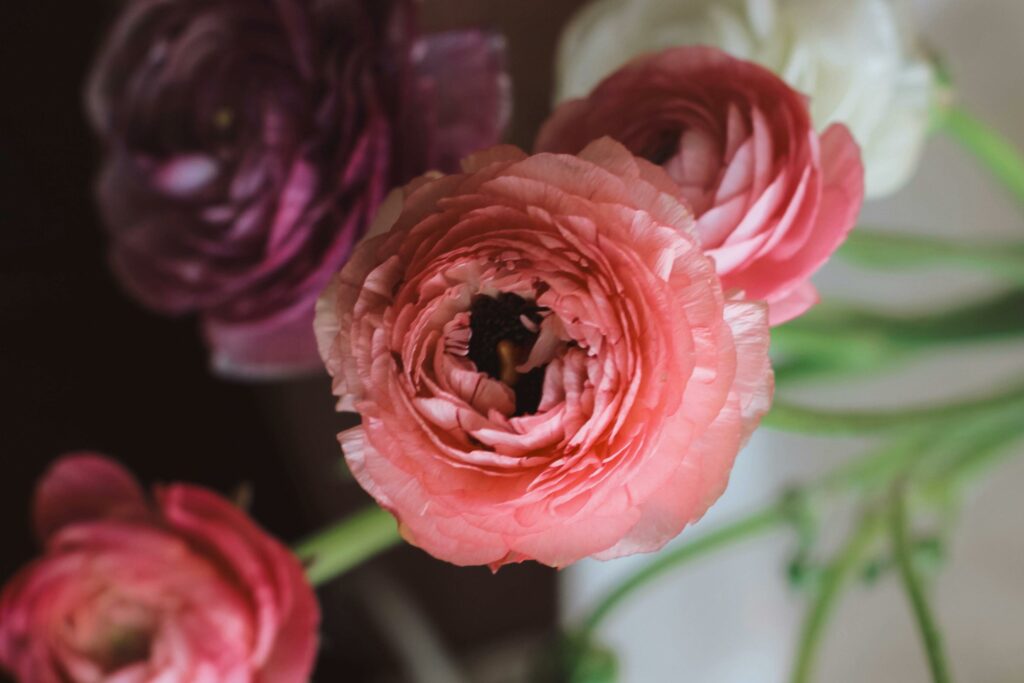

Behind every bouquet is a supply chain of jet fuel, heated glass, drained lakes, and vanishing water tables. A look at the hidden environmental cost of the world’s most beautiful commodity.
At four o’clock on a winter morning outside Amsterdam, before the sun has touched the flat Dutch polders, the largest flower market on Earth is already roaring. Forklifts thread between towering carts of roses, ranunculus, and chrysanthemums under the fluorescent glow of a building so large it could swallow 125 soccer fields. This is Royal FloraHolland’s auction house in Aalsmeer, the beating heart of an industry that moves an estimated 12 billion stems a year through its floors and clocks, blooms that arrived overnight from Kenyan hillsides, Ethiopian lakeshores, Colombian valleys, and Dutch greenhouses lit as bright as small cities. By the time most of the world sits down to breakfast, these flowers will already be airborne again, racing the clock toward vases in London, New York, Tokyo, and Dubai.
It is an extraordinary logistical ballet, and it is also, though few of us think about it while handing over cash for a bunch of tulips, one of the more carbon-intensive things a person can buy by the pound. A rose grown in a heated Dutch greenhouse in January, or flown twelve time zones from a highland farm outside Nairobi, arrives in a shopper’s hands carrying an invisible cargo: kilograms of greenhouse gas, liters of virtual water, and traces of pesticide that never quite wash off the supply chain. Multiply that rose by the roughly 1.5 to 2 billion stems that change hands worldwide around Valentine’s Day alone, and by the tens of billions more sold across Mother’s Day, weddings, funerals, and ordinary Tuesdays throughout the year, and a strange arithmetic emerges. An industry built entirely on the idea of natural beauty has become, in its current global form, a measurable contributor to the very crisis reshaping the plants, pollinators, and landscapes it depends on.
It’s worth pausing on just how odd this is, as environmental stories go. Climate change is usually discussed in terms of unavoidable necessities—the fuel that heats homes in winter, the fertilizer that feeds a growing population, the concrete that houses it. Flowers occupy a different category almost entirely. Nobody needs a rose in February the way they need a furnace or a harvest. And yet the infrastructure built to supply that unnecessary rose—the cargo jets, the heated glasshouses, the refrigerated trucking fleets, the irrigation networks—is every bit as real, and every bit as carbon-intensive, as the infrastructure built around goods with a genuine claim to necessity. That mismatch, between the triviality of the product and the scale of the machinery behind it, is part of what makes the flower trade such a revealing case study in how modern consumption actually works: not through any single obviously destructive act, but through the quiet accumulation of a thousand small, reasonable-seeming choices—fly it, refrigerate it, heat it, wrap it in plastic, discard it—each one individually unremarkable, together adding up to millions of tons of carbon a year.
This is not a simple story of villains and victims. It is a story about the peculiar economics of perishability, about deserts of glass in the Netherlands and farms perched a mile and a half above sea level in the Rift Valley, about a lake in Kenya that has fed both flamingos and export earnings until it could barely do either, and about the surprising, counterintuitive physics of carbon accounting that sometimes make a flower flown five thousand miles more climate-friendly than one grown in a heated greenhouse forty miles from the shop that sells it. To understand how flowers—of all things—became entangled with climate change, you have to follow them from the moment they’re cut to the moment they wilt in a vase, and reckon with an industry that, like so much of modern consumption, has globalized its beauty while quietly outsourcing its costs.
A Business Built on Borrowed Time
The modern cut-flower trade is a genuinely strange edifice of global commerce. Nearly every other traded agricultural good—coffee, grain, cocoa, cotton—can sit in a warehouse for weeks or months without much consequence. Flowers cannot. A rose begins dying the moment it’s severed from its root system, and the entire architecture of the industry exists to outrun that decay. Growers, brokers, cargo airlines, refrigerated trucking fleets, wholesalers, and florists have built, in effect, a vast just-in-time delivery system for a product with almost no shelf life and no nutritional or functional value beyond the emotional. It exists purely to be looked at, and then discarded.
That fragility drives nearly every environmentally costly decision in the supply chain. Because flowers can’t be shipped slowly by sea in the way most goods are, the industry has historically leaned on the fastest, most carbon-intensive form of freight available: cargo aircraft. Because flowers wilt quickly in heat, they must be kept in an unbroken “cold chain” from farm to florist, a refrigerated relay of coolers, trucks, and warehouses that runs on electricity and, in some links, ozone-depleting or high-warming refrigerant gases. And because demand for flowers is wildly uneven—spiking violently around a handful of calendar dates—growers in temperate climates who want a piece of that demand have to force blooms out of season, which usually means heating greenhouses through the winter with fossil fuels.
The scale of all this is bigger than most people imagine. The global cut-flower industry is valued at somewhere between $30 billion and $55 billion annually depending on how the trade is measured, and various analyses estimate that the sector generates somewhere in the range of 3 to 5 million tons of carbon dioxide emissions worldwide every year, an estimate that places the industry’s footprint above that of some small nations. That number is almost certainly conservative, since standardized life-cycle accounting for flowers—unlike for food crops—remains patchy, and much of the fertilizer use, refrigerant leakage, and packaging waste involved is poorly tracked or excluded altogether from most published figures.
Consider, too, that flowers behave differently from other perishable imports. While just under 20 percent of fruit and vegetable crops sold in the United States are imported, an estimated 80 percent of cut flowers are, despite sharing a similarly short shelf life with produce. That imbalance exists partly because the U.S. essentially dismantled its own commercial flower-growing sector in the 1990s, unable to compete on labor costs with farms in Latin America, and partly because global consumers have developed an expectation that any flower should be available in any season, anywhere in the world, at a moment’s notice. Roses in December. Peonies in November. Tulips in July. The greenhouse and the cargo jet exist to satisfy that expectation, and both come with an atmospheric price tag.
Valentine’s Day and the Physics of Fourteen Grams
If you want to see the industry’s climate math in its most concentrated form, look at a single date on the calendar: February 14th.
In the weeks leading up to Valentine’s Day, the ordinary rhythm of the global flower trade shifts into something closer to a military logistics operation. Farms across Colombia and Ecuador—which together supply roughly three-quarters of the roses sold in the U.S. during this period—work around the clock, and airports near Bogotá and Quito add extra cargo flights just to keep pace. In the run-up to a typical Valentine’s Day, more than 30 cargo flights depart Colombia for Miami every single day, each one packed with boxes of roses stacked into refrigerated holds. Aviation researchers who have tried to quantify the resulting emissions have arrived at strikingly large figures. One widely cited estimate from the International Council on Clean Transportation calculated that Valentine’s Day roses grown in Colombia and flown to the United States produced roughly 360,000 metric tons of carbon dioxide in a single year—a figure roughly equivalent to the annual emissions of 78,000 passenger cars.
Other estimates converge on similarly eye-widening numbers using different methods. Researchers have calculated that transporting Valentine’s flowers from Colombia alone burns on the order of 114 million liters of jet fuel in a single season. Separate analyses have pegged the emissions from the roughly 100 million roses grown specifically for the U.S. Valentine’s market at around 9,000 metric tons of carbon dioxide from the flight leg alone, before a single stem has even reached a wholesaler.
The reason air freight dominates the math is a matter of basic physics, not industry inertia. Compare the two dominant modes of long-haul transport: cargo aircraft and ocean container ships. According to freight-emissions data widely used in supply-chain research, moving a ton of goods a single kilometer by air generates roughly 665 grams of carbon dioxide, compared to roughly 8 grams for the same ton-kilometer traveled by sea—a difference on the order of eighty-fold. Ships benefit from enormous economies of scale and low friction; a laden aircraft, by contrast, has to expend enormous energy fighting gravity, and much of its payload capacity is consumed by the fuel needed to keep the plane aloft rather than by cargo.
For decades, that gap barely mattered to the flower trade, because nobody believed a rose could survive three weeks at sea and still look fresh enough to sell. That assumption has only recently begun to crack—more on that shortly—but for the vast majority of flowers sold globally, especially during concentrated demand spikes like Valentine’s Day, the cargo hold of a jet remains the default route from farm to florist.
None of this means Valentine’s Day flowers are uniquely evil compared to other gifts; a diamond ring or a smartphone carries its own hidden environmental ledger. But flowers occupy an unusual niche: a product whose entire value proposition is fleeting beauty, purchased in a single emotionally charged transaction, and then discarded within days—all while requiring a transportation footprint disproportionate to its size, weight, or usefulness.
The Cold Chain Nobody Sees
The flight itself is only the most visible link in a much longer refrigerated relay that most consumers never think about, largely because it’s designed to be invisible. From the moment a stem is cut on a Kenyan hillside or a Colombian savanna, it enters what the industry calls the cold chain: an unbroken sequence of chilled rooms, refrigerated trucks, cooled cargo holds, and temperature-controlled warehouses engineered to hold the flower at a narrow band of temperature, typically just above freezing, all the way to the moment it reaches a florist’s cooler or a supermarket’s flower case. Any break in that chain—a delayed truck sitting in tropical heat, a warehouse with a failed compressor—can mean an entire shipment arrives wilted and unsellable, so growers and distributors build in redundancy at every step, which means running compressors, chillers, and refrigerated engines essentially continuously across a journey that can last anywhere from three days to three weeks.
That continuous refrigeration carries its own climate cost, separate from the fuel burned in transit. Commercial refrigeration units, whether mounted on a truck, built into a warehouse, or fitted into a cargo container, typically rely on chemical refrigerants, and many of the refrigerants still in wide use across cold-chain logistics globally are hydrofluorocarbons, or HFCs—compounds developed decades ago to replace the ozone-depleting refrigerants of the 1980s and 1990s, but which turned out to carry an extraordinarily high global warming potential of their own, in some cases thousands of times more potent than carbon dioxide molecule for molecule. Leakage from refrigeration equipment, whether through poor maintenance, aging seals, or improper disposal of old units, is a widely documented problem across the broader cold-chain industry that supplies fresh food and flowers alike, and floriculture’s reliance on tightly controlled refrigeration from farm to florist means it shares fully in that risk, even though refrigerant leakage rarely appears in the headline carbon-footprint figures most commonly cited for the flower trade.
Then there’s the electricity itself. A flower’s cold chain doesn’t run on diesel and jet fuel alone; it runs, at nearly every fixed point along the route, on grid electricity to power chillers, walk-in coolers, and climate-controlled storage rooms. In countries where that electricity comes predominantly from coal or natural gas, as it still does across much of the flower-exporting and flower-importing world, every hour a shipment spends sitting in a cooled warehouse adds a further, quietly accumulating layer of emissions on top of the transportation footprint that dominates most public discussion of the industry’s climate impact.
The Greenhouse Paradox
Here is where the story complicates itself in a way that frustrates anyone looking for an easy villain.
Instinct suggests that a flower grown close to home should always be the greener choice—fewer food miles, less fuel burned, a shorter, gentler journey to the vase. For flowers, that instinct is often wrong, and the reason is heat.
Much of Europe’s flower supply, and a meaningful share of what’s sold in parts of North America, is grown not in fields but inside vast greenhouse complexes in the Netherlands, a country whose flat, waterlogged land and gray winter skies are otherwise poorly suited to floriculture. Dutch growers compensate with technology: heated glasshouses, supplemental LED and high-pressure sodium lighting to simulate longer days, computer-controlled irrigation, and climate systems that hold precise temperature and humidity year-round. It’s an engineering marvel, and it has made the Netherlands the undisputed capital of the global flower trade—but running that system, especially through a Dutch winter, is extraordinarily energy-intensive.
Multiple life-cycle assessments comparing the two dominant supply models—Dutch greenhouse cultivation versus East African or South American field cultivation with air freight—have reached a conclusion that startles most people the first time they hear it. Researchers have found that the carbon footprint of flowers grown in cooler countries can run more than five and a half times greater than that of flowers grown near the equator, even after accounting for the long-haul flight the equatorial flowers require. A widely referenced comparison of rose bouquets found that a Dutch-grown bouquet and a Kenyan bouquet flown to the same market produced nearly identical carbon footprints—around 32 kilograms of CO2 for five Dutch-grown roses versus about 31 kilograms for the same number of Kenyan roses, once air freight was factored in—while an equivalent bouquet grown outdoors and in season in Britain generated only a fraction of that, roughly 3 kilograms.
The explanation lies in where the sun does the work for free. Kenyan and Colombian flower farms typically sit at high altitude near the equator—the Kenyan highlands around Naivasha and the savanna outside Nairobi average roughly 1,800 to 2,000 meters in elevation, and the Bogotá savanna in Colombia sits at a similar height. That combination of altitude and latitude delivers something no fossil fuel can replicate cheaply: consistent, intense, natural sunlight and mild temperatures nearly year-round, with no need for artificial heating or supplemental lighting. A Kenyan rose farm can grow flowers in the open air, or in simple unheated greenhouses used mainly to control humidity and pests, for twelve months a year. A Dutch grower trying to produce the same rose in January has to manufacture, with electricity and natural gas, the conditions that Kenya and Colombia get from the sky for free.
This is the uncomfortable center of the flower-industry climate puzzle: the “natural” choice and the “local” choice are not always the same thing, and the industry’s own geography of comparative advantage—warm equatorial highlands supplying cold, wealthy markets—emerged for reasons that are now colliding with the reasons we most want to reduce that trade. As David Bek, a researcher who has spent two decades studying the sustainable cut-flower sector at Coventry University, has put it, if pressed to identify the most genuinely climate-friendly flower, it would be one grown outdoors in your own garden or found in a local hedgerow, fed only by rainfall—not flown in from Africa, but also not force-grown under artificial lights forty miles from where it’s sold. Both of the industry’s dominant models fall well short of that baseline.
The Netherlands itself is not blind to this problem, and the country’s growers have spent much of the past fifteen years trying to decouple their greenhouses from fossil fuels, with real if partial success. A meaningful share of Dutch floriculture now draws on geothermal heat piped up from deep underground, on combined heat-and-power systems that capture waste heat more efficiently than a conventional boiler, and on rooftop solar arrays that supplement electricity demand during sunnier months. Some of the country’s largest greenhouse complexes have installed systems that capture and reuse the carbon dioxide produced by their own heating systems, feeding it back into the greenhouse air to boost plant growth rather than releasing it directly to the atmosphere—a genuinely clever piece of industrial ecology, even if it addresses only one slice of the sector’s total emissions. But natural gas remains deeply embedded in the country’s greenhouse infrastructure, particularly for the intense heating demand of a Dutch winter, and the transition away from it has been gradual, expensive, and, since Europe’s energy markets were upended in the early 2020s, subject to the kind of price volatility that makes long-term investment in alternatives harder to plan around even for growers who want to make the switch.
The Lake That Grows Roses
If the Netherlands represents the industry’s energy problem, Kenya’s Lake Naivasha represents its water problem, and the two are deeply intertwined with a third: labor and land.
Lake Naivasha sits in Kenya’s Great Rift Valley, a shallow freshwater lake ringed by acacia woodland and papyrus swamp, home to hippos, over 400 recorded bird species, and, until relatively recently, a thriving artisanal fishery. Since the 1980s, its shores have also become one of the most productive flower-growing regions on the planet. Dozens of large commercial farms line the lake’s edges today, their greenhouses drawing water directly from the lake or from boreholes sunk into the surrounding aquifer to irrigate roses destined almost entirely for export to the European Union, which now sources roughly a third of all the roses it imports from Kenya.
The economic case for locating flower farms here is compelling: Kenya’s flower export industry generates several hundred million dollars annually and directly employs roughly 100,000 people, with many multiples of that number depending indirectly on the sector for their livelihoods. But the ecological case has grown steadily more troubling. Environmental researchers and journalists who have studied the lake over the past two decades have documented a lake in genuine peril: water levels that have fluctuated dramatically and, in drought years, dropped alarmingly, along with declining water quality tied to agricultural runoff. One hydrological study estimated that cut-flower cultivation around the Naivasha basin was responsible for exporting the equivalent of roughly 16 million cubic meters of “virtual water” out of the watershed each year during the study period, water embedded invisibly in the flowers themselves as they’re shipped abroad and never returned to the basin they came from.
The pollution side of the ledger is just as concerning. Researchers studying the wider Naivasha catchment have documented how intensifying agriculture in the region, including horticulture, has increased both nutrient and pesticide loading into the rivers and the lake itself, with consequences that ripple through the aquatic food web. Fish and other aquatic organisms have periodically died off in large numbers, and commercial fishing on the lake—once a significant local livelihood—has been repeatedly restricted or banned outright as a result. The lake’s famous flamingo populations, historically associated with the saltier waters of nearby Lake Nakuru, have at times been observed shifting toward Naivasha, a pattern some conservationists interpret as a troubling sign that the ecological balance of the region’s lake system has shifted in ways not fully understood.
It would be a mistake to lay all of this at the feet of the flower industry alone. Smallholder farms in Naivasha’s upper catchment, growing maize, vegetables, and other subsistence crops, also contribute significant nutrient and pesticide runoff into the watershed, and researchers who have studied the lake in detail generally describe the pollution burden as shared among commercial horticulture, smallholder agriculture, and untreated municipal sewage from the rapidly growing town of Naivasha itself. The Kenya Flower Council and major growers, for their part, point to genuine improvements: many large farms now operate constructed wetlands to filter wastewater before it re-enters the watershed, have adopted voluntary codes for water withdrawal, and have pursued certifications such as Fairtrade and Rainforest Alliance that impose stricter environmental and labor standards. Some farms have partnered with conservation organizations on watershed-payment schemes designed to compensate upstream smallholders for adopting less-polluting farming practices, an attempt to address the problem at its source rather than only at the lakeshore.
Still, the fundamental tension at Naivasha captures something true about the entire industry: a landscape’s ecological carrying capacity is being stretched by production aimed almost entirely at satisfying demand thousands of miles away, in markets where the water and land costs of that production are invisible to the people making the purchase. Some conservationists who have watched the lake for decades warn, starkly, that without significant intervention the basin risks continued long-term decline, its water table drawn down faster than seasonal rains and river inflow can replenish it, and its biodiversity increasingly squeezed between agricultural expansion on its shores and a warming, more erratic regional climate that makes the rains it depends on less predictable with each passing decade.
A Thirsty Crop
Water scarcity is not confined to Kenya. It shadows the industry nearly everywhere flowers are grown at scale.
In Ecuador, high-altitude flower operations in the country’s central valleys draw on snowmelt and groundwater originating in the páramo, a rare tropical alpine ecosystem found only in the northern Andes that functions as a critical natural water reservoir for millions of people living downstream. In Ethiopia’s Rift Valley, an increasingly important flower-growing region as the sector has expanded beyond Kenya, farms similarly draw from lakes and rivers in ecologically sensitive terrain that also supports local agriculture and pastoralist communities.
Researchers who study “virtual water”—the total water embedded in producing and transporting a good, including the water used to grow, process, and dilute the chemical runoff associated with production—have tried to put a number on what a single flower actually costs in water terms. Estimates from the Water Footprint Network put the water footprint of a single rose at somewhere between 10 and 18 liters once irrigation, processing, and pesticide dilution are factored in. That may not sound dramatic for one stem, but the industry does not sell one stem at a time. Multiplied across the estimated 1.5 billion or more flowers sold globally around Valentine’s Day, the total water footprint for that single week of purchasing reaches somewhere between 15 and 27 billion liters—enough, by one comparison, to supply a city of 100,000 people with water for several months.
This water is drawn overwhelmingly from regions that can least afford to lose it. Many of the world’s major flower-exporting countries—Kenya, Ethiopia, parts of Colombia and Ecuador—already face significant water stress, seasonal drought, or competition between agricultural, municipal, and ecological water demands. When that water is used to grow a product that will be flown abroad, consumed for its beauty, and discarded within a week or two, the exchange looks starkly asymmetric: water security in the Global South, permanently diverted to satisfy an aesthetic and emotional demand in wealthier markets, with little of it ever returning to the basin of origin in any usable form.
What’s Sprayed on Beauty
There’s a reason experienced florists are advised to wear gloves when handling imported stems, and it isn’t only about thorns.
Because cut flowers are grown for visual perfection rather than for consumption, and because a single blemish, wilted petal, or insect bite can render an entire stem unsellable, commercial flower farms have historically applied agricultural chemicals—fungicides, insecticides, and fertilizers—far more intensively than most food crops receive, with none of the residue limits or consumer-safety testing regimes that govern pesticide use on something people eat. Flowers grown in energy-intensive greenhouses, particularly in cooler climates, require both significant heating and lighting and correspondingly heavy chemical inputs to manage pests and disease in the resulting humid, artificial environment.
The human cost of this chemical intensity falls disproportionately on the workers who tend, cut, and pack the flowers, most of them in Latin America and East Africa, many of them women. Farmworkers across the industry have long reported poor wages, long hours, and unsafe working conditions tied to pesticide exposure, and labor organizations monitoring the sector have documented cases of skin conditions, respiratory problems, and reproductive health issues among workers with sustained exposure to the chemical cocktails used to keep flowers pest-free and camera-ready. Even as certification programs have expanded protective equipment and safety training on many larger, audited farms, conditions on smaller or less-scrutinized operations often remain far behind, and the intense seasonal crunch around holidays like Valentine’s Day, when farms push workers into mandatory overtime to meet a single date’s demand, tends to compound the exposure risk during the periods when chemical use is often highest.
The environmental consequence mirrors the water story: chemical runoff from flower farms doesn’t stay contained on the farm. It leaches into rivers, seeps into groundwater, and, as at Lake Naivasha, accumulates in the sediment and food webs of the lakes and wetlands nearest the farms. Even certification schemes designed to reduce these harms sometimes have narrower effects than consumers assume. One researcher who compared a conventionally farmed Colombian rose operation against a farm certified under Florverde, a Colombian sustainability standard requiring somewhat reduced pesticide use, found that certification meaningfully improved on-farm practices but did nothing to change the transportation footprint of the flowers—since the certification addressed cultivation but left the shipping method, and its associated emissions, completely unchanged. It’s a useful reminder that no single fix addresses every layer of the supply chain simultaneously; a greener farm can still sit atop a carbon-intensive flight path.
The Afterlife of a Bouquet
Even after a flower survives its journey by air, truck, and refrigerated warehouse to reach a vase, its environmental story isn’t finished. It’s often just entering its most wasteful chapter.
Walk into almost any florist’s workshop and you’ll likely find blocks of a dense green material, spongy and lightweight, used to anchor stems into arrangements and wreaths. This is floral foam, sold widely under brand names like Oasis, and it has been the default structural medium of professional floristry since its invention in the United States in the 1950s. It is also, researchers have more recently confirmed, a significant and largely unrecognized source of microplastic pollution.
Floral foam is made from phenol-formaldehyde, a synthetic plastic that easily crumbles into tiny fragments as it’s handled, cut, and disposed of. A study conducted by researchers at RMIT University in Australia—the first to systematically examine the foam’s environmental effects—found that a wide range of freshwater and marine invertebrates readily ingest these microplastic fragments, with some species showing measurable stress responses as a result. The same research found that chemicals leaching from the foam were more toxic to aquatic invertebrates than leachate from several other common plastic materials. Unlike ordinary plastic packaging, floral foam is essentially never recycled—its composition and inevitable contamination with organic plant matter make that impractical—and it does not meaningfully biodegrade. For roughly six decades, florists worldwide have commonly disposed of used foam by pouring it down drains or burying it in soil, often with little guidance from manufacturers about safer alternatives, and it’s not unusual, industry sustainability advocates note, for foam-based arrangements to be buried along with coffins at funerals, a final resting place for a material that will long outlast the flowers it was meant to support.
A single standard block of floral foam contains roughly as much plastic as ten single-use shopping bags—an unsettling figure once you consider how many blocks are used and discarded in a single wedding, funeral, or hotel lobby arrangement, to say nothing of the volume consumed industry-wide across a single Valentine’s Day or Mother’s Day. In response, a wave of florists, particularly in Europe and Australia, has begun moving toward “foam-free” design, relying instead on reusable metal or ceramic flower frogs, chicken wire, and moss—techniques that predate floral foam entirely and are now being revived explicitly as an environmental corrective.
Floral foam is only the most concentrated example of a broader plastic problem that trails the industry from farm to trash bin: the cellophane wrapping and printed sleeves used to protect stems in transit and on shelves, the thin plastic buckets and water tubes used at wholesale and retail, the ribbon, floral tape, and synthetic filler greenery that pad out arrangements, and the significant volume of unsold flowers—wilted before purchase, or simply left over after an event—that end up in landfill rather than compost, where they decompose anaerobically and release methane rather than breaking down cleanly.
That last category, unsold and discarded flowers, is larger than most people assume, precisely because the industry’s business model depends on overproduction. Because flower demand is concentrated so heavily around a handful of unpredictable calendar spikes, growers and wholesalers routinely produce more stems than they know will sell, treating a certain amount of waste as the unavoidable cost of never running short on the one day a year that matters most to their revenue. Supermarkets, which now account for a large and growing share of flower retail in the U.S. and Europe, compound this dynamic by displaying flowers in eye-catching, oversized buckets meant to signal abundance, a merchandising strategy that produces a great deal of unsold, wilting stock that is thrown away rather than discounted or donated. When those discarded flowers end up compacted into landfill alongside ordinary household trash, rather than composted, the anaerobic conditions underground cause them to break down releasing methane, a greenhouse gas with many times the near-term warming potency of carbon dioxide—an ironic final act for a product whose entire supply chain was built to look, until the very last moment, as fresh and alive as possible.
A small but growing corner of the industry has begun treating this waste stream as a problem worth solving in its own right. Flower-recovery organizations operating in cities across North America and Europe now collect leftover blooms from weddings, corporate events, and unsold retail inventory, and redistribute them to hospitals, hospices, and nursing homes, extending a flower’s useful life by days and diverting it from landfill afterward through composting rather than disposal. These operations remain a marginal fraction of the industry’s total volume, but they represent one of the more straightforward interventions available: not a redesign of the global supply chain, but simply a more thoughtful ending for a product that, by design, was never built to last very long in the first place.
A Growing Footprint on the Land
For all the attention paid to jet fuel and greenhouse heating, one of the quieter dimensions of the flower industry’s climate impact is simply how much land it now occupies, and how quickly that footprint is expanding into new regions.
Kenya alone has thousands of hectares under commercial flower cultivation, a figure that has climbed steadily for decades as the sector expanded beyond its original base around Lake Naivasha into new growing regions across the country’s highlands. Colombia’s savanna surrounding Bogotá is now so densely covered in greenhouse structures that satellite imagery of the region shows mile after mile of white plastic and glass roofing where open grassland once stood. Ethiopia, a relative newcomer to large-scale floriculture, has expanded its flower-growing land dramatically over the past two decades as the government actively courted foreign investment in the sector, often converting agricultural or wetland-adjacent land near the country’s Rift Valley lakes in the process.
China represents perhaps the most striking case of expansion still underway. The country’s floriculture production value grew roughly two and a half times over just a few years in the early 2010s, and Chinese officials have stated ambitions to become the second-largest flower exporter in the world after the Netherlands, developing large new growing regions in provinces like Yunnan, where favorable climate and lower land costs have attracted major new investment in greenhouse and open-field flower production alike. Every hectare converted to flower cultivation in these expanding regions represents a choice about how to use increasingly contested land and water resources at a moment when global agriculture is already under pressure to produce more food, on a shrinking base of arable and ecologically intact land, for a world population still climbing toward its likely peak later this century.
None of this makes flower farming unique among export crops—coffee, cacao, and cut-flower cultivation all compete for land and water with food production and natural habitat in similar ways, and researchers who study global land-use change generally note that floriculture’s total footprint remains modest compared to commodity crops like soy, palm oil, or cattle pasture. But the comparison cuts an uncomfortable way when set against the industry’s purpose. Land converted to grow soybeans or cattle feed is, whatever its other environmental costs, feeding people. Land converted to grow export roses is producing something that will be admired for roughly a week and then thrown away, and doing so on some of the most fertile, best-watered land available in exactly the regions of the world where both food security and water security remain most precarious.
The Case for Sailing, Not Flying
None of this is news to people inside the industry, and in the past decade a real, if uneven, effort at reform has taken shape—most visibly around the single biggest lever available: how flowers get from farm to market.
The most significant shift has been the slow, hard-won move from air freight to ocean freight for flowers that can tolerate the longer, gentler journey. For years, this was considered essentially impossible; roses were assumed too delicate to survive three weeks in a shipping container without wilting past any commercial use. That assumption cracked partly out of necessity. When pandemic-era disruptions sent air-cargo costs soaring, several major flower traders, under real financial pressure, began experimenting seriously with refrigerated sea containers for the first time. One well-documented case involved Kenyan grower Sian Flowers, which found that shipping roses by ocean in refrigerated containers not only reduced costs but cut its carbon emissions substantially compared to flying the same flowers, raising an interesting marketing and definitional question the company had to grapple with afterward—whether a rose that circles half the globe by sea can honestly be called “low-carbon,” even if it is dramatically lower-carbon than the same rose flown.
The physics behind that shift, once realized, are hard to argue with. Ocean freight generates roughly 8 grams of carbon dioxide per ton-kilometer of cargo moved, compared to roughly 665 grams for air freight—an efficiency gap on the order of eighty times, driven by the enormous economies of scale ships achieve and the fact that they don’t have to expend energy fighting gravity the way an aircraft does. Dutch Flower Group, one of the largest flower trading conglomerates in the world, has built out sea-freight routes from Colombia and Kenya over roughly the past fifteen years, and by the early 2020s was celebrating the arrival of its ten-thousandth sea container of Colombian flowers into its Dutch docks. The company has stated that shipping flowers by sea rather than air reduces the associated carbon emissions by somewhere between 80 and 90 percent, depending on the specific origin and destination involved.
The catch is that sea freight only works for certain flowers and certain markets. Hardier stems—many varieties of roses, chrysanthemums, and some greenery—can survive the longer transit with advances in cold-chain packaging and slower, gentler cooling protocols that actually appear to improve vase life on arrival compared to the shock of rapid refrigeration used in air transport. More delicate flowers, and any order tied to a hard deadline like a specific holiday, still depend on the speed only aircraft can provide. Sea freight also requires longer-range planning and larger minimum order volumes than air freight, which can be a harder fit for smaller growers and boutique florists working closer to real-time demand.
There’s also a subtler business logic that makes the shift harder than it might first appear. Because a rose loses value with every extra day it spends in transit—industry estimates suggest a stem can lose roughly 15 percent of its market value for each additional day of travel before it reaches a buyer—growers have historically treated speed as a direct proxy for quality and profitability, not merely convenience. Convincing a farm to trade a three-day flight for a three-week ocean voyage requires more than an appeal to carbon math; it requires new packaging technology capable of keeping stems hydrated and cool for weeks rather than hours, new harvesting protocols that pick flowers at an earlier stage of bloom so they open at the right moment after a longer journey, and new commercial relationships with buyers willing to place orders far enough in advance to make ocean freight’s longer lead times workable. The growers who have made the leap successfully describe it less as swapping one shipping method for another and more as re-engineering the entire product around a slower timeline, from the seed variety chosen to the packaging sealed around the final stem.
On the greenhouse side of the industry, Dutch growers—under pressure from both rising European energy prices and tightening EU climate policy—have accelerated investment in decarbonizing their notoriously energy-hungry glasshouses. Some growers have turned to geothermal heating systems paired with natural lake cooling to cut reliance on fossil-fuel boilers, while others have added solar panels, improved insulation, and adopted more precise, sensor-driven climate control systems that reduce the energy wasted on over-heating or over-lighting. Packaging is being redesigned to reduce weight and increase density per shipment, digital logistics platforms are being used to consolidate loads and cut unnecessary trucking miles, and the broader Dutch sector has begun treating carbon reduction as an economic necessity rather than a public-relations gesture, driven in no small part by increasingly demanding retail buyers and increasingly climate-literate consumers.
None of these innovations fully resolve the industry’s underlying tension. Sea freight reduces the footprint of long-haul flowers but does nothing to address water use or pesticide runoff at the farm level. Geothermal and solar greenhouses reduce Dutch energy demand but do nothing to reduce Kenyan water withdrawal. Fairtrade and Rainforest Alliance certifications improve labor conditions and often reduce chemical use, but as researchers have pointed out, they typically leave the transportation method—and its associated emissions—completely untouched. Reforming a global supply chain this fragmented, this fast-moving, and this driven by unpredictable, holiday-shaped demand spikes requires progress on multiple fronts simultaneously, and the industry, to its credit, does appear to be pursuing several of them at once, even if unevenly and far from completely.
The Slow Flowers Rebellion
Parallel to these industrial-scale shifts, a smaller but culturally influential movement has taken root among growers and consumers who argue that the entire premise of year-round, any-flower, anywhere availability is the actual problem—not merely how that availability is achieved.
The “Slow Flowers” movement, a term popularized in the United States after writer Debra Prinzing published a book documenting locally grown, seasonal American flower farms, argues for something closer to the local-food movement’s ethos applied to floriculture: buy what’s in season, buy what’s grown nearby, and accept that a bouquet in November will look different from a bouquet in June, because the two are made from entirely different plants growing under entirely different conditions. Local flower farms—typically small-scale, often organic or low-input, and selling directly to consumers, florists, or farmers’ markets rather than through the global auction-and-wholesale system—have grown steadily in numbers across the U.S., U.K., and parts of Europe over the past decade, aided by growing consumer interest in traceability and reduced “flower miles.”
The environmental case for this approach is genuinely strong when it’s done right. A British researcher’s life-cycle comparison found that a bouquet of outdoor-grown, in-season British flowers produced roughly a tenth of the carbon footprint of an equivalent bouquet of imported roses, whether those roses came from Dutch greenhouses or Kenyan farms. The catch, familiar by now, is that “locally grown” only delivers that benefit when the local flowers are grown outdoors, in season, without supplemental heating or lighting—the moment a domestic grower tries to compete on the industry’s terms by forcing blooms out of season in a heated structure, the emissions advantage narrows or disappears entirely, as the Dutch greenhouse comparison illustrates.
The Slow Flowers approach also runs into an obvious structural limit: it cannot currently supply anything close to the volume the global market demands, particularly around concentrated peaks like Valentine’s Day, when a small regional flower farm simply has no roses blooming outdoors in February in most of the Northern Hemisphere. It functions less as a wholesale replacement for the existing global trade and more as a values-driven alternative for consumers willing to accept different flowers, different timing, and often a higher price, in exchange for a dramatically smaller footprint and, frequently, a direct relationship with the grower.
There’s a deeper cultural challenge underneath that supply constraint, one that has as much to do with expectation as with agronomy. Decades of year-round global availability have trained consumers, florists, and retailers alike to expect a fixed, familiar palette of flowers—roses, lilies, carnations, tulips—regardless of the actual season, in a way that has quietly narrowed the botanical imagination of the entire industry. A domestic flower farm growing what’s actually thriving outdoors in a given month might offer dahlias, zinnias, branches of flowering quince, or seed heads and grasses rather than roses, and part of the Slow Flowers movement’s work has been less about logistics than about persuasion: convincing florists to design around what’s locally available rather than a fixed shopping list, and persuading customers that a November bouquet of chrysanthemums, amaranth, and autumn foliage can be just as compelling as a rose that had to cross an ocean or a heated greenhouse to reach them. Where that persuasion succeeds, the resulting bouquets tend to look and feel distinctly different from the standardized, globally sourced arrangements found in most supermarkets—a difference some consumers have come to value in its own right, treating seasonal variation as a feature rather than a limitation.
An Industry That Can’t Agree on Its Own Math
One of the most persistent difficulties in even discussing the flower industry’s climate impact honestly is that the underlying data remain surprisingly incomplete and inconsistent. Unlike food commodities such as beef, palm oil, or coffee, which have been the subject of extensive, standardized life-cycle assessment for decades, cut flowers have no widely agreed-upon methodology for calculating their carbon footprint, and the studies that do exist often reach different conclusions depending on which stages of the supply chain they include.
A recent scholarly review of carbon-footprint research across the cut-flower supply chain found that greenhouse-based cultivation in temperate regions like the Netherlands generally produces higher emissions than open-field cultivation in tropical countries such as Kenya or Colombia, primarily due to the heating and artificial lighting greenhouse cultivation requires—but that long-haul air freight can significantly elevate, or even entirely offset, the emissions advantage tropical growers otherwise enjoy. That same review noted persistent data gaps in standardized methodology, regional emissions inventories, and end-of-life waste tracking across the sector—an academic way of saying that nobody has yet built a comprehensive, comparable, farm-to-landfill accounting system for the industry as a whole.
This matters beyond academic tidiness, because it means consumers, retailers, and even flower companies themselves are often working from incomplete or apples-to-oranges comparisons when they claim a given bouquet is more or less sustainable than another. A rose’s carbon footprint can look dramatically different depending on whether a given study includes refrigeration and cold storage, whether it accounts for fertilizer production emissions, whether it counts the “empty leg” emissions of cargo flights that would otherwise fly regardless of the flowers aboard, and whether it includes end-of-life disposal at all. Some studies calculating the footprint of Colombian roses, for instance, deliberately exclude refrigeration and shipping from their scope entirely, focusing only on cultivation—a methodological choice that can make a certified, lower-pesticide farm look identical in footprint to a conventional one, simply because the study wasn’t designed to capture the part of the supply chain where the two actually diverge.
Are the Alternatives Actually Better?
Faced with all of this, a reasonable question follows: if cut flowers carry such a heavy footprint, are the obvious substitutes—potted plants, dried arrangements, or artificial silk flowers—genuinely better for the climate? The honest answer is that it depends heavily on how each is produced and how long it’s kept, and none of the alternatives is as unambiguously clean as marketing around them sometimes suggests.
A living potted plant avoids the single-use disposal problem entirely, and if it’s kept alive and cared for over months or years, its footprint amortizes down to something far smaller per year of enjoyment than a cut bouquet replaced every week or two. But potted plants sold at scale through garden centers and supermarkets are frequently grown in the same energy-intensive heated greenhouses used for cut flowers, shipped in the same refrigerated trucks, and, if they die within weeks of purchase from neglect or unsuitable conditions—a common outcome for impulse-bought houseplants—their environmental advantage over cut flowers can evaporate almost entirely. A potted orchid or poinsettia that dies within a month has essentially replicated the cut-flower supply chain’s carbon cost while adding a plastic pot to the waste stream.
Dried flowers, which have enjoyed a substantial resurgence in wedding and home-decor markets in recent years, offer a genuinely different profile: because they’re grown once and can last for months or years rather than days, the emissions from cultivation and transport are spread across a much longer useful life, and many dried-flower growers work with lower-input, often domestically grown varieties specifically bred for drying rather than for the export cold chain. The tradeoff is aesthetic and cultural rather than environmental—dried arrangements simply look and feel different from fresh flowers, muted and textural rather than vivid, and for many of the emotional occasions flowers mark—romance, condolence, celebration—consumers have historically wanted the vividness that only a fresh, living flower provides, at least for now.
Artificial flowers made from silk, polyester, or other synthetic materials present the starkest tradeoff of all. They generate no ongoing agricultural footprint, require no water, pesticides, or refrigeration, and can in principle be reused indefinitely. But they are, without exception, plastic products manufactured from petroleum feedstocks, typically in energy-intensive manufacturing facilities, and they do not biodegrade at the end of their use—when eventually discarded, they persist in landfill for centuries, effectively converting a fleeting, biodegradable natural product into a permanent plastic waste stream. Life-cycle researchers who have modeled this tradeoff generally find that an artificial arrangement only becomes the lower-carbon choice if it’s reused a substantial number of times over several years, a threshold that casual or one-time purchasers—someone buying artificial flowers for a single wedding or holiday display—rarely meet in practice.
The uncomfortable conclusion is that there is no simple substitute that sidesteps the underlying problem. Every option available carries some combination of agricultural, energy, water, or plastic-waste cost; the meaningful differences lie not in which category of product is chosen but in how it’s grown, how far it travels, and how long it’s actually used before being discarded—the same variables that determine the footprint of a cut flower in the first place.
What a Rose Is Actually Worth
Some economists and environmental researchers argue that the industry’s problems ultimately trace back to a single root cause: flowers are priced as though their environmental costs don’t exist.
The concept, sometimes called “true cost accounting,” holds that the price a consumer pays for a bouquet at a supermarket checkout reflects the cost of growing, harvesting, packing, and shipping the flowers, plus a retail margin—but almost never reflects the cost of the water drawn from a stressed watershed, the carbon emitted by the cargo flight, or the long-term ecological damage from pesticide runoff. Those costs don’t disappear; they’re simply absorbed by ecosystems and communities far removed from the transaction, a pattern environmental economists refer to as an externality. Proponents of true cost accounting have proposed remedies ranging from carbon taxes or tariffs applied specifically to air-freighted agricultural goods, to mandatory environmental labeling that would require flowers to disclose their water footprint, carbon emissions, and country of origin the way food products are increasingly required to disclose nutritional content and sourcing.
That last point—country of origin labeling—turns out to be a surprisingly significant gap in current regulation. Unlike fresh produce sold in most wealthy countries, cut flowers typically carry no requirement to disclose where they were grown, and bouquets assembled from multiple countries of origin are common, especially in mixed arrangements sold at supermarkets. That makes it genuinely difficult for an interested consumer to make an informed choice even if they wanted to, since a bouquet might combine Kenyan roses, Ecuadorian carnations, and Dutch-grown filler greenery into a single product with a single, uninformative price tag.
There’s a deeper, more uncomfortable question underneath the accounting debate, one raised most pointedly by researchers at organizations like the World Resources Institute: whether the water, land, chemical inputs, and carbon budget consumed by an industry devoted entirely to short-lived aesthetic pleasure represent a defensible use of increasingly scarce global resources, particularly in regions already grappling with food insecurity, water stress, and land degradation. It’s not an argument that flowers should disappear—they generate real economic value, real jobs, and, undeniably, real joy—but it is a reminder that in a world of finite land, water, and atmospheric carbon budget, every acre devoted to export roses is an acre not devoted to something else, and every liter of water shipped abroad embedded in a flower is a liter not available to the watershed it came from.
It’s also worth acknowledging that the economic case against reforming the industry too aggressively is not trivial. Export horticulture in Kenya, Ethiopia, Colombia, and Ecuador provides some of the more stable, better-paying formal employment available to rural workers in regions where alternative jobs are scarce, and a substantial share of that employment goes to women who might otherwise have far fewer economic options. Labor advocates who study the sector generally caution against blunt instruments—consumer boycotts, outright bans on air-freighted flowers, or punitive tariffs—precisely because those tools risk eliminating jobs and export revenue in some of the world’s poorer regions while doing relatively little to address the underlying structure of demand in wealthy import markets that actually drives the industry’s environmental costs. The more constructive version of reform, most researchers and advocates in this space argue, targets the how of production and transport—cleaner energy, lower-impact chemicals, slower and less carbon-intensive shipping, better wastewater treatment—rather than the whether of production itself, preserving the economic benefits the trade provides while working to shrink its ecological footprint.
Small Adjustments, Real Difference
None of this suggests that buying flowers is indefensible, or that individual consumers bear primary responsibility for fixing a fragmented, decades-old global supply chain. But the research does point toward some genuinely meaningful choices available to anyone who wants to reduce the footprint of a bouquet without giving up flowers altogether.
Buying what’s in season and grown reasonably close to home remains, by a wide margin, the single most effective lever available to a consumer, precisely because it avoids both halves of the industry’s core carbon problem: neither the heated greenhouse nor the long-haul flight is needed to produce an in-season, locally grown flower. Where that’s not practical or available, some research suggests looking for certifications like Fairtrade, Rainforest Alliance, or Florverde, which won’t reduce the transportation footprint of an imported flower but generally do indicate meaningfully reduced pesticide use and improved labor conditions on the farm itself—an improvement worth making even if it doesn’t solve every part of the equation. Asking a florist directly where flowers were grown, and how they were shipped, is a reasonable and increasingly common question, and the growing number of florists actively marketing their use of sea-freighted or domestically grown stems suggests the industry has noticed that some consumers are asking.
At the disposal end, avoiding floral foam where possible, composting spent flowers rather than sending them to landfill, and supporting organizations that recycle event flowers rather than discarding them after a single use—several such services have emerged in major cities specifically to redirect wedding and event flowers to hospitals, nursing homes, and community organizations rather than the trash—represent smaller but genuinely additive steps.
The Uncomfortable Bloom
There is something almost poetic, in an unwelcome way, about an industry built entirely on the aesthetics of nature having become a quiet contributor to nature’s unraveling. The rose has been a symbol of love and beauty for millennia, its cultural resonance older than the countries that now grow it for export. It deserves better than to become, unexamined, a small brick in the wall of a warming planet.
The good news, if there is any, is that flowers occupy a strange position among climate-relevant industries: unlike fossil fuels or heavy industry, there is no fundamental reason the sector cannot be dramatically decarbonized without eliminating the product or the jobs that depend on it. Sea freight, renewable-powered greenhouses, reduced pesticide regimes, foam-free floristry, and seasonal, local alternatives all already exist, in commercial use, today—not as speculative future technologies but as working models that simply haven’t yet scaled to match the size of global demand. The roadblocks are largely economic, logistical, and behavioral rather than technical: an industry organized for decades around speed, year-round availability, and rock-bottom prices is now being asked to reorganize around patience, seasonality, and full-cost accounting, and that kind of transition rarely happens quickly or evenly.
What makes the flower trade worth this much scrutiny, in the end, isn’t that it’s the world’s biggest climate problem—it plainly isn’t, sitting well below aviation, agriculture at large, or the fossil fuel industry on any ranking of global emissions sources. It’s that flowers sit so close to the emotional core of ordinary life—births, weddings, illness, grief, apology, celebration—that the industry supplying them has managed to become genuinely enormous and genuinely consequential while remaining almost entirely unexamined by the people who buy from it. Few consumers picking out a bouquet at a supermarket checkout are thinking about Rift Valley aquifers, refrigerant leakage, or the ton-kilometer math of jet fuel versus bunker fuel; the whole design of the product, and the marketing built around it, encourages exactly that kind of unreflective purchase. In that sense, the cut-flower trade offers an unusually clear window into a much larger pattern in global consumption: industries that have globalized production to chase cheap land, labor, and sunlight, while leaving the environmental accounting for someone else, somewhere else, to eventually confront.
In the meantime, the auction floor in Aalsmeer will keep roaring before dawn, forklifts weaving between carts of flowers that traveled through the night to get there, each one carrying, invisibly, a little of the atmosphere’s carbon budget and a little of some distant watershed’s dwindling water. Roses will keep flying out of Bogotá at three in the morning, roughly a month before Valentine’s Day, packed into cargo holds alongside cardboard boxes stamped with the names of farms most of their eventual buyers will never think to ask about. Greenhouses in the Dutch polders will keep glowing through the winter dark, their lights visible from space, manufacturing summer out of natural gas and electricity so that a rose can bloom in January. And somewhere along the shores of a shrinking lake in Kenya’s Rift Valley, a flamingo that shouldn’t be there will keep wading through water that used to be saltier, cleaner, and higher, a small, strange signal from an ecosystem absorbing costs that were never priced into anyone’s bouquet.
The next time a bouquet changes hands—at a wedding, a hospital bedside, a grocery store checkout on a Tuesday for no reason at all—it’s worth remembering that behind its brief, deliberate beauty lies one of the more improbable and least examined supply chains in global agriculture: a system engineered, with real ingenuity, to defeat time itself, at a cost the planet has been quietly paying for decades. The flowers themselves are innocent of all this, of course. They are only doing what flowers have always done: blooming, briefly, before they fade. It’s the machinery built around them, spanning six continents and running on jet fuel, natural gas, and borrowed water, that has turned that brief bloom into something the climate now has to reckon with.